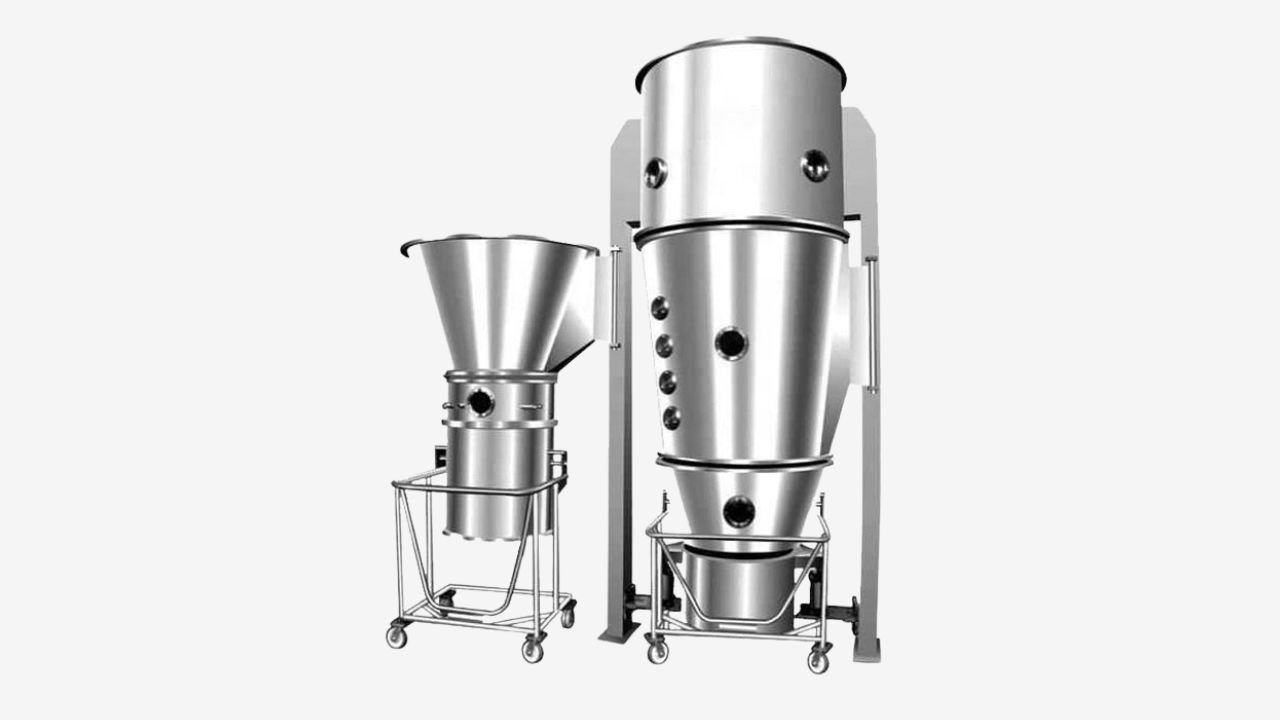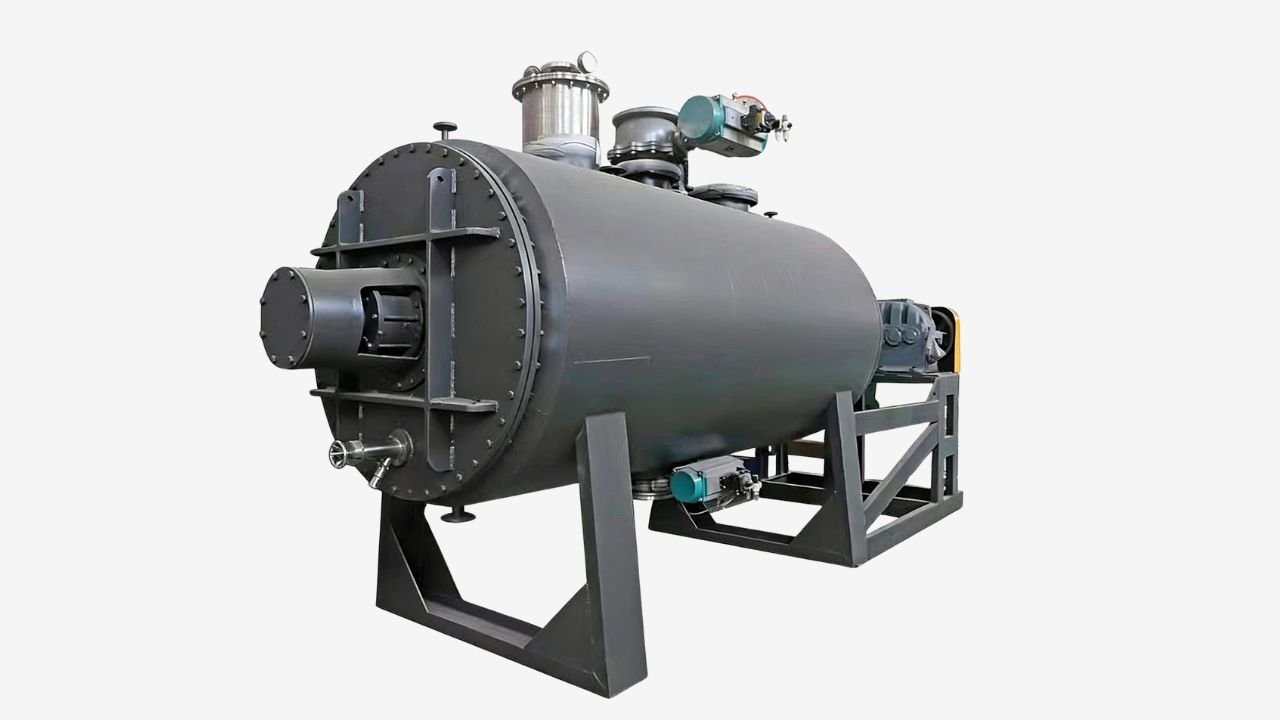
Spray drying is a scalable process you can use to make many powdered ingredients or instant products. Many factories in food processing, pharmaceutical and chemical industries use spray dryers to make free-flowing, stable and uniformly sized powders.
In this article, we are going to explore all the vital aspects of spray dryer machines. So, before you invest in the next machine for your factory, read this guide.
What Is Spray Drying?
By spraying liquid feed into a hot air stream, the thermal drying method known as “spray drying” turns it into a dry powder. The slurry or liquid is pumped into a spray drier, where it is shredded into tiny droplets using an atomizer.
How a Spray Dryer Works
Evaporating the moisture in liquid feed is one technique to utilize a spray dryer to dry it out. First, pour the liquid solution, slurry or emulsion into the drying chamber. A rotary wheel or pressure nozzle atomizer splits up the liquid into fine droplets to form a great deal of surface area.
Meanwhile you put hot air in the chamber. When the droplets come into touch with the hot air, the moisture nearly instantly evaporates. The dry particles are either deposited at the bottom or isolated by cyclones or bag filters.
Then the powder is gathered as exhaust air flows out of the system. This rapid technique maintains quality, uniformity and flow characteristics of products.
Basic Principle of Spray Drying Machine.
· Feed Preparation (Liquid or Slurry Formation)
The spray drying process starts with preparing the feed material in liquid, solution, emulsion, or slurry. This is essential since the spray dryer can only operate with pumpable liquids. You regulate solid concentration, viscosity and temperature to guarantee uniform atomization in the future.
· Atomization of the Feed
An atomizer, such as a pressure nozzle, two-fluid nozzle, or rotary atomizer, is used to atomize the prepared liquid supply into tiny droplets. The atomization multiplies the surface area of the liquid manifold so that moisture can evaporate very fast. The control of the droplet size is critical as it dictates the size of the particle in a powder, bulk density, and flow characteristics.
· Exposure to Hot Dry Air
Next you supply hot air to the drying chamber and immediately it comes into contact with atomized droplets. The air heats the droplets quickly and thus the moisture is evaporated within seconds.
· Evaporation of Moisture and Development of Particles
Each droplet is converted into a solid particle, as it passes through the drying air and the moisture evaporates. It takes seconds to dry, resulting in powders of known size, shape, and internal structure.
· Powder Separating and Collecting
For the final part you can choose to use scrubbers or cyclones to separate exhaust air and dry powder. The powder collected is released to containers, bins or downstream processing systems. Effective separation reduces losses in products and provides clean exhaustive air.
Key Stages of Spray Drying
· Atomization
The spray drying process starts with the transformation of a liquid feed into fine droplets by atomization. A solution, suspension or emulsion, the liquid is pumped into the spray dryer and forced through an atomizer, which can be a rotary atomizer or a high pressure nozzle.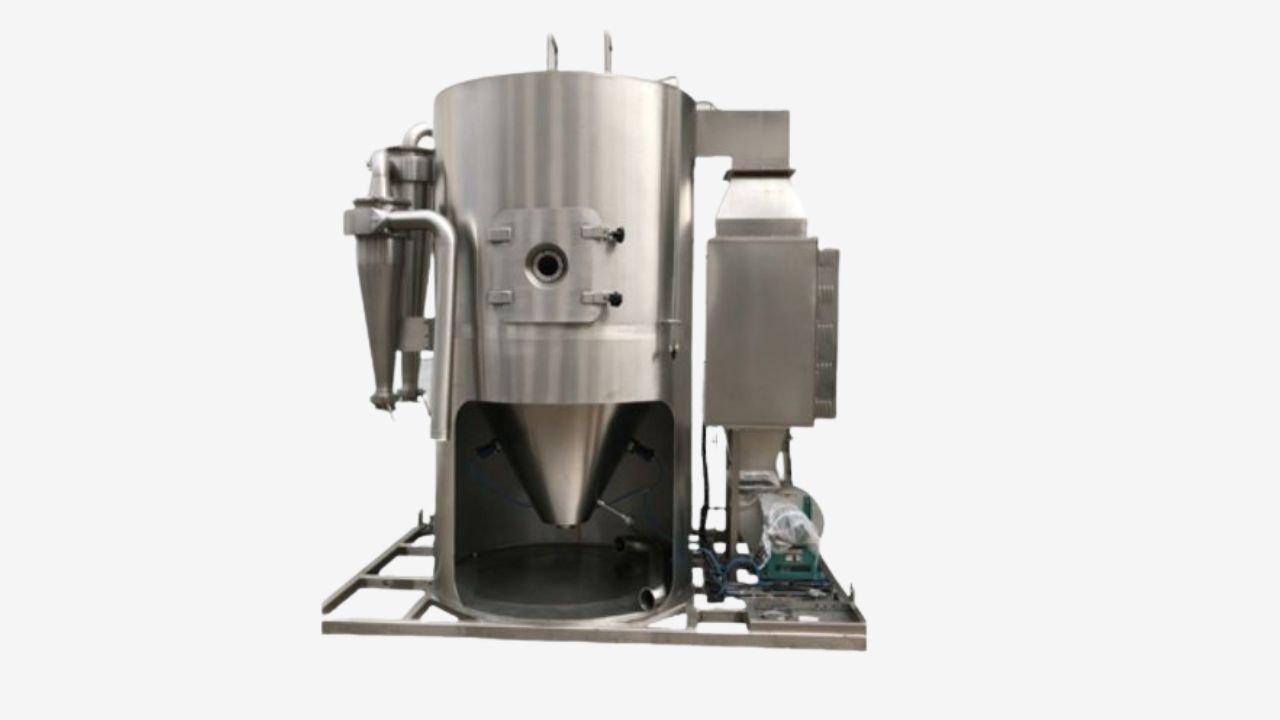
· Drying
Once the droplets have been atomized, you allow hot drying air to pass through the drying chamber and contact the fine droplets. Transfer of heat happens very quickly and the moisture evaporates almost immediately through the droplet. Since evaporation cools the droplets, the internal temperature of the droplets is kept relatively low to safeguard the heat sensitive materials like pharmaceuticals, enzymes, and food ingredients.
· Separation
When the drying is done, you will have to separate the dried particles and the exhaust air. This separation normally occurs by the use of cyclones, bag filters, or wet scrubbers. The lightweight powder particles by the airflow are taken to the separation system, where the centrifugal force or filtration devices trap the solids as the clean air leaves the system.
· Collection
The last stage is where you separate the powder and then aggregate the powder in respective containers or hoppers when dry. Depending on the level of production and the requirements of handling, the powder can be emptied directly into drums, bags or intermediate bulk containers. At this point the powder can be further refined by cooling, agglomerating or blending as required.
Main Parts of a Spray Dryer
· Feed Tank or Solution Tank
The feed tank is used to store and condition the liquid feed then dried. It provides stable flow rate, temperature and concentration. Adequate agitation eliminates settling and ensures homogenous atomization, which directly impacts quality of powder, drying efficiency and ultimate consistency of the particles.
· Atomizer (Rotary Wheel or Nozzle)
You depend on the atomizer to tear the liquid feed into small droplets. Centrifugal force is employed in rotary atomizers, whereas pressure is employed in nozzles. The uniform droplets are smaller in size, which augmented the surface area, making moisture evaporate more easily and creating homogeneous size.
· Drying Chamber
The primary area in which hot air is exposed to atomized droplets is the drying chamber. The chamber offers adequate residence period to evaporation of moisture.
· Air Heater
You apply the air heater to increase the temperature of inlet air to the necessary level of drying. It may be either electric, steam or gas-fired. The controlled heating will maintain a high level of moisture removal, as well as protecting products that are heat sensitive, preserving product stability and guaranteeing uniform drying performance.
· Cyclone Separator / Bag Filter
You separate the exhaust air by use of cyclone separators or bag filters to separate dry powder. Cyclones rely on centrifugal force whereas bag filters are used to filter small particles.
· Powder Collection System
You depend on the powder collection system to collect and release dried product in a safe manner. It has collection bins, valves and conveyors which are meant to avoid contamination and moisture pick-up.
· Automation Systems and Control Panel
Control panels and automation systems are used to monitor and control temperatures, airflow, and feed rate, and atomization. Automated controls enhance product stability, process stability, and safety.
Types of Spray Dryers
Based on Atomization Method
· Pressure Nozzle Spray Dryers
You apply pressure nozzle spray dryers when you require fine and uniform droplets and size of the particle. The system drives liquid feed through a high pressure nozzle, which disintegrates it into fine droplets within the drying chamber. This technique is suitable with heat-sensitive products and low to medium viscosity feeds.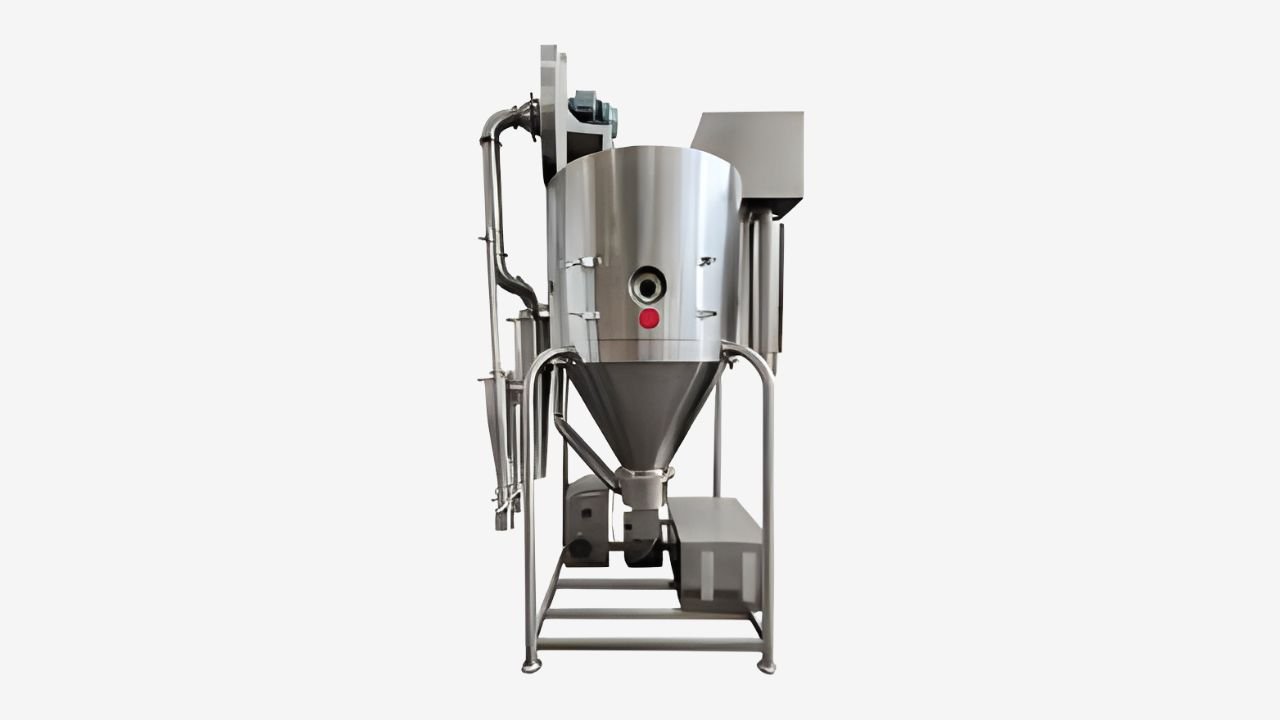
· Two-Fluid Nozzle Spray Dryers
Speaking of the low feed rates, or even laboratory-scale production, you will opt to use two-fluid nozzle spray dryers. The feed liquid is atomized by means of compressed air or gas to create very fine droplets. It is also ideal on heat sensitive and high value materials because you have an excellent control on the size of the droplets.
· Rotary Atomizer Spray Dryers
You use the rotary atomizer spray dryers to have high capacity and continuous production. Centrifugal force is used to chop the liquid feed into droplets by using a rapidly spinning disk or wheel. This process is effective in terms of high feed rates and different viscosities.
Based on Flow Pattern
· Co-current Flow Spray Dryer
The operating principle in a co-current spray dryer is that hot drying air is introduced and atomized liquid feed is introduced in the same direction, typically at the top of the drying chamber. You put wet droplets to the hottest air temperature first, which will allow the product surface to dry quickly but leave product temperature rather low.
· Counter-current Flow Dryer
Spray dryer You load a counter-current spray dryer with hot air at the bottom and feed atomized at the top. In this arrangement, partially dried particles are exposed to high temperatures closer to the outlet and more moisture is removed.
· Mixed-flow Spray Dryer
You have used a mix of co-current and counter current designs in a mixed-flow spray dryer. You add air and feed in a programmed fashion that enables droplets to be exposed to different temperatures throughout the drying process. Such a method will allow you to combine product protection with efficiency in drying.
Special Designs
· Closed-loop Spray Dryers
When you need to be sensitive to the product or environmental issues, you employ closed-loop spray dryers. They recirculate drying air to maximize the emissions as well as loss of moisture. This system safeguards volatile substances, prevents contamination, and offers better energy efficiency, so it can be adopted by pharmaceuticals.
· Vacuum Spray Dryers
You use vacuum spray dryers to deal with heat-sensitive supplies. Having reduced drying pressure means reducing the boiling point of the solvent, and thus dry at lower temperatures. This preserves nutrients, flavors or bioactive compounds in powders. They are usually used on pharmaceuticals, enzymes, or delicate food items.
· Multi-stage Dryers
When it is important to control moisture and energy consumption closely, you select multi-stage dryers. These dryers have several drying areas, including pre-drying and final drying areas, to eliminate moisture slowly by slowly. Sticky, heat sensitive or large volume materials can be processed more efficiently and uniformity of particle size and consistency of powder achieved.
Applications of Spray Drying
- Food Industry:Spray drying can be used in food processing of like milk powder. This process ensures that your products remain nutritious and longer shelf life.
- Pharmaceuticals: Spray drying is used to assist you in creating uniform fine powders to use in making tablets, capsules, inhalable medicines, and vaccines. It enhances bioavailability, solubility and stability.
- Chemicals: You use spray drying to get detergents, catalysts, dyes, pigments, and polymers, attain uniform particle size, and readily handle them.
- Biotechnology: Spray drying enables you to maintain enzymes, probiotics, and bioactive compounds and then retain them over a long period of time without compromising their activity and stability.
Benefits of Spray Drying
- Makes Uniform and Free-flowing Powders: You get a stable particle size and shape, improving product quality, solubility, and handling.
- Very Fast Drying Process: You can quickly transform liquid feed into dry powder, which saves time on processing and enhances throughput.
- Good to Heat-sensitive Materials: You retain controllable temperature and exposure of nutrients, flavors, and bioactive compounds.
- Scalable to Lab to Industrial Production: Spray drying systems do not need to be limited to small laboratory size systems to achieve the goal of full-scale industrial production.
- Control of Particle Size and Moisture Content: You adjust the parameters to dry to achieve a response in fine particle size and moisture content to maintain similar performance in downstream operations.
Factors Affecting Spray Drying Efficiency
- Inlet and Outlet Temperature: You can vary temperatures to control the rate of drying and the quality of products. Increased inlet temperature accelerates drying, but can cause decomposition of heat sensitive substances; whereas outlet temperature will guarantee final moisture content without excessive drying.
- Feed Concentration and Viscosity: You maximize solids content and viscosity to achieve efficient atomization. Viscosity may result in bigger droplets and yield slower drying and less uniformity in the particle, whereas excessive lightness of feed can lead to fines or low yields of powder.
- Feed Concentration and Viscosity:You maximize solids and viscosity to do efficient atomization. A very high viscosity can form bigger droplets, retarding the drying process and influencing the uniformity of the particles whereas an overly thin feed feed can result in fines or low yield of powder.
- Atomizer Type and Droplet Size: You choose pressure, two-fluid, or rotary atomizers, depending on desired particle size and feed properties. Smaller droplets dry quicker but may form fines whereas bigger droplets require more residence time.
- Design of Airflow Pattern and Drying Chamber: You select co-current, counter-current or mixed-flow patterns based on the feed characteristics. As shown in proper design, maximum contact with air and droplets can be achieved, and uniform drying and loss of minimum products are guaranteed.
- Drying Time: You set residence time to strike a balance between moisture removal and heat exposure. Excessively long leaves wet powders, too short can destroy delicate materials.
- Moisture Content Required: You set endpoint by product specifications. The attainment of accuracy in moisture levels enhances shelf life, flowability and stability to have a functional and quality powder.
Safety and Operational Concerns
Being in a spray dryer, you should adhere to very strict safety rules. Proper ventilation is necessary to prevent dust explosions and to maintain the appropriate temperature and airflow at the recommended limits. Wear PPE, masks, gloves and eye protection always.
Conclusion
Spray drying is an effective and flexible form of transforming liquid feeds to dry powders. The selection of the correct atomization process, airflow design, and working conditions will guarantee the quality of products, energy savings, and reduced wastage.
FAQs of
What are the disadvantages spray dryers?
The spray dryers consume a lot of energy, are very demanding in the control of processes and cannot work with very sticky or viscous feeds. Cleaning and maintenance may be intensive.
1. What is the difference between a spray dryer and a dehydrator?
Spray dryers spray liquids into fine droplets to be dried by air, and dehydrators dry solid food by blowing low temperature air through it. Spray drying is used to produce powders; dehydrators retain solids.
2. What is the difference between fluid bed dryer and spray dryer?
A fluid bed dryer is used to dry solid particles in hot air in suspension, but a spray dryer includes the conversion of liquid feeds into powders through atomization and hot air contact.
3. Which materials are not suitable for spray drying?
Very viscous fluids, very heat sensitive substances and feeds that leave sticky or gummy remnants are not suitable to the traditional spray drying process.
4. How can you increase efficiency of spray dryer machine
You optimize inlet/outlet temperatures, feed concentration, atomizer type, airflow patterns, and chamber design. Efficiency is also enhanced by proper feed maintenance and pre-treatment.
5. How frequent should you maintain spray dryer machine?
Regular cleaning of the chamber and atomizer, inspection of air filters and cyclones once a week and regular preventive maintenance according to the manufacturer guidelines will maintain steady performance.
Why Choose FanQun Spray Dryer Machines.
With FanQun spray dryers, you enjoy high-end engineering, accuracy of atomization, and low-energy consumption designs. Our machines are adaptable to food, pharmaceutical, chemical and biotech sectors.
At FanQun, we offer scalable solutions, dependable control of heat, strong material management, and automation capabilities that make operation and maintenance easier. When you choose our machines, we guarantee the stable quality of powder, high safety, and long-term workability.