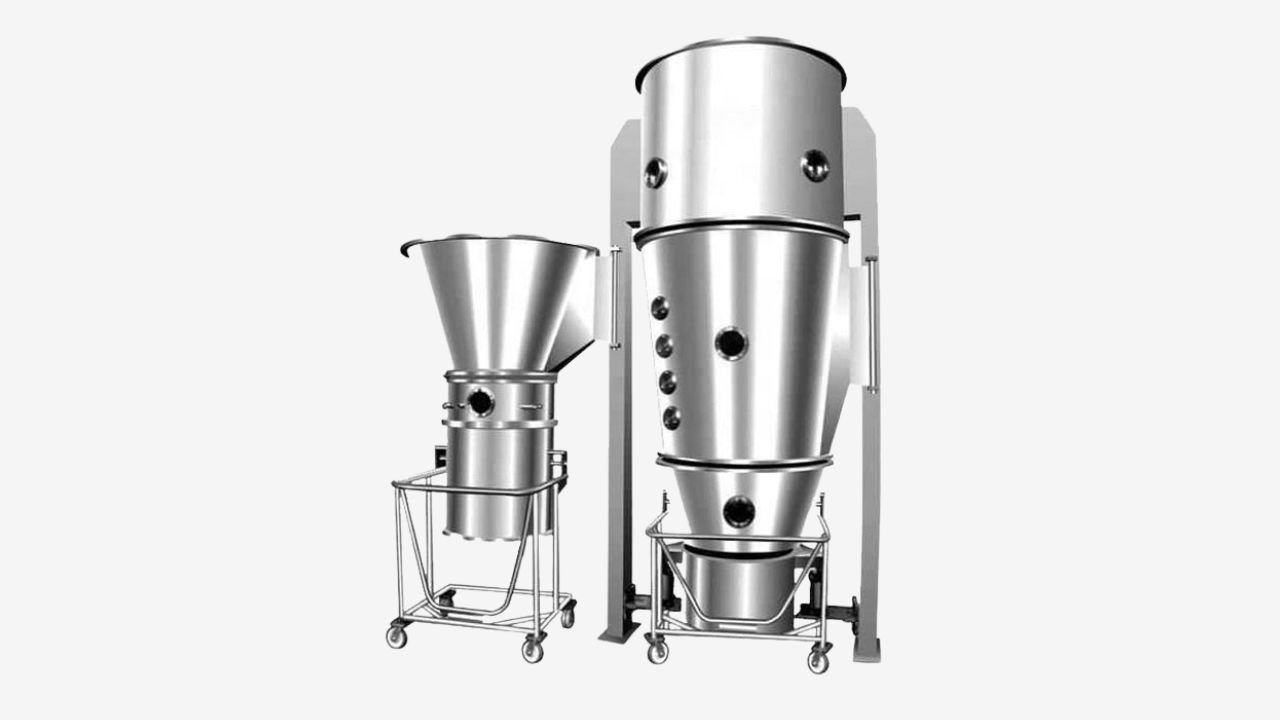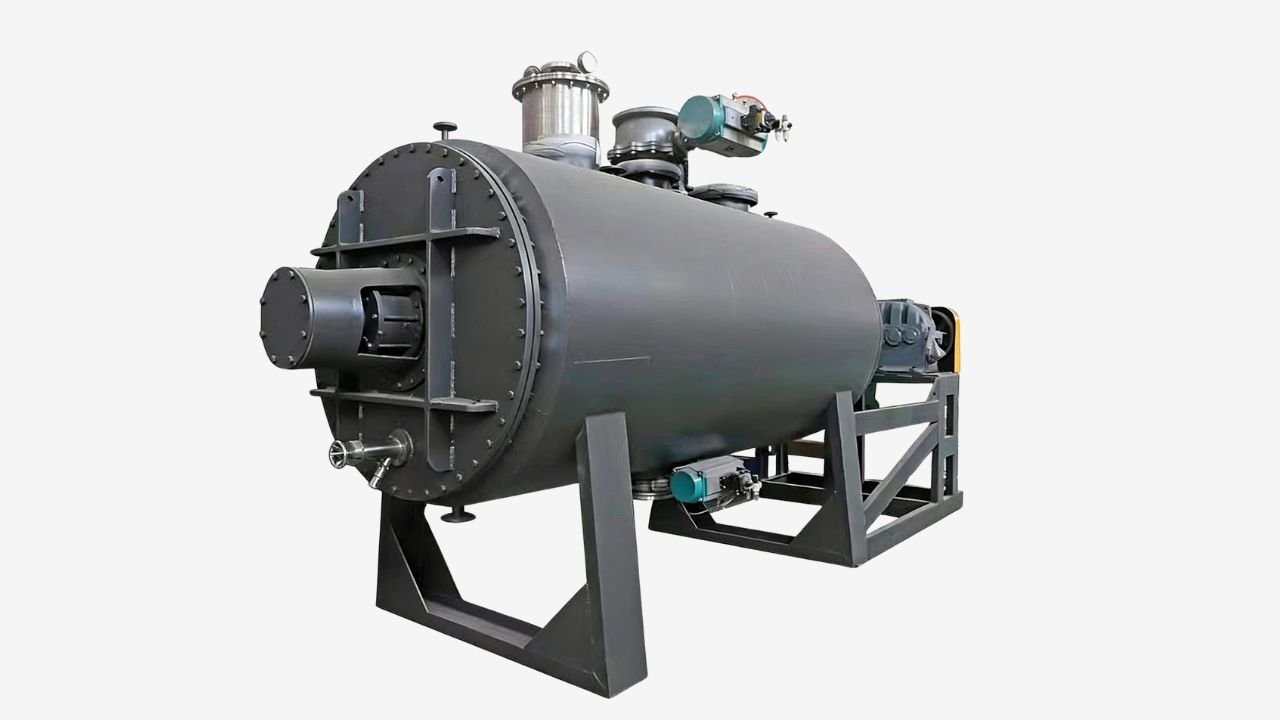
You know, the global demand for dehydrated foods, drugs, and generally dry materials seems to skyrocket every day. With this growth, you need drying systems that dry your stuff quickly, uniformly, yet keep them of high quality.
One drying system that does these and more is a flash dryer.
But is a flash dryer worth investing your money in?
Let’s find out.
What Is a Flash Dryer?
A flash dryer is a type of industrial dryer that removes moisture from materials that need to be dried. A flash dryer can dry powders, slurries, cakes, pastes, and so on.
A flash dryer dries using a high-velocity stream of hot air. Flash drying exposes the wet material to this increased stream of hot air which can immediately evaporate the moisture off the wet material.
To complete drying the materials, the flash dryer spreads out the drying material into fine particles. After spreading, the force of the hot air suspends the particles in the drying air.
With the increased velocity of hot air, the flash dryer dries your materials in a flash; the flash dryer dries literally within seconds! This speed makes flash drying one of the fastest thermal drying methods ever developed and used in processing industries.
Some of the industries that prioritize the use of flash dryers want a drying system that:
- Has a very fast moisture removal
- Makes powder of consistent quality
- Does not easily break down
- Can easily be controlled temperature-wise especially for heat-sensitive materials
- Can continuously process wet materials
- Has a high result and operational yield
Flash dryers dry rapidly and uniformly, and they only minimally degrade drying substances by the heat. Hence, they are mostly used to dry food that will become powders, chemical and pharmaceutical powders, herbal extracts, and to process biomass wastes amongst other uses.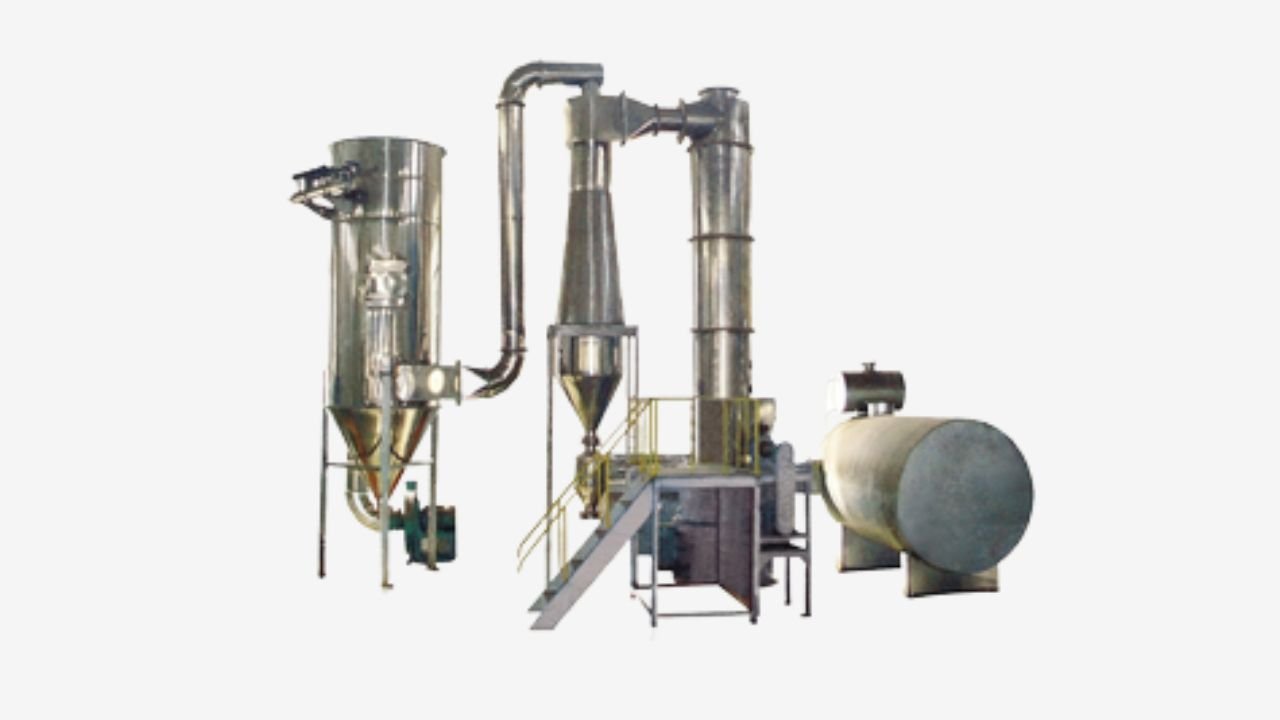
Key Components of a Flash Dryer
The major components of a typical flash dryer are:
● Air Heater
This is the component that heats the air to a temperature you set. And depending on your choice of flash dryer, air heaters may use electricity, gas, steam, or even run on furnace oil.
● Feed System
This is the part of the flash drying system that controls how much material enters the flash dryer at a time. The feed systems of a flash dryer may be a simple rotary valve, a screw feeder, a pump, or a pneumatic conveyor.
● Drying Chamber
The drying chamber (or drying duct) is where the high-velocity hot air comes in close contact with the wet materials for the removal of moisture. Think of it as where the “dry in a flash” magic happens.
A drying duct may be horizontal or vertical depending on the model.
● Disperser
Breaks cakey, pasty, or lumpy ingredients into particles to increase surface area and improve the material’s contact with the hot air.
● Cyclone Separator
It may come as a bag filter in some machines, and it collects the finely dried particles from the air stream.
● Exhaust System
Expels the cleaned waste or exhaust air safely into the environment.
● Control Panel
It is a part of the flash drying system that allows you to control, monitor, or automate the drying process.
How Does a Flash Dryer Work?
No, flash dryers do not work similarly to other common drying systems such as tray dryers, rotary dryers, or oven dryers.
While most common drying systems depend on conduction (which is way slower) to dry, flash dryers dry in three summarized steps: first, high heat transfer, then the instant drying phase, and suspension of the drying materials in the drying air.
These steps are more reliable, and they make flash dryers a better option if you do bulk industrial production.
So here is the step-by-step working principle of a flash dryer:
Step 1: Material Feeding
This is the point where you feed the wet material into the drying chamber of the flash dryer. Wet materials in the forms of slurry, cake, or powder are most often dried with a flash dryer. And since the quantity you are drying or the type of flash dryer is different, you may use a screw feeder, pump, or conveyor to do this step.
Step 2: Hot Air Generation
Remember the flash dryer dries with hot air? After you place the wet materials in the drying chamber, you close the system. The air heater of the flash dryer raises the temperature of the system to the temperature you set.
Step 3: 1st Drying Phase
Although the temperature is efficient for drying, the drying materials must be separated first for faster results. Now, this is the job of a disperser. The disperser breaks the material into smaller particles for easy drying in the drying chamber.
Step 4: Flash Drying Proper
The drying materials are now in particulate matter, so moisture evaporates off all sides of the particles. The moisture evaporates as the particles go through the drying duct.
Step 5: Separation
To avoid collecting more hot air than the actual drying materials, there is a cyclone separator which looks a lot like a bag filter. This bag filter separates dried particles from the exhaust air.
Step 6A: Collection of Dried Product
The dried powder is collected at the end of the cyclone separator of the flash dryer, and it is ready for packaging or further processing.
Step 6B: Exhaust Air Treatment
From the cyclone separator still, the air, which is called the exhaust air, goes into a system where it is cleaned. After cleaning, it is released into the environment.
Basic Types of Flash Dryers
There are two major types of flash dryers: the pneumatic and spin flash dryers.
1. Pneumatic Flash Dryers
The pneumatic flash dryer is the more common type of flash dryer that manufacturers use and produce. It uses high-velocity air to convey the wet materials through the drying chamber. As the materials move, the hot air also dries the materials through the drying chamber or duct.
The pneumatic flash dryer is best for drying materials that you want in powder form. They are ideal for powders, small particles, and free-flowing materials.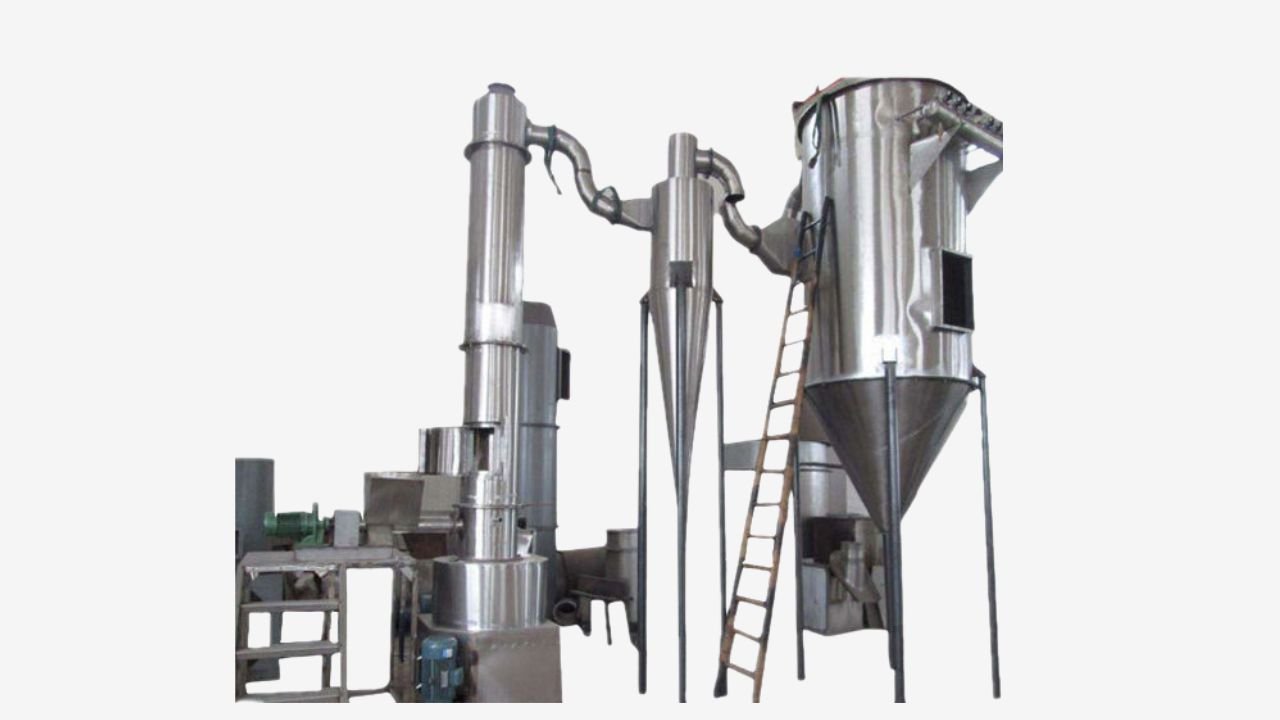
2. Spin Flash Dryers
Spin flash dryers work rather differently as they are designed to dry sticky, pasty, or viscous materials. The disperser component disperses lumps of the drying material to improve the rate of drying. Like the pneumatic flash dryers, spin flash dryers produce fine and uniform powders as their end results too.
Advantages of Flash Drying
Flash dryers are better for drying because
- They have a very fast drying time. This means that with a flash drying system, you can get all forms of moisture out in seconds.
- Flash dryers are energy efficient as with a lesser them spent in trying and high heat transfer and retention, you minimize the consumption of energy.
- Flash dryers prevent overheating, so you can use them to dry heat-sensitive materials too
- Flash dryers maintain the color, aroma, flavor, activity, and stability of the things you dry.
- You can use flash drying systems for large-scale production and drying.
Limitations of Flash Drying
Although powerful, flash drying has some limitations:
- Pneumatic flash dryers (which are by far the most commonly produced) do not dry very wet or sticky materials well. Hence, you may need to pre-dry or go for the spin flash dryers
- Some materials need to be preprocessed before you dry them
- Initially on the expensive side to purchase.
Applications of Flash Dryers Across Industries
● Food Industry
Flash dryers are used to dry foodstuffs like potato starch, rice flour, protein concentrates, vegetable powders, spices, seasonings, and so on.
● Chemicals and Petrochemicals
Flash dryers are also used to dry petrochemical derivatives including pigments, catalysts, polymers, and other intermediates.
● Pharmaceuticals
Flash dryers are used to dry heat-sensitive active ingredients, drug excipients, herbal extracts, granules, and so on.
● Biomass and Waste Management
Flash dryers are used to dry bio matter, wood shavings, sawdust, bagasse, organic wastes and agricultural residues, biomass fuels, and so on.
How to Choose the Right Flash Dryer for Your Production
Since flash dryers are perfect for industrial processing, selecting the right kinds of flash dryers:
1. Material Characteristics
Know the kind of material you are dealing with. Is your material a powder, slurry, or paste? Is it sticky, heat-sensitive, or abrasive? Knowing the kind of material it is will help you choose.
2. Needed Output
How many tons per day or kilograms per hour do you expect from the flash drying system? When you know how much you will produce, you can adequately determine the dryer size and airflow rate.
3. Energy Efficiency
You should go for a flash dryer that has add-ons that maximize and optimize energy efficiency and heat recovery.
4. Temperature Control?
Flash dryers that have temperature control systems you can preset yourself are a big plus. You’d enjoy this feature more if you deal with heat-sensitive ingredients.
5. Safety Features
Look out for flash dryers that are sturdy and safe. Check for explosion-proof designs, dust control features, shutoff systems, thermal protection, and so on.
6. Total Cost
Flash dryers are pricey, but some are more expensive than others.
So, aside from the price of purchase, check for the installation, energy use, maintenance, and lifecycle value over time too. Does it suit what your business can make do with?
If it does, you should go ahead regardless of the initial cost.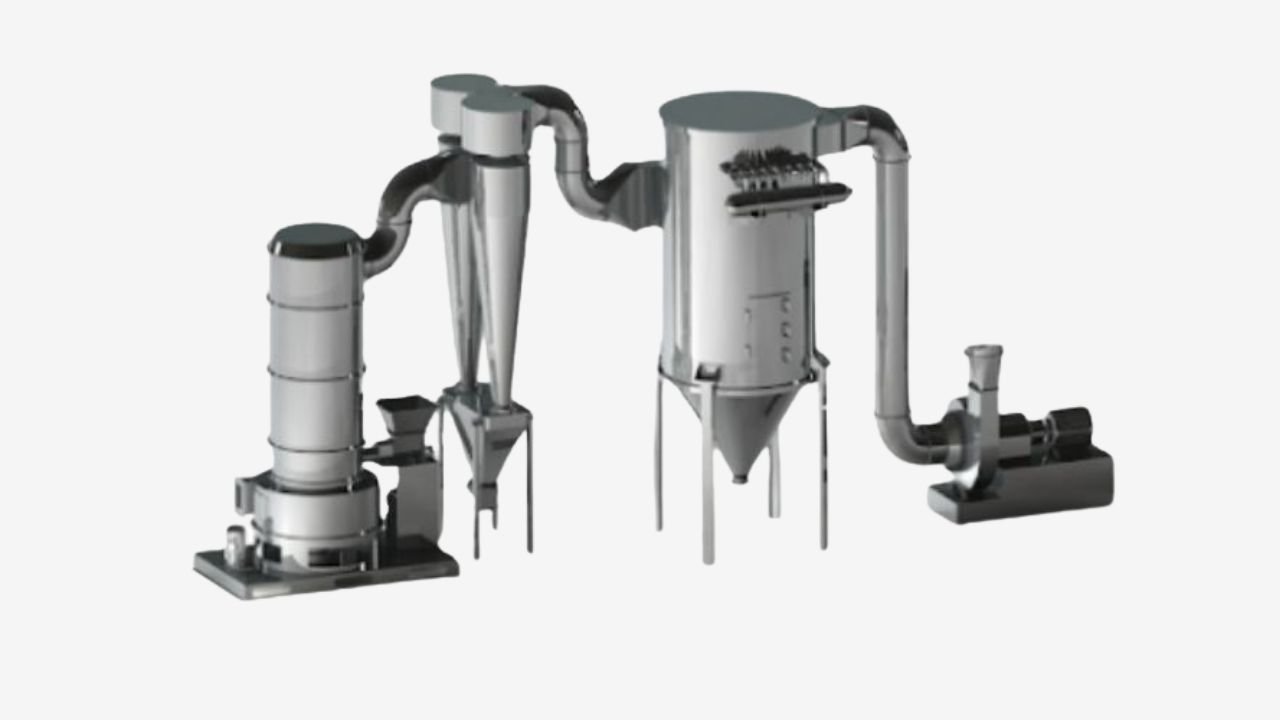
FAQs
Can I use a flash dryer for heat-sensitive materials?
Yes, you can. The temperature of flash dryers are controlled, so they are ideal for drying heat sensitive and active ingredients including extracts and powders.
How fast does a flash dryer work?
A flash dryer dries in a flash, and it happens in about 3 to 10 seconds, depending on the material type and how much moisture the material contains.
What materials cannot be dried with a flash dryer?
You can not dry very sticky or viscous materials or materials with high moisture content that you will have to pre-dry.
Why is it called a flash dryer?
Manufacturers call a flash dryer a flash dryer because it removes moisture from a material almost instantly.
What is the energy consumption like?
Luckily, flash dryers rapidly transfer heat, and they have a short residence time while drying in the chamber. As a result, flash drying systems are way more energy-efficient than other traditional drying systems.
Does flash drying affect product quality?
No, flash drying does not affect the quality of your dried product. When you properly control the heat and temperature, it retains the flavor, color, aroma, and activity of the food or drug you are drying.
Why Choose FanQun Flash Dryers?
At FanQun, we deal with the production and distribution of efficient and durable flash drying systems. So whether you need to dry powders, pastes, or heat-sensitive materials on a large scale, FanQun flash dryers deliver excellently for your business to thrive better.