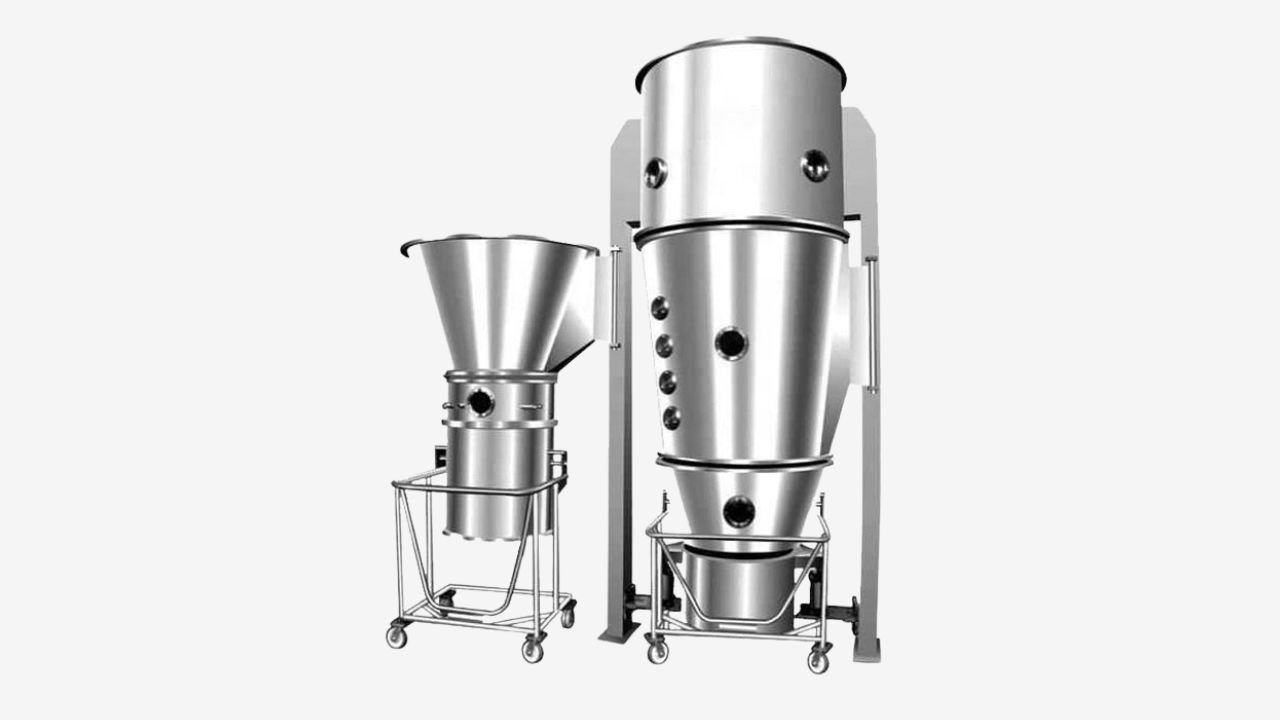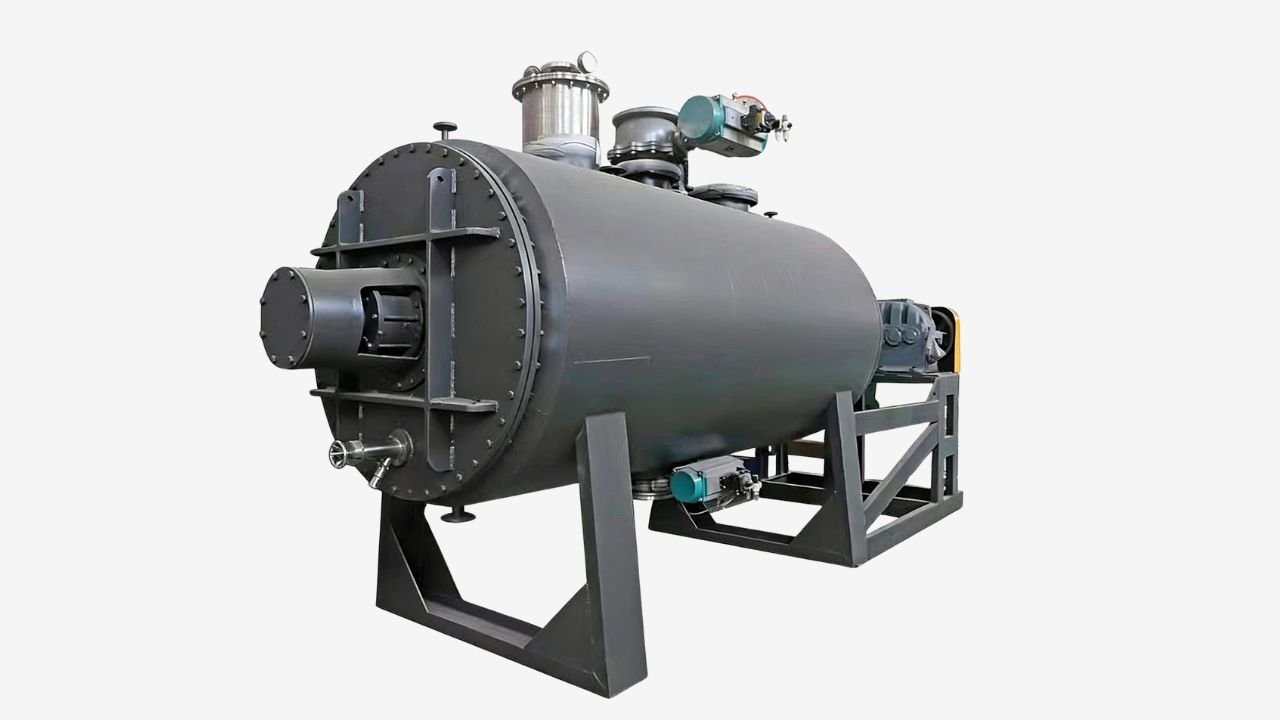
Before the emergence of drying equipment, exposure to intense sunlight and traditional heating methods were used to dry food and medicinal materials. These methods totally rely on the environment. Freeze drying and vacuum drying make it possible to extend the shelf life of food without losing nutrients. So, for industrial mass production, which one should be chosen? This article will teach you how to distinguish between freeze drying and vacuum drying systematically.
What is Freeze Drying?
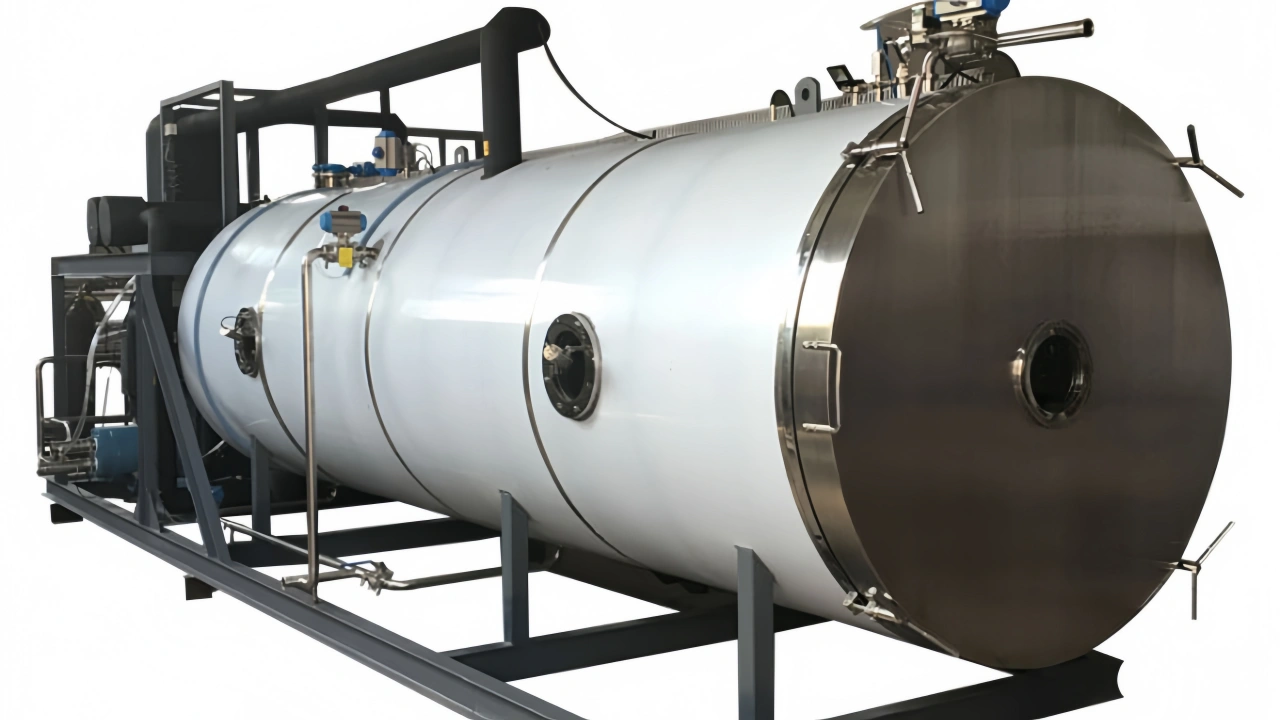
Freeze-drying is the process of placing your material in a -40℃ to -80℃ drying chamber , the free water within the material will turn into ice crystals, and the vacuum level in the drying chamber will be lowered to allow the ice crystals to sublime. Once this process is complete, your materials will still contain 5%-10% bound water. Bound water is primarily associated with proteins and polysaccharides and is difficult to freeze, therefore, a two-stage drying process is required. After the two-stage drying, the moisture content of the material will drop to below 1%.
What is Vacuum Drying?
Vacuum drying applies the principle that the boiling point of water decreases as pressure drops. Firstly, the drying chamber needs to be evacuated. Then, gradually raise the temperature to 30-80℃ , the water in the material will be evaporated. The whole process is the transformation of a liquid into a gas.
Key Components of Freeze Drying Equipment
Drying Chamber
Drying chambers are required for both primary and secondary drying , the entire space features excellent sealing, can withstand negative pressure, and is equipped with an observation window.
Refrigeration System
The core part of freeze-drying equipment is the refrigeration system , it provides a low-temperature environment and is also responsible for capturing the large amount of water vapor generated during the sublimation process in the cold trap. 1 kg of frozen water produces 1 kg of water vapor; the water vapor must be removed to maintain the vacuum environment within the drying chamber. The refrigeration system includes components such as a compressor, a condenser, and an evaporator.
Heated Shelf System
The heated shelf system’s primary task is to supply heat during primary and secondary drying. Materials are placed on the shelves , during primary drying, the shelf temperature is adjusted to approximately 20°C to allow the frozen ice crystals within the material to sublime. During secondary drying, the shelf temperature is raised to 40–60°C to remove the remaining bound water from the material.
Vacuum System
The vacuum system causes frozen water to sublime by reducing the ambient pressure to the range of 10–100 Pa. A vacuum system typically consists of vacuum pumps, vacuum piping, valves, and other components. There are various options for vacuum pumps , the rotary vane vacuum pump is a common choice, capable of achieving an ultimate vacuum of 0.5–5 Pa at a low cost. Other options include dry vacuum pumps and Roots booster pumps, allowing you to configure components based on your materials’ characteristics.
Key Components of Vacuum Drying Equipment
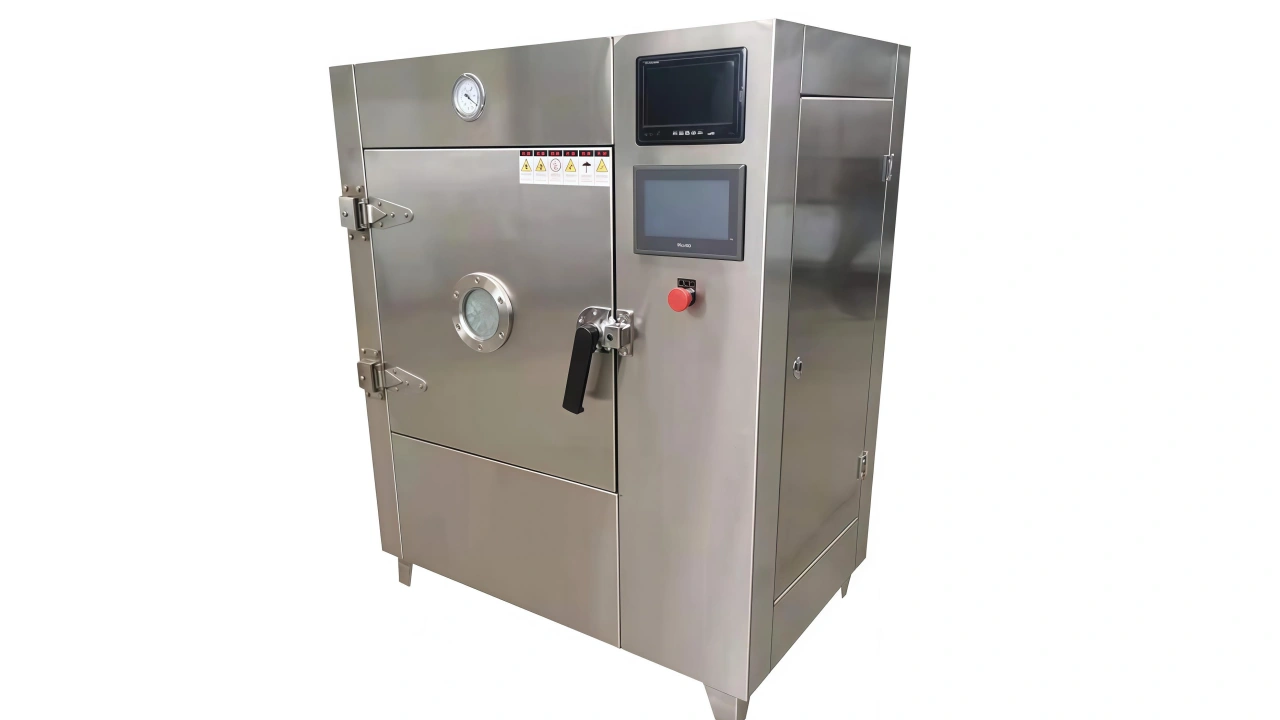
Drying Chamber
The whole process of vacuum drying is totally in the drying chamber. The chamber is completely sealed, and the entire unit is constructed from stainless steel, ensuring corrosion resistance.
Heating System
The Heating system is an important part of vacuum drying equipment. It effectively enables moisture to evaporate from the material, working in tandem with the vacuum system to complete the drying task.
Vacuum System
Water has a boiling point of 100℃ and requires 101.3 kPa.The vacuum system maintains the pressure within the range of 5–30 kPa, corresponding to a water boiling point of 30–70°C. This allows the moisture in the material to evaporate rapidly with only slight heating, making the process highly suitable for heat-sensitive materials.
Vacuum Drying vs Freeze Drying: Key Comparisons
The following table summarizes our comparison of key parameters for vacuum drying and freeze-drying equipment, based on our experience:
| Parameter | Freeze Drying | Vacuum Drying |
| Temperature | Low temperature | Higher temperature |
| Drying Time | Longer | Shorter |
| Energy Consumption | Higher | Lower |
| Equipment Cost | Higher | Lower |
| Operating Cost | Higher | Lower |
| Product Quality | Excellent structure preservation | Good quality preservation |
| Production Scale | Small to medium scale | Large industrial scale |
| Automation | High | High |
Energy Efficiency:
The process of a vacuum drying machine is faster and more energy-efficient, so it is suitable for large-scale continuous production. The material in the freeze-drying process needs to remain in a fixed position, in its frozen state, it cannot be conveyed or stirred, and the process is unsuitable for continuous feeding, as doing so would compromise the product’s form. Therefore, continuous freeze-drying presents significant technical challenges and entails high energy consumption, making it suitable for small-to-medium batch production or high-value products.
Operating Costs:
Vacuum drying offers faster processing times and lower energy consumption, while also eliminating the need for a refrigeration system among the core components. The entire vacuum drying process typically takes a few hours, whereas freeze-drying consists of freezing, primary drying, and secondary drying that usually requires tens of hours or even longer. So, all in all, freeze-drying entails higher costs for both operation and maintenance compared to vacuum drying.
Final Product Quality:
Freeze drying is better than vacuum drying in preserving product flavor and texture, especially high-quality food and pharmaceuticals. The freeze-drying process is gentler, resulting in a porous structure, low density, and low moisture content in the dried product. Consequently, the product rehydrates more easily and has a longer shelf life,when placed alongside fresh food, it is difficult to distinguish visually. Conversely, products dried under vacuum have high density and moderate moisture content, so their flavor and color are inferior to those of freeze-dried products.
Comparison of Applications: Vacuum Drying vs Freeze Drying
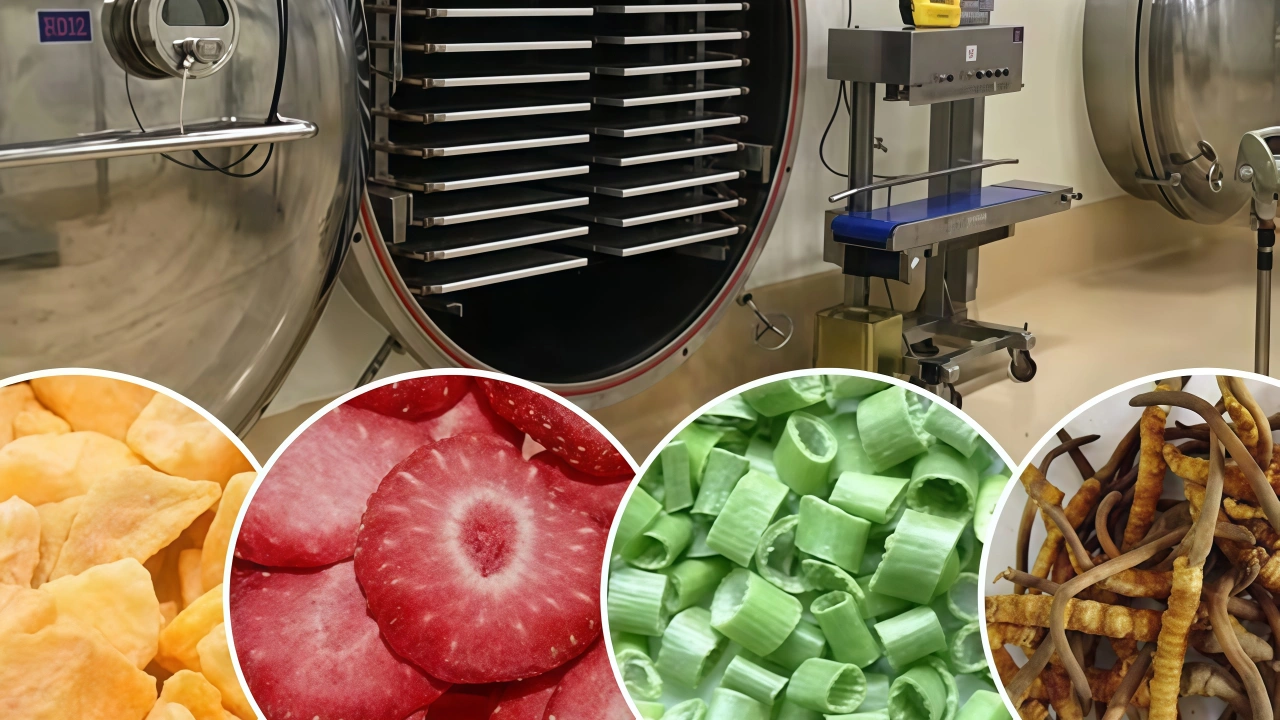
A freeze-drying machine is suitable for pharmaceutical intermediates, active pharmaceutical ingredient (API) powders, etc. Raw materials of this type typically need large-scale continuous drying rather than small-batch processing. Freeze-drying, on the other hand, is suitable for products such as vaccines and cell-based preparations that require preservation of biological activity and cellular structure. Both drying technologies have their respective strengths in the pharmaceutical industry.
Food industry
A freeze-drying machine offers distinct advantages in preserving the flavor, color, and shape of food,for instance, this technology is used for common products such as freeze-dried fruits and vegetables. Products such as seasonings and fruit or vegetable powders are processed using vacuum drying. In contrast, conventional hot-air drying, where hot air comes into direct contact with the material, can lead to a partial loss of nutrients in the finished product. Vacuum drying allows moisture to evaporate at lower temperatures; the process is gentler than hot-air drying, and low temperatures generally help preserve product quality.
Chemical & material
Freeze-drying is a gentle process for porous materials; it preserves their microstructure and properties, ensuring that the finished product retains its performance characteristics after drying. Vacuum drying is used for materials such as chemical powders and catalysts; chemical reactions occurring during this process generate substances such as water and ethanol. Vacuum drying removes residual solvents at low temperatures by lowering the boiling point; furthermore, since chemical materials are typically produced on a ton scale, vacuum drying makes large-scale production easier to achieve.
Biotech
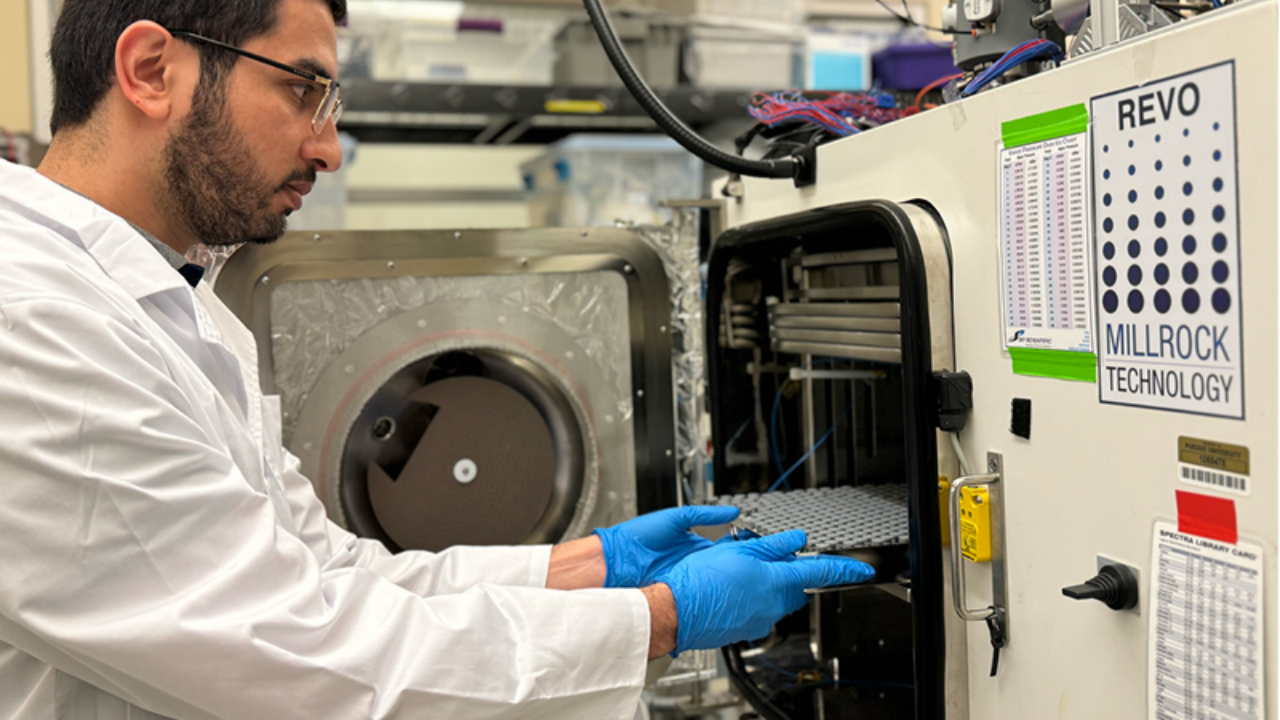
In the biotechnology industry, the application of vacuum drying is relatively limited compared to freeze drying, while vacuum drying is suitable for stable, non-viable protein materials and biological extracts, most biological materials are extremely sensitive to temperature. Freeze-drying maintains low temperatures throughout the process, thereby maximizing the preservation of biological activities, such as those of enzymes and probiotics, and enhancing microbial survival rates.
How to Choose Between Vacuum Drying and Freeze Drying?
Freeze-drying selection requirements
- When evaluating freeze drying equipment, it may seem expensive, leading you to consider vacuum drying as an alternative. However, this perspective is limited. The key first step is to understand your material’s characteristics before selecting drying equipment. If you operate in sectors such as biopharmaceuticals, microbial products, or high-end food processing, your materials are typically high-value and heat-sensitive, making low-temperature freeze-drying the appropriate choice; an incorrect selection could result in the total loss of the product, far outweighing any potential cost savings.
- If your product requires a very low moisture content, specifically, a final level of less than 1%, freeze drying ensures the stability of its molecular structure. Such low moisture levels allow for long-term storage. Certain fruits and vegetables can even be preserved for years while retaining their original color and shape.
- The products which requiring structural integrity and rapid rehydration. The freeze drying process minimizes the shrinkage and structural damage of cells, resulting in a product with an internal porous structure; these pores allow for rapid rehydration. A feature of great interest to industries such as food and pharmaceuticals.
Vacuum-drying selection requirements
- If your material is moderately heat-sensitive and it can withstand temperatures between 30°C and 100°C, you might consider vacuum drying. This method is gentler than hot-air drying. It minimizes color changes, preserves nutritional content, and prevents product denaturation caused by high heat.
- For products where appearance is not a primary concern, the priority is not preserving the original shape or achieving perfect color, instead, the focus is on efficient moisture removal and large-scale production. Examples include fruit and vegetable powders and seasonings, vacuum drying reduces their moisture content to 3%–8%, which meets basic quality and storage requirements.
- For a factory with a limited budget that meets the two aforementioned requirements, choosing vacuum drying over freeze-drying is indeed far more cost-effective in terms of both operating and long-term maintenance expenses.
There are slight differences between the two technologies, freeze-drying excels at preserving nutritional value, making it ideal for high-value products. Both processes offer unique advantages tailored to different needs, so you can make a choice based on your specific requirements.
The Future of Vacuum Drying and Freeze Drying
Vaccines and cell therapies are expected to experience significant growth in the coming years. Due to their high value and stringent requirements for cell viability, freeze-drying will continue to be an essential technology. As energy costs rise, customers are becoming more conscious of energy consumption and carbon emissions. As a result, future vacuum drying equipment and freeze drying equipment will increasingly incorporate technologies like energy recovery to lower operating costs while ensuring environmental protection.
Fanqun has extensive experience in producing drying equipment, consistently maintaining a leading position in the industry. If you are looking to upgrade equipment or scale up production, you might consider Fanqun. Our team of engineers is available 24/7 to provide you with free solutions.
FAQ
1.How do I choose between a laboratory freeze dryer and a vacuum drying oven?
A laboratory freeze dryer and vacuum drying oven are both used for small-batch trials, the application scenarios differ slightly. One involves freeze-drying samples, while the other involves sample dehydration. The specific differences are essentially the same as those between industrial freeze dryers and vacuum drying equipment , you can make your choice based on your needs.
2.How can I shorten the freeze drying cycle without affecting product quality?
The freezing part is a critical factor influencing the duration of the freeze-drying process, accounting for approximately 60% of the total time. The overall drying process can be accelerated by increasing tray surface area, reducing the loading thickness, and controlling ice crystal size.
3.Where can I buy a freeze drying machine for home use?
A home freeze-dryer is typically sufficient for food preservation and is designed to be user-friendly for individual consumers and small-scale operations. In contrast, laboratory and industrial freeze-dryers are more expensive and complex, requiring precise adjustments, making them suitable mainly for businesses and research institutions with specific production needs.