
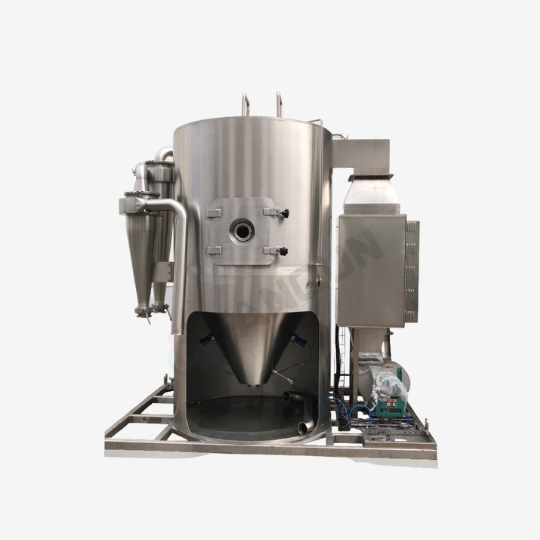
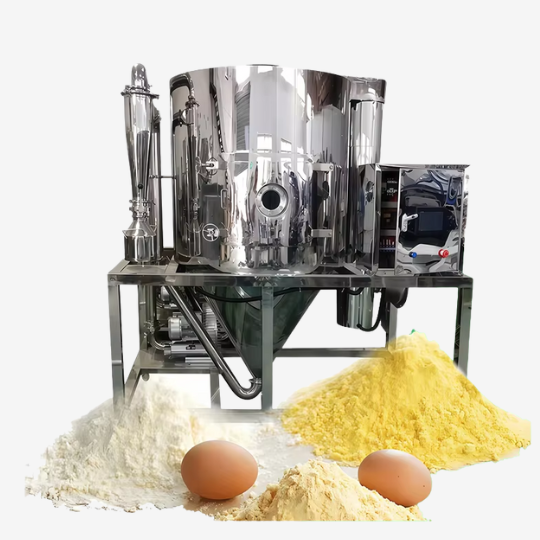
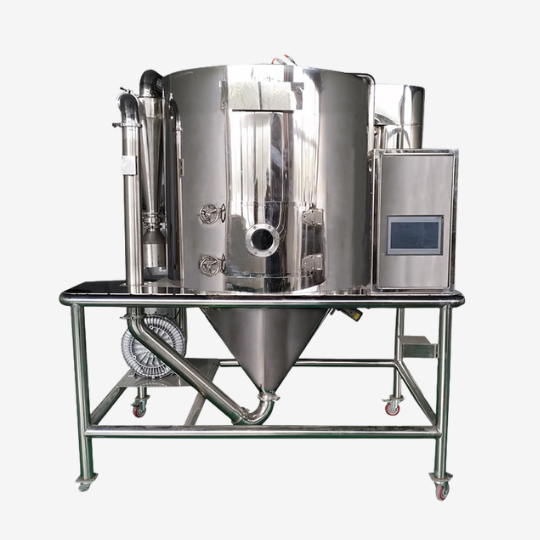
Features of FANQUN Spray Dryer in Food Industry
FANQUN Spray Dryer, specifically designed for the food industry, realizes consistent quality in every batch through stable drying performance and verifiable hygienic design. Contact us today for your exclusive FANQUN custom solution!
- High-speed nozzles control the droplet size in the range of 80–200 μm and are appropriate for food formulations like milk powder, coffee powder, and juice powder.
- FANQUN minimizes wall adhesion and fine powder loss through internal airflow optimization and multi-stage collection structures, which render the system suitable for a high-sugar or high-solids system.
- FANQUN spray dryer is made of SUS 304/316L stainless steel in order to meet food regulations.
- Removable panels, CIP wet cleaning design reduces downtime while meeting GMP hygiene requirements.
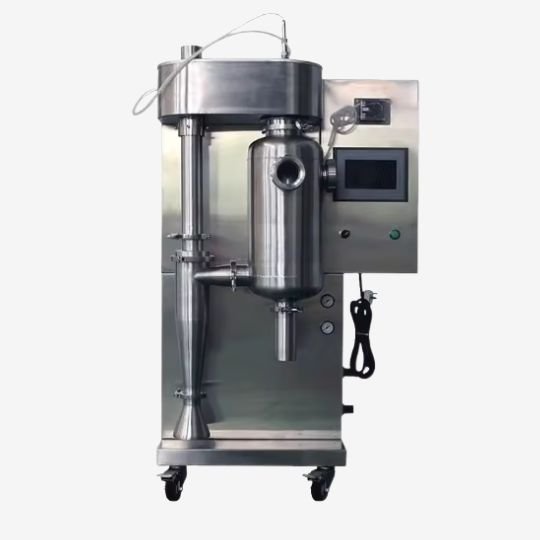
The drying speed is fast. The surface area of the raw material liquid increases significantly after atomization, allowing 95%–98% of the moisture to be evaporated instantly.
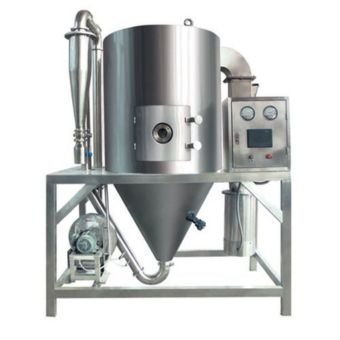
A high quality low consumption yet high efficiency industrial pressure type spray dryer for food processing with a continuous automatic drying.
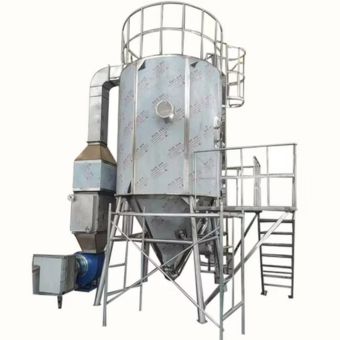
A carbon steel material high efficiency spray dryer for food with a 1000 liter maximum production capacity per batch and a multifunctional and energy saving features.
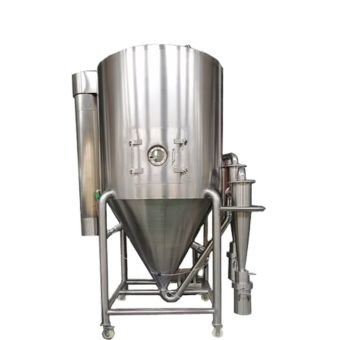
A multifunctional 99kW power whey protein solution powder spray dryer with customizable voltage and high productivity feature available.
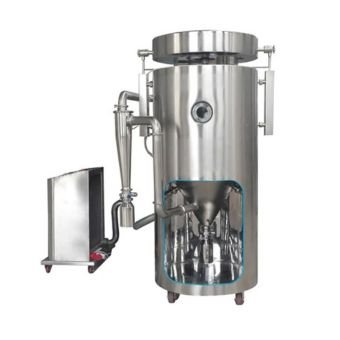
An oil heating low consumption yet high efficiency food processing pressure spray drying machine with customizable voltage and size and dimensions to fit your company’s needs.
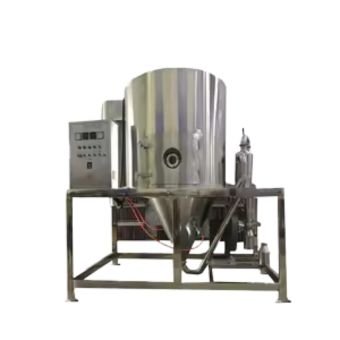
An automatic and multifunctional stainless steel material industrial egg powder spray dryer with customizable kW power and voltage available.
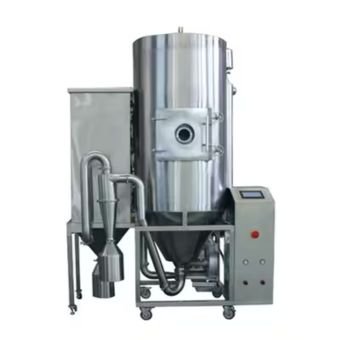
A multifunctional 2000 kilogram maximum production capacity milk powder spray dryer with customizable heating options and customizable voltage and kW power.
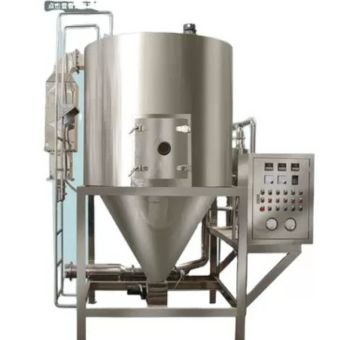
A gas heating automatic and multifunctional industrial spray dryer for food powder with customizable voltage and customizable size and dimensions.
What is a Spray Dryer?
High-speed atomization in FANQUN spray dryers changes liquid foods into minute droplets, which are then instantly dried in hot air to directly yield free-flowing powder. This allows the food production process to be continuous and stable.
Why does the Food Industry Need Spray Dryers?
With the increasing scale and cross-regional sales of the food industry, manufacturers have to consider not only the flavor of products but also the transportation, storage, and shelf life. Liquid or paste-like foods deteriorate quickly even at ordinary temperatures, and refrigeration can maintain stability for no more than a short period of time.
The technology of spray drying transforms liquid raw materials into free-flowing powders by a process involving high-speed atomization and instantaneous drying. These features reduce the water activity significantly, inhibiting microbial growth and oxidative reactions, which means that products can be stored at room temperature for extended periods.
In addition to increasing product stability, spray drying for dairy products, coffee, juice powders, or seasoning powders maintains consistent solubility and flavor. This enables processing companies to achieve continuous production and standardized output.
Working Principle of Spray Dryers
The operating principle of spray dryers can be divided into four steps: atomization, drying, recovery, and exhaust.
Step 1: Atomization
Liquid feed material enters the drying chamber through a nozzle or a centrifugal atomising disc where the material is dispersed into micron-sized droplets.
Since smaller droplets have a bigger evaporation surface area, full contact with hot air allows for rapid drying.
In the food industry, the most common configurations are pressure nozzles and centrifugal atomizing discs for products such as dairy, juice powders, and plant extracts.
Step 2: Drying
Atomised droplets come in contact with hot air inside the drying tower at a two-step drying process:
Constant rate drying stage: In this period, the moisture at the surface of the material evaporates rapidly, and an outer shell structure forms.
Decreasing-rate drying stage: the internal moisture diffuses and expels slowly inside, forming hollow or dense particles gradually.
This microscopic drying process imparts excellent flowability and solubility to spray-dried powders.
Step 3: Recovery
Airflow carries the dried powder into the collection system.
FANQUN spray dryers use a cyclone separator in tandem with a baghouse dust collector to facilitate efficient recovery over a wide particle size range.
The larger particles are separated by the cyclone separators, while fine powders are caught by the bag filtration system. This will generally enhance recovery and reduce loss.
Step 4: Exhaust Ventilation and Exhaust Gas Treatment
Exhaust gases are discharged after dust removal and filtration, or undergo heat recovery.
Food-grade systems would include:
- HEPA filtration to avoid secondary contamination
- Wet cleaning, with assistance from CIP, ensures hygiene in equipment.
- Removable or mirror-finish structures to reduce wall adherence and residue.
Only the treated clean gas is discharged while the powder stays within the recovery system.
Key Components of Spray Dryers
Nozzle System
The first step to spray drying is atomization. At the nozzle, the liquid is dispersed into micron-sized droplets, which is very important for particle shape and redissolving properties.
The food industry generally aims for a range of 100–200 μm: droplets small enough for rapid contact with hot air, yet not so fine that they adhere to the nozzle walls.
Nozzles mainly come in single-fluid and two-fluid versions.
- Single-fluid high-pressure nozzles: Appropriate for low-to-medium viscosity food formulations, these nozzles depend entirely on pressure for atomization in order to obtain more homogeneous particles.
- Two-fluid nozzles: Use compressed air for assisted atomization; they are thus more appropriate for high-sugar or high-solids feeds like plant protein powders and coffee creamer.
Spray Drying Chamber
Droplets enter the drying chamber where they meet the hot air. Surface dehydration with protection of a shell is formed fast, then continued internal moisture diffusion results in the formation of stable powder particles.
In other words, this process, besides water reduction in food ingredients such as dairy products or juice powders, determines whether particles are plump or hollow, keep their free-flowing properties at room temperature, and could provide for rapid redissolution.
FANQUN drying chamber materials SUS 304/316L stainless steel or high-borosilicate glass meet food hygiene standards. Polished inner walls and conical bottoms minimize adhesion of high-sugar/ high-protein formulations, improving recovery rates while reducing microbial risks.
Powder Collection System
Dried powder enters the collection system via airflow, itself a direct factor affecting product recovery.
In this respect, one widespread type of combination is a cyclone separator followed by bag filtration.
- Cyclone Separator: Used to recover primary particles, enabling powder purity maintenance.
- Bag Filtration: It captures fine particles, minimizing losses of coffee powder, formula powder, or plant protein powder in the exhaust air.
For high-value powders, this graded collection can raise recovery rates consistently in the range 97–99%, reducing waste and improving batch-to-batch consistency.
Hot Air System
Spray drying requires stable, clean hot air. Inlet temperature controls the evaporation rate, while outlet temperature specifies the final moisture content of the powder. Any imbalance in either affects flavor, color, and storage stability directly.
FANQUN uses multi-stage filtration before hot air goes to the drying tower, including HEPA filtration to reduce particulate and bacterial risks.
To the manufacturers of milk powder, fruit powder, or seasoning powder, stable hot airflow translates into fewer recipe adjustments and long-term stability of the equipment.
CIP Sanitizing System
In food production, hygienic reliability is more important than drying speed. Spray dryers contain intricate surfaces such as nozzles, tower walls, and piping where manual disassembly for cleaning risks residue and cross-contamination.
The CIP system utilizes spray balls and circulating wash to cover the entire process without disassembly, very important for sensitive products like dairy and infant formula. It ensures microbial indicators in each powder batch stem from process consistency and not from cleaning errors.
Classification of Spray Dryers in the Food Industry
Counterflow Food Spray Dryer
Product flow is contrary to the flow of hot air, which is suitable for heat-resistant food ingredients. Provides high thermal efficiency, but it is less gentle than co-current systems for sensitive products containing heat. Example: dairy
Co-current Food Spray Dryer
Material moves downward with the flow of hot air, hence it becomes the most common choice for heat-sensitive food products like milk powder, coffee powder, protein powder, etc. High inlet temperatures become quickly toned down as the product quickly moves out of the high-temperature zone, maintaining color and flavor stability.
Semienclosed Food Spray Dryer
Partially recirculates the air for reuse, saving energy consumption and dust emission. Applicable for big production facilities with higher requirements on the environment.
Closed-Loop Food Spray Dryer
The fully closed system, using nitrogen in most applications as the conveying medium, allows the safe processing of oxidizable, flammable, or high-sugar-content food formulations like seasoning powders and functional powders, therefore increasing the product stability significantly.
Food Spray Dryer-Open Circuit
It uses a normal air inlet and outlet system with a simple structure, mainstream in most general food powder, such as maltodextrin, fruit powder, and egg powder, therefore, it is easy to maintain.
Two-Stage / Two-Level / Two-Phase Food Spray Dryer
The first spray dries into powder, then undergoes secondary drying via fluidized bed, thus giving substantially lower final moisture content. It is suitable for products requiring higher bulk density and low moisture, like instant milk powder, nutritional powders.
Single-stage food spray dryer
Classic configuration for sprays and dries in one pass. Suitable for food formulations with moderate solid content and non-extreme moisture requirements.
Horizontal Food Spray Dryer
Equipped with a horizontal drying chamber for easier and more flexible control of hot air flow. More suitable for high viscous or wall sticking food formulations. It is usually employed for special starches, plant extracts etc.
Vertical Food Spray Dryer
Vertical material flow through the drying chamber characterizes the most common configuration, which stably adapts to various products, from dairy to coffee powder and nutritional powders. Its mature structure and excellent cleanability make it a universal model in the food industry.
Advantages of Spray Dryers in the Food Industry
Instant Drying
Of all the drying methods, spray drying is the quickest. In spray drying, when a liquid is exposed to hot air, 65-98% of the liquid evaporates within 5-15 seconds, and so it appears to occur very quickly. This is very important when working with dairy, juices, and most plant-protein liquids, which are very heat-sensitive.
Uniform Structure
Spray-dried powders are more rounded and more free-flowing, and also faster to re-dissolve. In fact, the particle size achieved is also beneficial to several manufacturers producing milk powders, coffee powders, and various seasoning powders. This provides a finer texture to the reconstituted mixture and ensures the packaging also remains stable, and thus, no caking problems are to be faced.
High Recovery Rate
Atomization and optimal airflow inside the tower enable avoidance of adhesion of liquids high in sugar and viscosity to the drying chamber, so high powder recovery and low drying loss are assured when producing dairy products, plant extracts, and sugar-containing products.
Preservation of Natural Flavor
The ultra-short drying time further restricts exposure to high temperatures, which is very helpful in retaining the aroma and flavor of the heat-sensitive ingredients such as dairy, plant proteins, and coffee extracts. This could turn out to be a strong USP branding point for you.
Strict Moisture Content Control
Spray drying enables control over the end moisture content by inlet and outlet temperatures, thereby ensuring consistency. Spray drying is used to produce milk powder to health-promoting powders, and it protects different properties in each, including powder flow and storage stability.
Meet GMP Compliance
In maintaining a closed system employing filtered hot-air drying, the FANQUN Spray Drying Equipment basically eliminates dust generation and achieves easily accessible food-grade levels of cleanliness. The design is amenable to certification and export.
Continuous Production
Since the process is one single function, commencing right after feeding and atomization up to the point of drying and then finally to the point of collection, on long runs of milk powder, protein powder, and solid beverages, productivity is increased and labor costs are also reduced.
Applications of Spray Dryers in the Food Industry
Spray dryers are almost universal in food processing, whether it be dairy, fruit and vegetable powders, or a variety of functional formulations. FANQUN technology accelerates the drying process, enhances the recovery of powder, and maintains flavors, therefore making your production steadier and more efficient.
| Food Categories | Typical Products | Common Process Parameters (Reference Range) | Advantages of Spray Drying |
| Dairy Products | Milk powder, infant formula, whey powder, cheese powder | Inlet Temperature: 150–200°C Outlet Temperature: 70–90°C Finished Product Moisture Content: 2–4% Particle Size: 80–150 μm Recovery Rate: ≥95% | Achieve stable particle morphology, preserve natural color and texture, and ensure excellent powder flowability. |
| Coffee & Beverage Powders | Instant Coffee, Juice Powder, Malt Beverage Powder | Inlet Temperature: 160–210°C Outlet Temperature: 80–95°C Finished Product Moisture Content: 2–3% Particle Size: 100–300 μm (Instant Grade) Recovery Rate: 93–98% | The powder is well-rounded and free-flowing, with low moisture absorption. |
| Fruit and Vegetable Products | Juice Powder, Fruit and Vegetable Powder, Plant Extract Powder | Inlet Temperature: 150–190°C Outlet Temperature: 75–90°C Finished Product Moisture Content: 3–6% (high sugar content) Particle Size: 50–120 μm Recovery Rate: 90–96% | Preserves natural color and aroma for use in beverages or baked goods |
| Starch and Grains | Rice flour, corn flour, protein powder, grain flour | Inlet Temperature: 160–200°C Outlet Temperature: 75–85°C Finished Product Moisture Content: 3–5% Particle Size: 60–150 μm Recovery Rate: Approximately 95% | Control gelatinization risks for a lighter texture. |
| Seasonings and Food Additives | Soup powder, meat extract powder, cheese powder, spice powder, egg powder, sauce powder | Inlet Temperature: 160–200°C Outlet Temperature: 80–95°C Finished Product Moisture Content: 2–5% Particle Size: 80–200 μm Recovery Rate: 92–97% | Reduce caramelization and browning while enhancing powder stability and shelf life. |
| Food Additives | Flavor Powders, Thickeners, Functional Additives | Inlet Temperature: 140–180°C Outlet Temperature: 70–85°C Finished Product Moisture Content: 2–4% Particle Size: 20–80 μm (depending on formulation) Recovery Rate: 90–97% | High uniformity, enhanced dissolution rate and stability |
| Egg Powder | Whole Egg Powder, Egg White Powder, Egg Yolk Powder | Inlet Temperature: 155–185°C Outlet Temperature: 70–85°C Finished Product Moisture Content: 2–4% Particle Size: 80–160 μm Recovery Rate: 96–98% | Easy to store and transport, minimizes off-flavors and flavor loss. |
How to Order a Food Spray Dryer?
There are several things to do:
Step 1: Identify Your Material
Various foods, such as dairy products, juices of fruits and veggies, vegetable proteins, and seasonings, have their respective viscosities, solid contents, pH, and surface tensions. We are eager to understand the specifics of materials used by each of you.
Step 2:Definition of Drying Goals
What is the final moisture level you are trying to achieve? Will the particles be more spherical, finer, or is it possible to achieve instant solubility? All of these answers will determine hot air temperatures and/or droplet sizes.
Step 3: Set Production Capacity
Equipment scale is determined by daily throughput. When it involves the continuous production of powders such as coffee and milk powder, we design bigger chambers and hot-air systems, bearing in mind two-stage drying and closed-loop circulation.
Step 4: Select the Automation Level
Stability, which is largely dependent on inlet and/or outlet temperatures, is of the utmost importance. Where mass production is assumed, automation regarding temperatures will self-regulate the evaporations, avoiding fluctuations of moisture. In addition, optional CIP cleaning and powder feeding systems will increase efficiency.
Step 5:Define Gathering and Sanitation Requirements
In the food sector, hygiene and rate of recovery are more important than speed. Choices could include:
- Main cyclone + bag filter combination achieving 97-99% recovery rate
- GMP-Compliant Enclosed Powder Collection System
- Clean hot air filtered by HEPA
- No Powder Cross Contamination between Drying and Finished Product Areas
All details regarding anti-adhesion and easy-to-clean facilities, and hygiene norms, shall be suited to the audit scheme adopted by your factory, which could be milk powder, egg powder, plant protein powder, and seasonings.
As a global leader, FANQUN provides stable and high-quality spray drying solutions to the food industry. Be it dairy or fruit and vegetable juices, our engineers will tailor the nozzles and hot-air systems to your material, thus assuring more uniform and controllable production.
CIP is standard due to residue risk. FANQUN provides retractable spray balls or spray rods for towers, pipelines and cyclones. Use alkaline or neutral food-grade detergent, let spray balls cover internal surfaces, then rinse with hot water. No tower disassembly required.
The coating of lecithin improves cold-water solubility in instant milk powder, plant protein powder, and instant beverage production. This system mixes the fine powder together with lecithin at the late drying step for fast wetting and dispersion, avoiding floating particles or clumping.
The size of the chamber depends on the particle size, residence time, and target moisture. Droplets must have contact with hot air for a long enough period without sticking to the walls or overheating.
If you’re unsure how to calculate the residence time versus tower diameter, let our engineers design the optimal size for your formulation and capacity.