
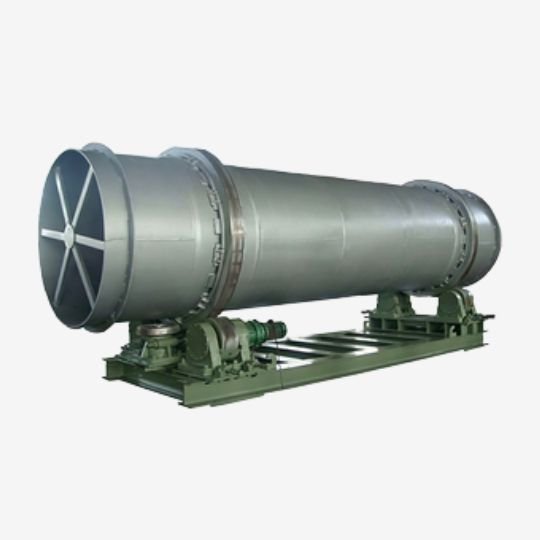
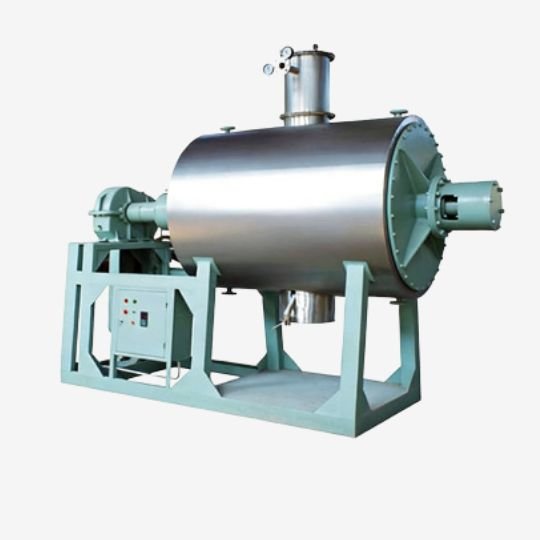
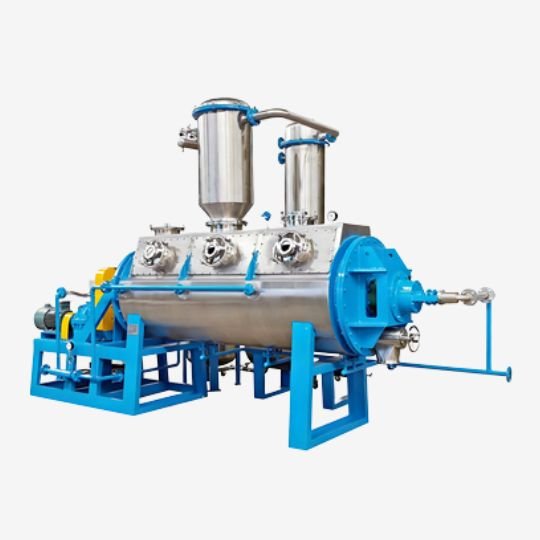
Features of FANQUN Rotary Vacuum Paddle Dryer
FANQUN Rotary Vacuum Paddle Dryer dehydrates the materials efficiently under low-temperature vacuum conditions and offers a quick, stable, and uniform drying solution for powders, slurries, and all other heat-sensitive materials.
- FANQUN Rotary Vacuum Paddle Dryer realizes uniform mixing during the whole process in vacuum and low-temperature conditions, without sticking of material on walls or forming hard lumps.
- Large-area heat-conducting paddles, combined with an oversized drum, are able to maintain continuous material agitation, keeping every particle well dried.
- Dual condensation and vacuum systems work in concert to provide near 95% recovery of your solvents, minimizing your emissions burden.
- Energy-efficient heat transfer design minimizes energy consumption from the heat source, which can maintain the thermal efficiency of 95% or more.
- The FANQUN Rotary Vacuum Paddle Dryer, fabricated in either stainless steel or Hastelloy, is suitable to efficiently dry highly corrosive materials such as strong acids.
JFQ-YQJ-ZK Vacuum Paddle Dryer
As an indirectly heated piece of equipment, the horizontal disc paddle dryer has been applied in the chemical industry, food industry, feed industry, dye industry, and sludge treatment for several decades. At present, the technology has become quite mature and holds a very high market share in the international market.
The horizontal disc paddle dryer is used for the indirect heating and cooling of pasty, granular, powdered, and slurry materials. The disc-type paddles inside the equipment feature a large heat transfer area and high heat transfer efficiency.
The main body of the horizontal disc paddle dryer consists of a cylindrical shell and a set of discs running through the center. The disc assembly is hollow, allowing the heating medium to flow through it and transfer heat indirectly to the material through the discs. The material passes between the discs and the shell, receives heat transferred from the discs, and evaporates moisture. The water vapor generated from moisture evaporation is carried out of the dryer by hot air.
The horizontal disc paddle dryer features low dust generation during operation and high safety performance. Each disc transfers heat on both the left and right sides, providing a large heat transfer area. The structure is compact, the overall dimensions are small, auxiliary equipment is minimal, and the system is simple. As the material inside the dryer is wet, fixed long scrapers are installed on the inner wall of the shell to prevent material from sticking to the discs. These scrapers extend into the gaps between the discs, serving to agitate the sludge and clean the disc surfaces. Low-temperature heat sources (≤180 °C) are used for heating, ensuring that material on the discs will not overheat during shutdown. Only a small amount of auxiliary air is required, resulting in compact exhaust gas treatment equipment. The disc dryer can be used for both semi-drying processes and full drying processes. Various heat transfer media such as steam and thermal oil can be used, providing a very good on-site environment. It features low power consumption, stable operation, low noise, and low labor requirements.
Features of JFQ-YQJ-ZK Vacuum Paddle Dryer
- Low Energy Consumption: the dryer heats materials through the paddles, shaft, and inner wall. Due to indirect heating, heat loss is minimal;
- Low Investment Cost and Small Footprint:a large heat transfer coefficient and high thermal efficiency shorten drying time, reduce equipment size, and decrease building area and space;
- Wide Range of Material Applications: it can process both heat-sensitive materials and high-temperature-resistant materials. Different heating media can be selected according to different materials. Common heating media include steam, thermal oil, hot water, and cold water. Continuous operation or batch operation is possible, with a wide range of applications;
- Low Environmental Pollution: air is used to carry away water vapor, resulting in minimal dust entrainment and easy exhaust gas treatment. For polluted materials or materials requiring solvent recovery, closed-loop circulation systems or vacuum disc dryers can be used;
- Low Operating Cost: under normal operation, only one operator is required. Low rotational speed and reasonable structure result in minimal wear and low maintenance costs.
Application of JFQ-YQJ-ZK Vacuum Paddle Dryer
- Organic Chemical Products:Polyvinyl chloride resin, polytetrafluoroethylene resin, maleic acid, anthraquinone, nitroanthraquinone, p-aminophenol, melamine, cyanuric acid, p-aminobenzenesulfonic acid, antioxidant 168, phenolic compounds, stearates, aniline, nitroaniline, dipentaerythritol, chlorinated paraffin, calcium formate, triethylenediamine, EDTA, rubber accelerators, sodium benzenesulfinate, isophthalic acid, sodium dimethyl pentasulfonate, thiourea, oil-soluble aniline black dyes, acid black dyes, indigo, and other organic chemical raw materials and intermediates.
- Inorganic Chemical Products:Light calcium carbonate, activated calcium carbonate, nano-scale ultrafine calcium carbonate, magnesium carbonate, sulfur concentrate, pyrite, copper-nickel ore, aluminum hydroxide, lime black, strontium carbonate, barium carbonate, potassium carbonate, lithopone, sodium dithionite, silica fume, barium sulfate, potassium sulfate, microsphere catalysts, magnesium hydroxide, copper sulfate, nickel sulfate, nickel amide, sodium molybdate, sodium chloride, cryolite, red iron oxide, nickel oxalate, cobalt oxalate, black iron oxide, lithium hydroxide, nickel hydroxide, zirconium hydroxide, calcium phosphate, sulfur, etc.
- Pharmaceuticals and Food:Ampicillin, Deng salt, L-phenylglycine and intermediates, cefamandole, ceftriaxone, metamizole, cimetidine, vitamin B12, vitamin C, pharmaceutical-grade salt, pharmaceutical aluminum hydroxide, pharmaceutical magnesium metasilicate, caffeine, tea, flower extracts, ginkgo leaf, cocoa powder, starch, corn germ, pharmaceutical raw materials and intermediates.
- Feed and Fertilizers:Potassium carbonate, bio-potassium fertilizer, protein feed, chlortetracycline for feed, mycelium, bran, distillers’ grains, grains, seeds, herbicides, cellulose, dicalcium phosphate for feed.
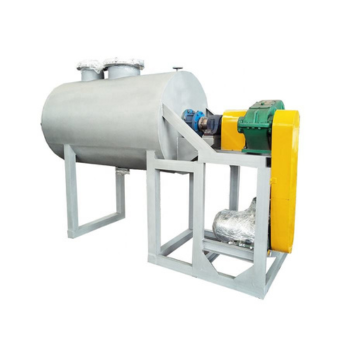
Suitable for liquid form, pastel of the lotion and powdery supplies. Requiring low temperature for drying.
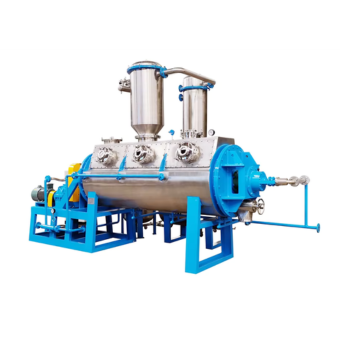
Continuous working type and moisture-proof. Ideal for paste, filter cakes, granules under vacuum condition.
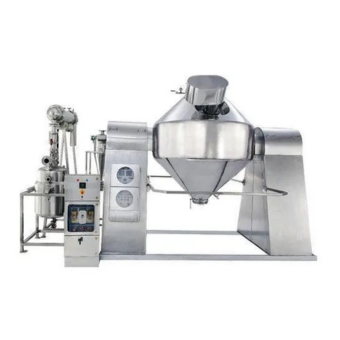
Low temperature drying under vacuum. Highly-efficient for uniform drying in a short time.
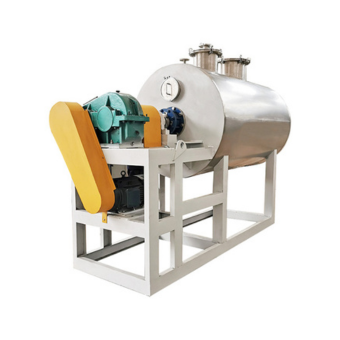
It is suitable for drying a small amount of mud and paste materials under a vacuum state.
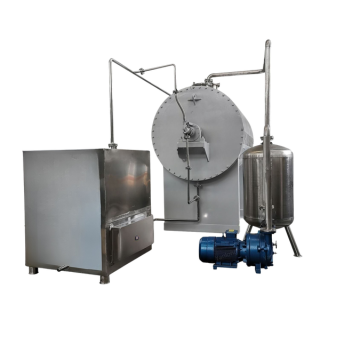
Good accessibility for inspection and cleaning purposes. Simple validation, automatic, and energy saver.
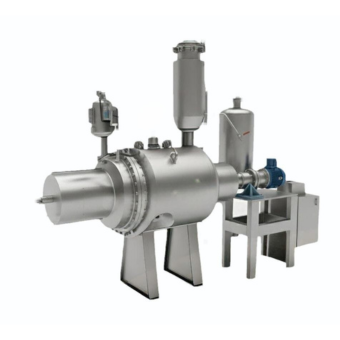
Automatic grade, glossy surface finish. It carries multiple operation in a single machine. Stainless steel grade material.
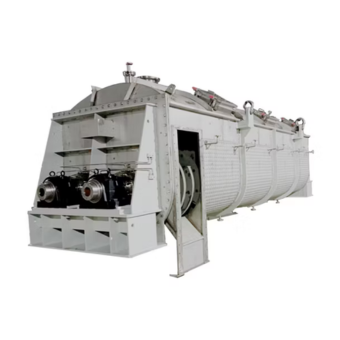
Agitation movement, parallel flow. Atmospheric operation pressure. Radioactive heating mode. We offer custom-make upon request.
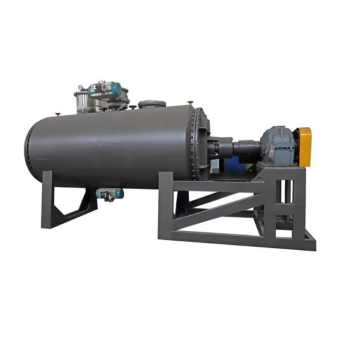
Large heat transfer area. Ensures uniform drying and mixing. Widely used in industrial sludge, chemicals and food.
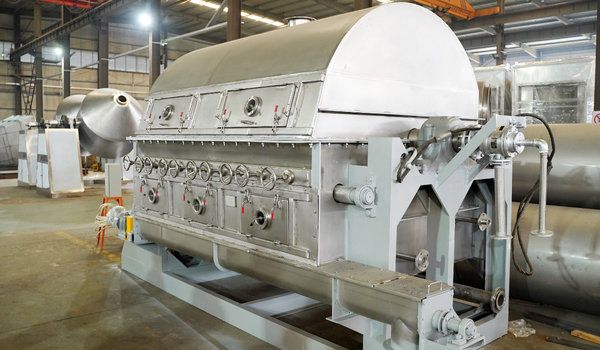
JFQ-YQJ-XZ Rotary Vacuum Paddle Dryer
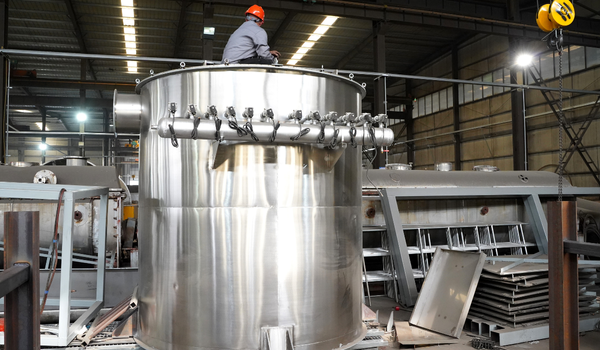
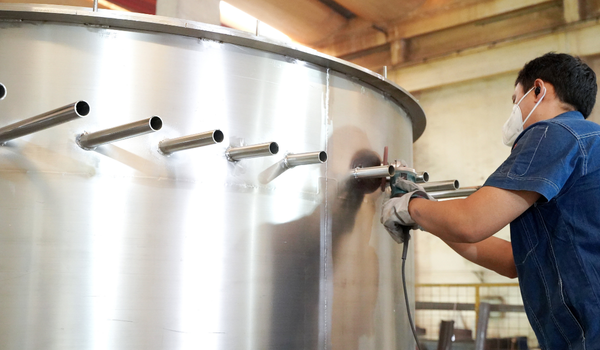
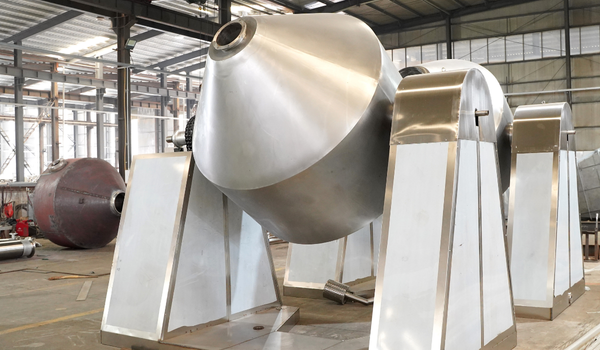
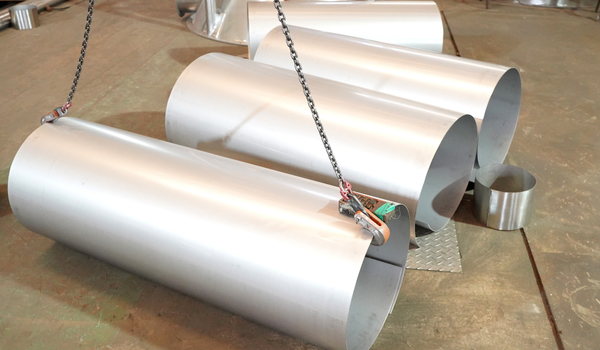
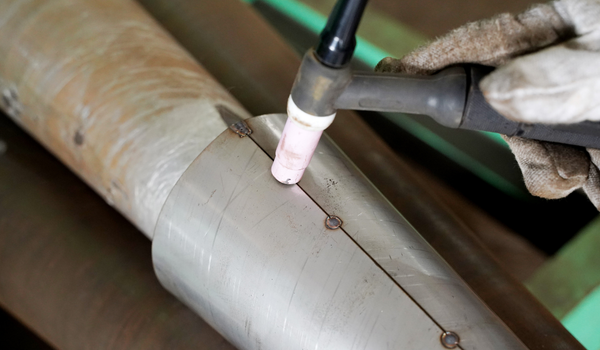
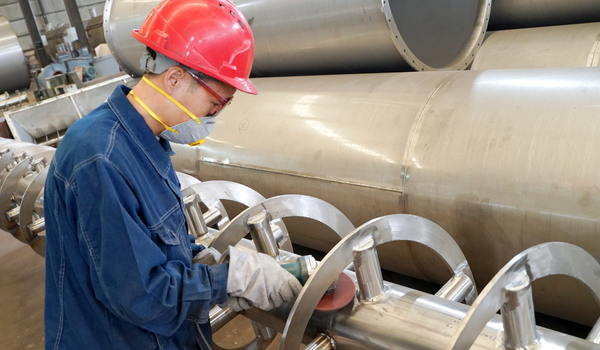
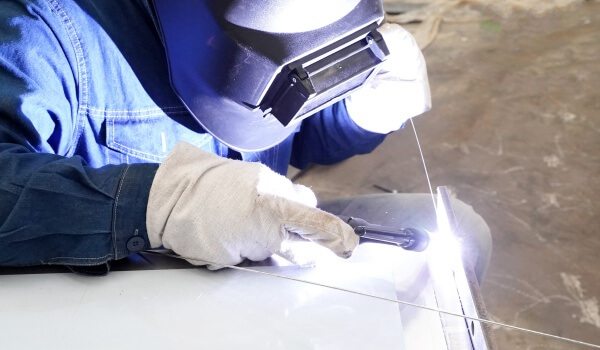
- Our Factory
- Technical Parameters
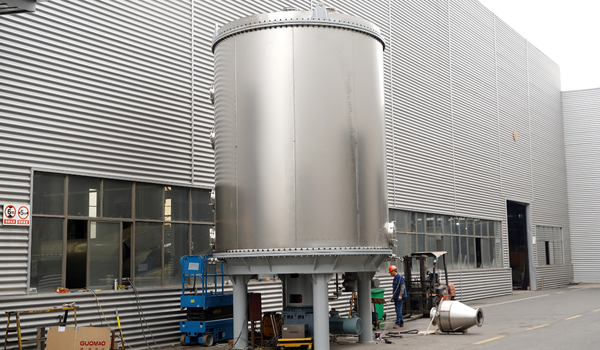
| Model | Power(kw) | Heat Transfer Area(m²) | Full Capacity(m³) | External Dimensions(L×W×H)(mm) |
| YQJ-30 | 15 | 30 | 1.97 | 5500×1300×810 |
| YQJ-50 | 18.5 | 50 | 3.27 | 5600×1600×1000 |
| YQJ-80 | 22 | 80 | 4.5 | 5200×1900×2700 |
| YQJ-100 | 30 | 100 | 6 | 6400×1900×2700 |
| YQJ-120 | 37 | 120 | 8 | 7200×1900×2700 |
| YQJ-150 | 45 | 150 | 9 | 6200×2500×3000 |
| YQJ-180 | 45 | 180 | 11.5 | 7500×2500×3000 |
| YQJ-200 | 55 | 200 | 15 | 9000×2500×3000 |
| YQJ-260 | 75 | 260 | 17.5 | 8600×2800×3300 |
| YQJ-300 | 75 | 300 | 20 | 10100×2800×3300 |
| YQJ-350 | 90 | 350 | 26 | 11000×3000×3650 |
| YQJ-400 | 90 | 400 | 30 | 11500×3200×3750 |
| YQJ-450 | 110 | 450 | 33 | 12000×3300×3950 |
| YQJ-500 | 132 | 500 | 36 | 12500×3400×4100 |
What is a Rotary Vacuum Paddle Dryer?
The rotary vacuum paddle dryer is a kind of industrial drying equipment for powders, slurries, crystals, and heat-sensitive wet material.
This equipment dehydrates materials gently in a sealed vacuum environment through the reduction of boiling points of moisture or solvents inside the material, thus preventing degradation, discoloration, or loss of activity caused by high temperatures.
How Does a Rotary Vacuum Paddle Dryer Operate?
The operation of a rotary vacuum paddle dryer can generally be divided into the following core steps:
Step 1: Turn on the Equipment and Create a Vacuum
After powering on, the stirring paddles start to rotate at low speed. Feed slurry or wet cake material into the drying cylinder and turn on the vacuum system to place the dryer, dust collector, condenser, and storage tank under vacuum conditions.
Vacuum reduces the boiling point of the solvent. Heating medium circulates through jacket and internal paddle channels into the equipment so that during agitation, the material comes in direct contact with the heated surfaces. The slow-rate evaporation thus starts.
Step 2: Conduction Heating and Evaporation
With continuous stirring by the agitator, the wet material constantly keeps in contact with the hot cylinder and paddle surface.
The heat flows into the material by conduction, slowly evaporating moisture or organic solvents. The resultant vapors are drawn out under suction through vacuum lines into the condensation system.
The vapor, after passing through the condenser, is cooled, turned into liquid, and then collected in the storage tank, achieving up to 95% recovery.
Step 3: Dynamic Adjustment and Stable Operation
Drying would require dynamic adjustment based on material properties for steam pressure, heat temperature, vacuum level, and condenser cooling water temperature.
FanQun generally presets process parameters and control logic for different materials, which ensures stable and uniform drying without wall sticking, caking, and uneven drying.
Step 4: Drying Completion and Discharge
When the material reaches the set final moisture content, heating stops and vacuum is released. The agitator then reverses rotation, pushing the dried powder or granules toward the discharge valve. The material is then conveyed through the discharge system for packaging or subsequent processes.
Key Components of Rotary Vacuum Paddle Dryers
Rotary vacuum paddle dryers mainly comprise the following key components, which work together to maintain efficient and stable operation during continuous 24/7 operation.
Horizontal Jacketed Cylinder — Creating a Stable Vacuum Drying Environment
The shell is a fixed horizontal cylindrical shell with an external jacket or coil for heating with hot water, steam, or thermal oil. All the drying processes take place either under vacuum or controlled pressure that allows for the dehydration at low boiling point, preventing thermal decomposition and handling heat-sensitive materials better. Even heat conduction over the surface area of the cylinder provides a uniform distribution of temperature and lays the basis for continuous drying.
Hollow Paddle Blades and Hollow Agitator Shaft — Maximizing Heat Exchange Area
The central heating mechanism of the rotary vacuum paddle dryer takes place in the hollow agitator shaft and in the hollow paddle blades. The heat medium moves directly through the interior part of the paddles, thereby turning the blades themselves into heating surfaces. The result of this is a double-surface heat exchange: cylinder wall + paddle surface.
The wide-surface paddle design gives more heating area than conventional agitators. This special arrangement continuously tumbles the material in contact to avoid prolonged contact between this material and high-temperature walls or surfaces that would cause scorching or caking.
Scraper Design — Self-Cleaning & Enhanced Heat Transfer Efficiency
Flexible scrapers at the blade tips cover the entire inner cylinder wall. These scrapers peel off adhered layers continuously during rotation and clean the heat transfer surfaces to keep high heat transfer efficiency. Fixed scrapers can be added when treating extremely viscous materials in order to clean the agitator body and prevent buildup.
Drive and Bearing System — Resisting Thermal Stress
The trunnions and bearings support the agitator shaft, which is driven by a motor + reducer + sprocket assembly. To mitigate thermal expansion stress, a floating bearing design is applied. Dual mechanical seals ensure high-vacuum operation, complemented by nitrogen purging and bag pulse cleaning to prevent dust backflow and contamination.
Vacuum and Condensate Recovery System — Enhancing Dehydration Efficiency
The system usually consists of two-stage tubular condensers, buffer tanks, and vacuum pumps.
Operating in the range of 300–2000 Pa, it efficiently removes vapor and recovers condensate at recovery rates of up to about 95%.
This not only accelerates drying rates but also reduces exhaust loads and solvent losses, better meeting environmental and energy utilization requirements.
Additional Operational and Maintenance Components — Minimizing Downtime
During extended batch drying cycles, the operators are mainly concerned with unstable equipment performance and post-operation cleaning challenges. With FANQUN, these pain points are addressed by equipping the rotary vacuum paddle dryers with a number of operational and maintenance components to reduce downtime and minimize manual intervention at the source.
- Crushing Rod: Automatically breaks up material agglomerates during drying
- Quick-Release Discharge Valve: Simplifies bagging and removal of material
- Vacuum-sealed discharge door: avoids secondary contamination.
- Thermal Insulation Jacket: reduces heat loss and increases energy efficiency for you.
These minor details directly decide whether equipment can work stably in the field. FANQUN incorporates them into standard design because we understand that industrial production is not laboratory testing-it requires a controllable, continuous, easy-to-maintain system. This approach enables us to serve customers worldwide across diverse operating conditions for the long term.
Advantages of Rotary Vacuum Paddle Dryers
High Efficiency
The rotary vacuum paddle dryer uses a hollow stirring shaft plus a hollow paddle design. The hot fluid heats up not only the cylinder but also directly transfers heat into the paddles and shaft.
While the volume remains the same, the effective area for heat exchange will be almost doubled. Material is constantly dispersed and put in contact with heating surfaces, minimizing resistance to heat transfer and greatly reducing drying time.
Low Energy Consumption
The vacuum environment is highly able to lower the boiling point of a solvent significantly. Water or organic solvents that typically require 90–120°C for evaporation can vaporize at just 30–60°C under conditions of vacuum.
No Caking
The blades rotate constantly inside the FANQUN Rotary Vacuum Paddle Dryer to lift, scatter, and renew the material surface, avoiding long-time adhesion to heating surfaces to form hardened lumps.
If localized caking occurs, the crushing bar immediately breaks it up, maintaining the flowability of the batch. This minimizes manual intervention and increases drying uniformity.
Reduced Oxidation and Volatilization
The drying process occurs within a sealed vacuum chamber, preventing material contact with external air.
This significantly reduces the risks of oxidation, discoloration, and degradation-especially important for fine chemicals and biomaterials. Pharmaceutical design options offered by FANQUN meet the GMP standards and provide sterile operations.
Heat Recovery
The condenser recovers evaporated moisture and heat from the container, which means:
- Organic solvents can be reused: directly reducing your material costs.
- Waste heat recovery: 95 percent thermal efficiency for the system is achieved.
Applications of Rotary Vacuum Paddle Dryers
Pharmaceutical Industry
Rotary vacuum paddle dryers allow dehydration or concentration at low temperatures in the production of pharmaceutical intermediates, APIs. It prevents high temperatures at the source, which could cause degradation or discoloration and loss of potency.
Continuous paddle agitation serves to prevent high-value materials from sticking to the walls or caking, ensuring uniform drying and discharge at the outlet for easy packaging and aseptic handling. In addition, the condensation section centrally recovers the solvent vapors-especially valuable for typical pharmaceutical solvents such as ethanol, isopropanol, and toluene-which decreases consumables and protects the environment.
Fine Chemicals
Rotary vacuum paddle dryers are especially versatile when handling resins, pigments, catalysts, additives, or high-solids slurries. Multifunctional in processing capability, the range extends beyond drying into crystallization, post-reaction treatment, and recovery of solvents, making them a quintessential chemical process unit.
Food Industry
In the food industry, much emphasis is placed on heat sensitivity and flavor retention. Boiling point reduction enables the rotary vacuum paddle dryer to dry at low temperatures, which maintains the color, aroma, and activity of ingredients such as yeast and protein powders. The process is conducted within a completely sealed chamber, preventing air oxidation and microbial contamination, and minimizing volatilization losses for you. This makes it particularly suitable for high-value-added nutritional supplements and functional food bases.
As a globally leading manufacturer of rotary vacuum paddle dryers, FANQUN has always focused on providing users with steady and reliable drying equipment together with professional technical support.
All critical components are subjected to performance and durability testing in our in-house laboratories for long-term stability in structural integrity, sealing, and heat transfer. Every design conforms strictly to cGMP and FDA requirements, making our equipment suitable for regulated industries such as pharmaceuticals, fine chemicals, and food processing.
If you need any specific product-related drying solutions, we are waiting for you at any time. FANQUN’s engineering team will make thorough assessments and recommendations according to your exact process requirements.
Our machinery supports the heating range from 20°C to 300°C. Whether it is the processing of heat-sensitive materials or requiring high temperatures to hasten evaporation, appropriate operating conditions are found within this range. Actual temperature matching will depend upon the heating medium used-hot water, thermal oil, or steam-and product characteristics.
The standard recommended loading is 40%–60% of the total volume. This enables adequate space between the paddles for material agitation while ensuring a continuous contact with the heat transfer surface, hence improving drying efficiency, avoiding clumping or retention. Specific gravity, flowability, and viscosity may need minor adjustments in loading rate for different materials. We will advise on exact recommendations in the project phase.
Absolutely, with decades of expertise in the industrial-grade rotary vacuum paddle dryer solutions, FANQUN customizes the design according to your process requirements, from overall dimensions and heating methods to vacuum systems and material grades. For either pharmaceuticals, fine chemicals, or food materials projects, we provide an end-to-end service: from conceptual design and manufacturing to delivery and commissioning.