Certain pasty products or products with relatively higher moisture contents can be impractical to package or even consume.
They necessitate a significant reduction in their moisture content, and since some are quite sensitive to heat, specialized machinery is required. Paddle dryers are often the solution, and this article shows you exactly how they turn pastes and sludges into compact, usable goods.
What is a Paddle Dryer?
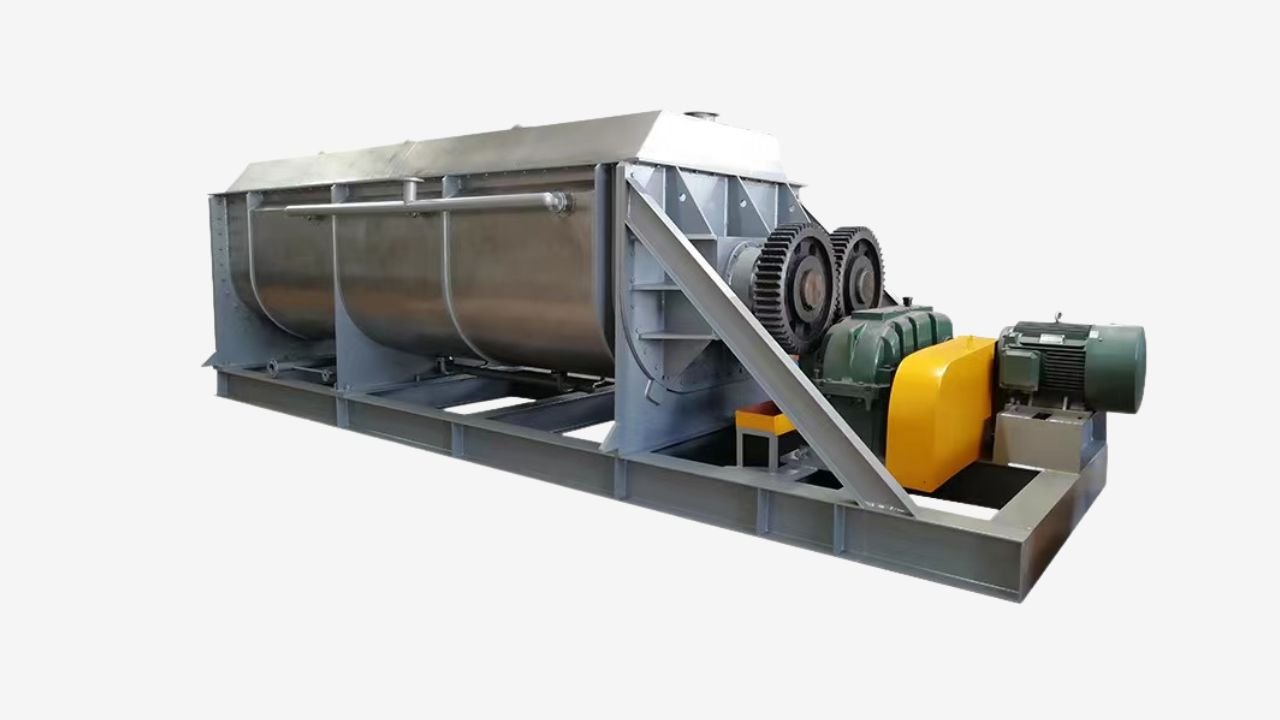
Paddle dryers are essential secondary production equipment, often used to reduce the moisture content of pasty or sludgy materials. They feature rotating paddles, which apply heat to the respective materials indirectly, consequently drying them within several minutes or hours. Their use spans multiple industries, particularly industries specializing in heat-sensitive products like pharmaceuticals and food products. 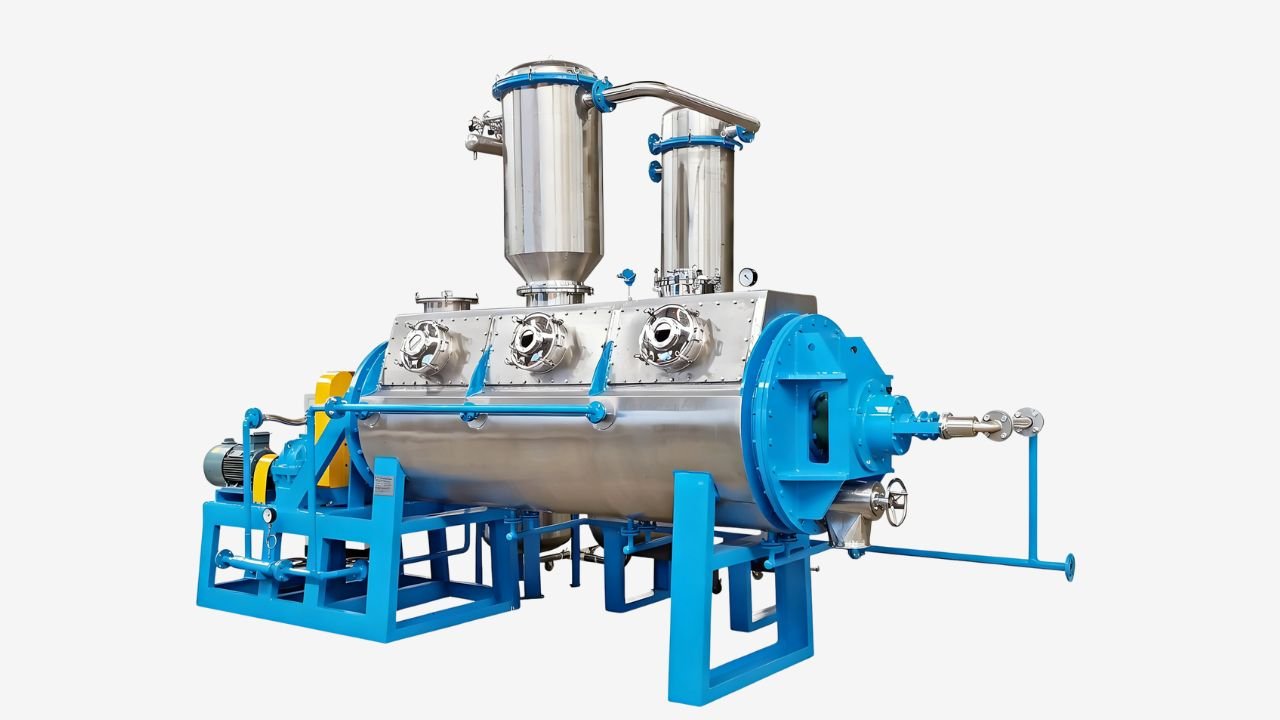
Key Parts of Paddle Dryers
| Parts of Paddle Dryers | Function |
| Drying Trough | A jacketed shell that houses the dyer’s inner components, including the heating and cooling mediums. |
| Paddles | Bladed tools that keep rotating while mixing the material undergoing drying. |
| Drive System | A drive unit tasked with powering the rotation of the paddles. Often comprises the gearbox and the motor. |
| Paddle Shaft | Supports the paddles and rotates them to facilitate the desired agitation. |
| Discharge Mechanism | Often, exit valves that provide a way out for the dried products. |
| Heating Source | A heating system that provides heat to the trough and paddles. This heat is then used to evaporate the moisture in the raw materials. |
| Cooling System | Gets rid of the excessive heat in the dryer, consequently protecting the integrity of the heat-sensitive materials being dried. |
How the Paddle Dryer Works
· Feeding of the Moisturized Material
The material to be dried is loaded onto the paddle dryer, particularly through the inlet feed. This is often done by hand, but in automatic industrial paddle dryers, the feed is driven into the paddle trough by a dedicated conveyor system. The material should be loaded in controlled portions to facilitate uniform drying.
· Constant Stirring of the Material
As the wet material gets into the trough, it is evenly distributed along the trough’s inner walls as the paddles stir it. In addition to distributing the feed material uniformly, this continuous agitation by the paddles ensures that all the material’s particles are subjected to sufficient heat, consequently creating high-quality dried products.
· Controlled Heating
Once in the trough, the sludge or pasty materials are subjected to heat. However, this heating is indirect. It is transferred from a heating medium, most often steam, which runs through the jacketed trough walls.
As this happens, the paddles keep rotating, consequently agitating the feed. These paddles have thermic fluid flowing in them, meaning that they also contribute greatly to the heat application process.
· Solvent Evaporation:
The application of heat, albeit indirectly, goes on for a while, often spanning several minutes or hours. Once the boiling point of the harbored solvents is reached, they vaporize, consequently isolating the dry materials. The vapor is then collected and ejected from the paddle dryer. Where possible, it is redirected into the production process, resulting in lower production costs.
· Discharge of the Dried Products
After the desired moisture content has been achieved, the dried product is carefully driven out of the paddle drying machine. It is then loaded into a packaging system or taken to the next production stage. The bed is then readied for the next drying cycle.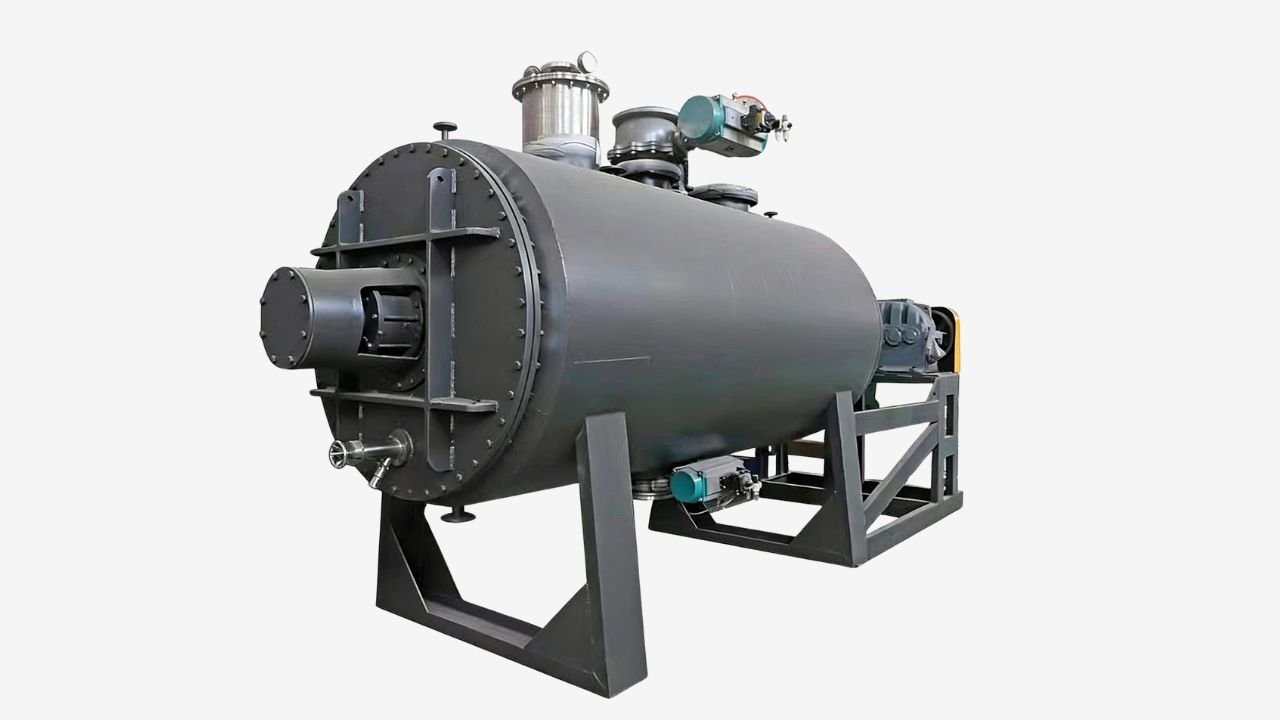
Factors Affecting the Efficiency of the Paddle Drying Process
- Heat Transfer Area:A trough design that leaves a large surface area for your feed facilitates the drying of more material within shorter timelines.
- Paddle Design:Utilizing hollow paddles filled with steam or any alternative heating medium supplements the heating applied by the trough jacket, thus lowering the residence time significantly.
- Heating Medium:Although hotter heating mediums, such as steam, promise faster residence time, they can damage overly fragile materials.
- Operating Pressure:Paddle dryers equipped with vacuum operation facilitate the drying of sensitive materials at relatively lower temperatures since they induce evaporation at comparatively lower boiling points.
- Material Characteristics:Materials with a relatively higher amount of solvent may demand higher heating temperatures and also take longer to dry.
- Filling Level:The fill level should not exceed 70% of the trough volume. This ensures that the paddles have sufficient space to agitate the feed material during drying.
FAQs
What is the difference between a paddle dryer and a fluid bed dryer?
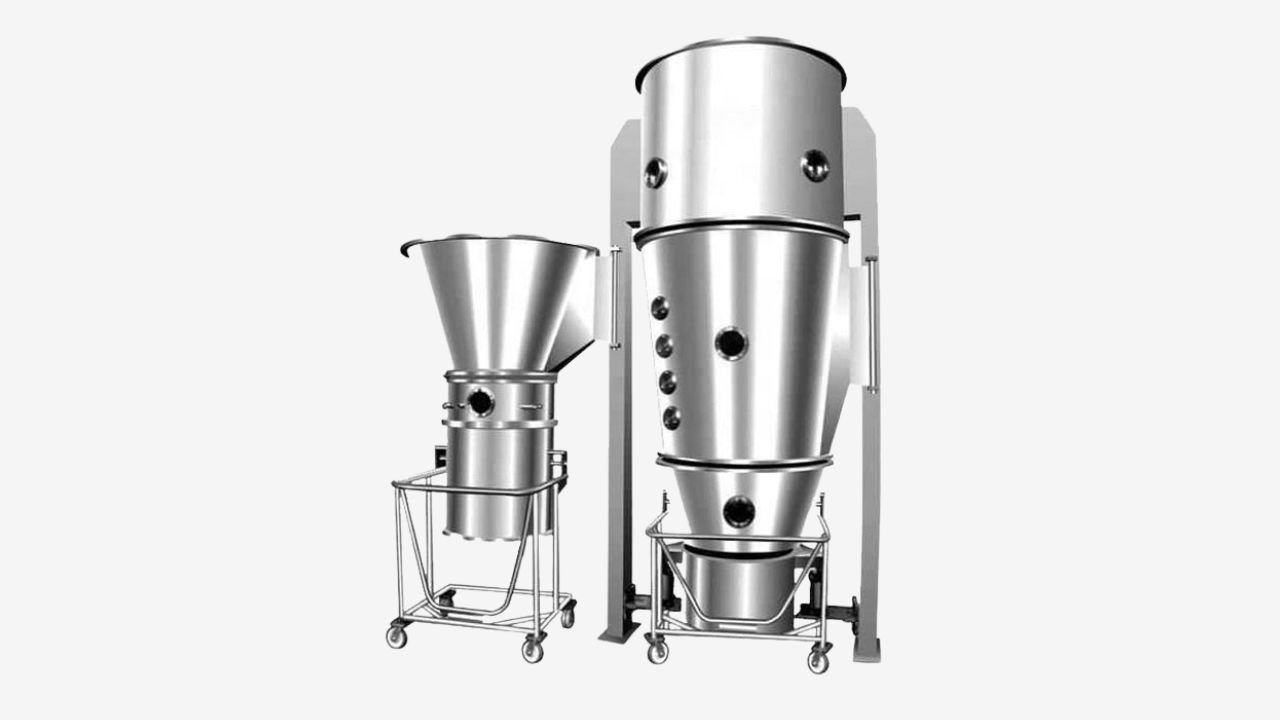
Whereas paddle dryers excel at extracting solvents from materials quite sensitive to heat, fluid bed dryers are tailored for free-flowing powders. They expose the wet products to a stream of hot air, leading to faster residence times.
How do you increase the efficiency of paddle dryers?
With an adequate understanding of paddle dryers and their respective temperature and pressure settings, you can make them up to 30% more efficient. For instance, setting the operating pressure for vacuum paddle dryers to -0.05 to -0.09 MPa can significantly lower your dryer’s power consumption.
What are the main applications of paddle dryers?
While there are multiple dryers, none are more suited to drying free-flowing or slurry, toxic, and heat-sensitive materials than paddle dryers. Their reliance on indirect heating makes them the preferred option for most pharmaceutical, agricultural, and food production industries.
What are the advantages of a paddle dryer?
Paddle dyers promise an array of benefits, but the most rewarding benefit that has seen them greatly revered is their suitability for heat-sensitive materials. Other benefits include;
- Uniform drying.
- Energy efficiency.
- Compatibility with different materials.
Which materials are not suitable for the paddle drying process?
Whereas paddle dryers work with most materials, ranging from thick slurries to free-flowing liquids, you are likely to find drying extremely abrasive and sticky materials quite challenging.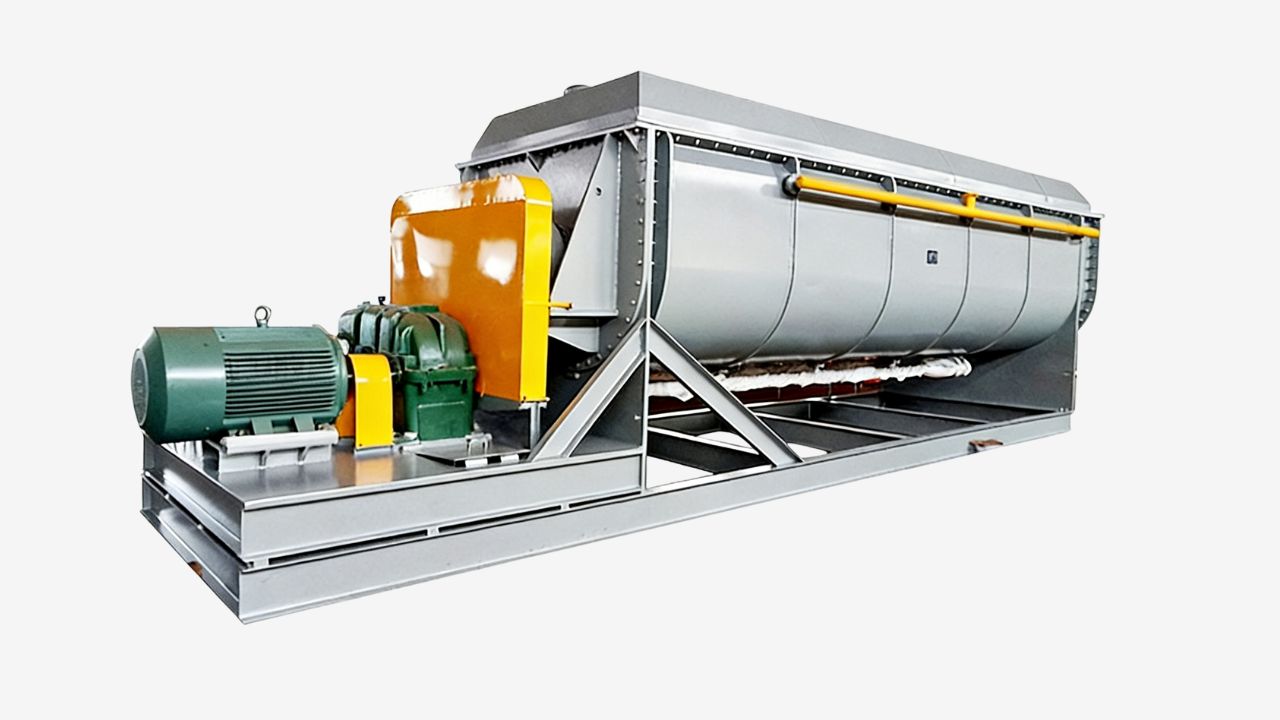
Why Choose FANQUN Paddle Dryers
For over 15 years, FANQUN has been at the forefront of manufacturing premium-quality paddle drying equipment. Our catalogue is quite extensive, ranging from small dryers to industrial dryers, and we deliver to over 150 countries. With FANQUN, you are not only guaranteed the best quality but also friendly prices, especially when ordering in bulk. So, reach out to us today for the best deals on paddle dryers.