


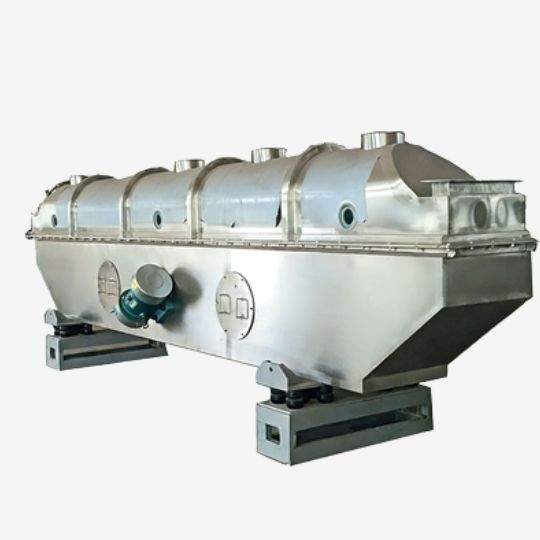
FANQUN Horizontal Fluid Bed Dryer
The horizontal fluid bed dryer from FANQUN is specially designed for high-volume drying of particles and can reliably process materials with particle sizes of 0.1 mm and above. Contact FANQUN today for a one-stop customized solution tailored to your process parameters.
- A horizontal bed structure provides more stable airflow distribution across the surface for uniform suspension of your particles, reducing the risk of localized over-drying or clumping.
- The dead-zone-free flow pattern ensures a continuous, intensive contact between the hot airflow and the particles. Thermal efficiency can be over 80% with an exhaust heat recovery system integrated.
- While maintaining materials’ effectiveness, FANQUN horizontal fluidized bed dryers can achieve fast drying in merely 6 minutes.
- FANQUN has a modular design and supports cleaning processes under CIP/SIP conditions to help users meet GMP production requirements.
XF Series Horizontal Fluid Bed Dryer
Boiling dryer is also called as fluidized-bed.lt consists of air filter, heater fluidized-bed main machine, feeder, cyclone separator, cloth bag duster, high-pressure centrifuge fan and operation table. Because the property of raw materials exist difference, it is necessary to equip dust remover in accordance with practical needs. It can select cyclone separator and cloth bag duster both or one of them.in general, it needs to select cycione separator only for raw material that is large and cloth bag duster for the material which is powder or small and light granule,meanwhile there pneumatic feeding device and belt conveyor for selection.
Operation of this machine are continuous and intermitter type.
Steam, electricity or hot air furnace can be used (it can be supplied as re-quest).
Principle of XF Series Horizontal Fluid Bed Dryer
Boiling dryer use clean air after filtering,through heat exchange, make air temperature rise to a certain value into main machine, then through distributor of valve plate into fluidization, material from feeder enter into the dryer, because of wind pressure, raw material become boiling state in dryer, the wide contact between hot air and raw material, increasing the process of hot exchange, In short time, make water vaporizing, raw material is discharged from the outlet. exhaust gas discharged from the top oi the boiling dryer, and discharged from cyclone separator, dust filter with cloth bag after reclaiming material, The machine is working in negative pressure.
Application of XF Series Horizontal Fluid Bed Dryer
Used on medicines, chemical raw material, foodstuff, grain processing, feed and so on. For example, raw medicine, granular tablet, Chinese traditional medicine, health foods, drinks,maize embryo, feed, plastic resin, citric acid and other powders. The suitable diameter of raw material is normally 0.1-0.6mm. The most applicable diameter of raw material will be 0.5-3mm.
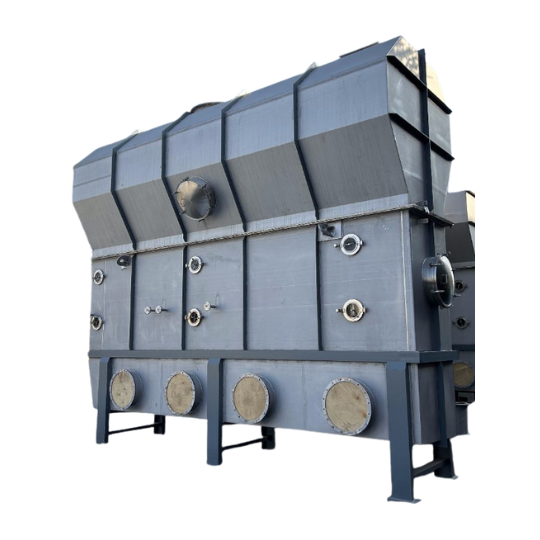
Ideal gluconate dryer for extremely damp sea salt, Steaming heat method with distillation process for purified salt powder.
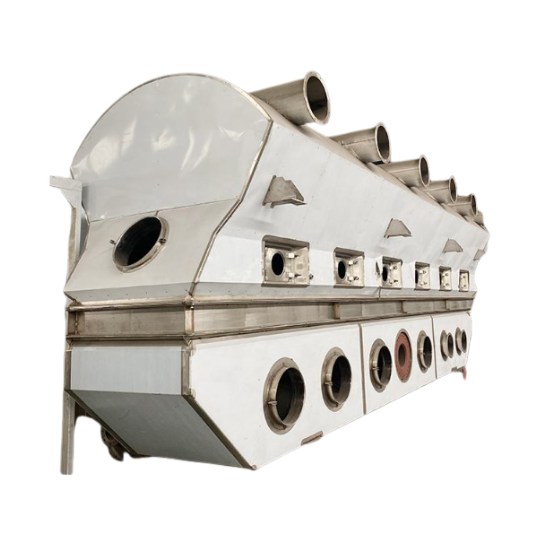
Granulation of sea salt being dried and compressed into iodized powder salt. Temperature control and has responsive adjustability.
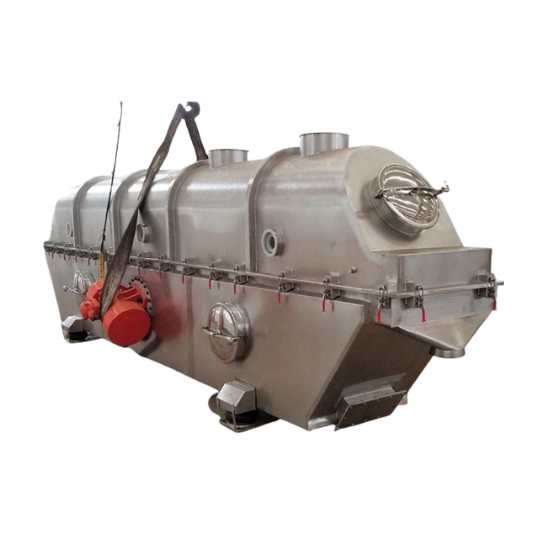
Has multiple heating methods and ideal chemical application, Most commonly used for pharmaceutical medicine.
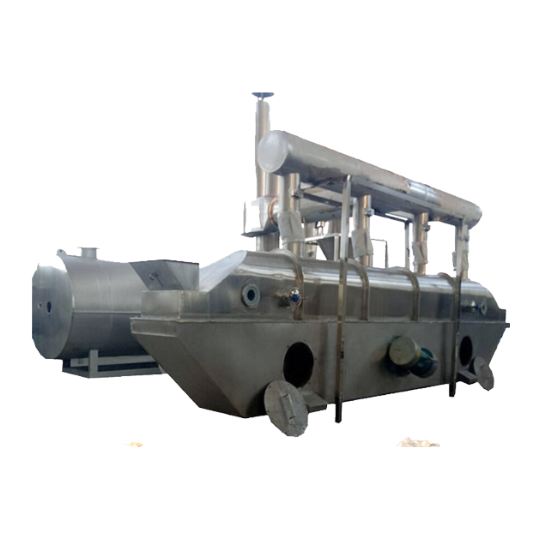
Multifunctional and automatic machine for granulating and drying damp material whether chemical or edible process.

Great sugar producing machine with various enhanced liquid distillation or fluid bed drying for the sweet flavor content.
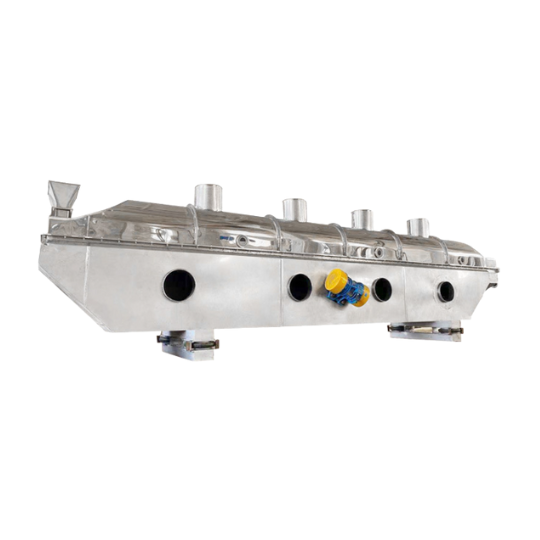
Two enhanced advantages: Liquid distillation and fluid bed drying. Temperature control and improved pace process.

High productivity and easy to operate, has enhanced granulation and adjustable settings for temperature with preferable pace.
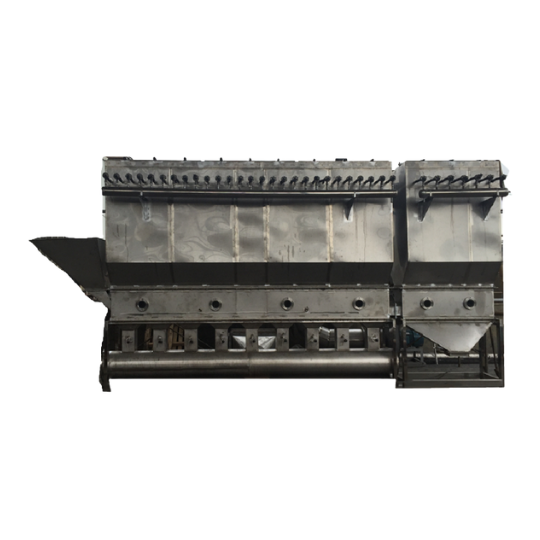
Low electricity consumption and withstand heavy duty. Available for chemical and food processing application.
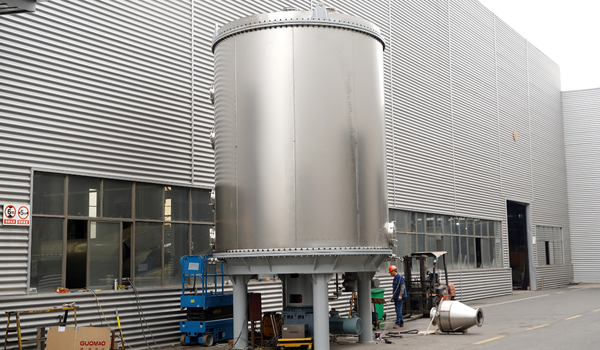
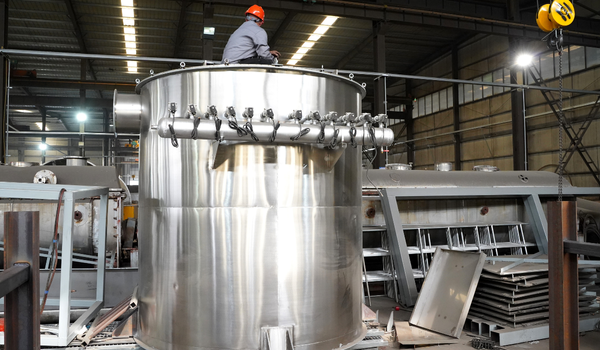
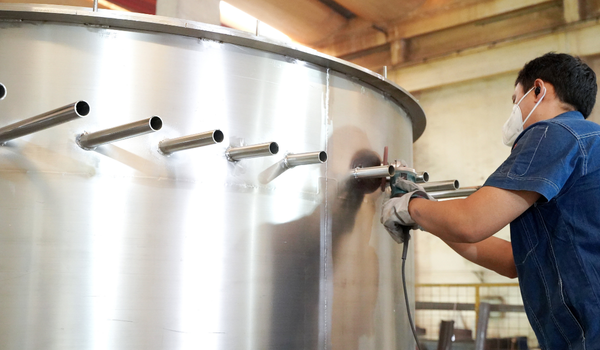
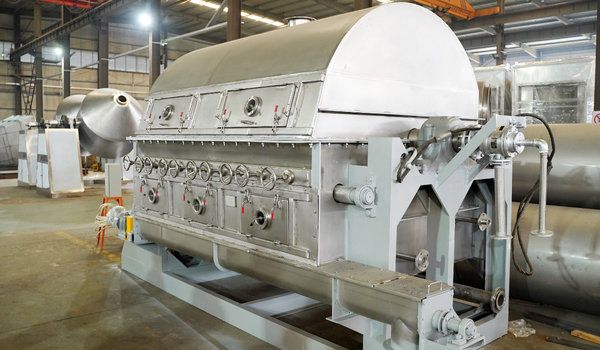
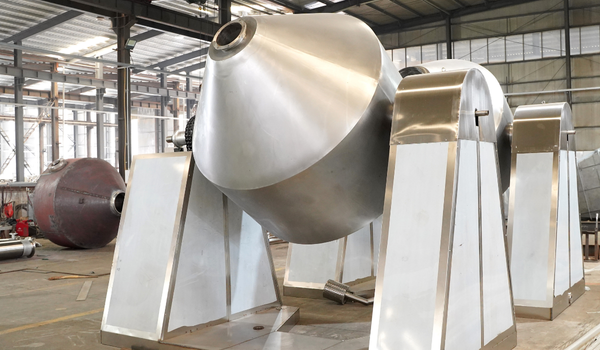
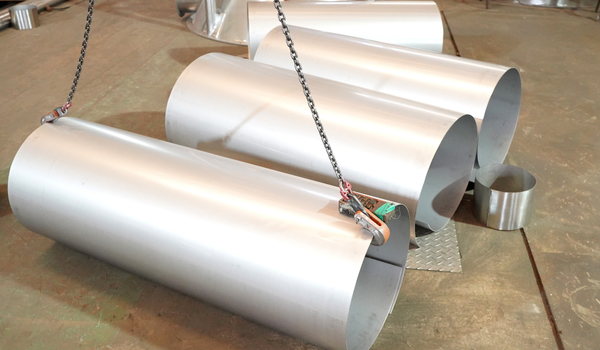
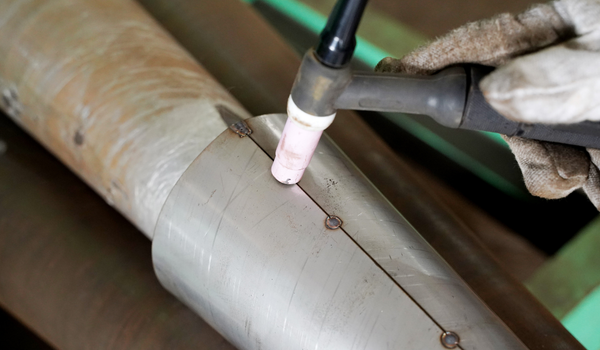
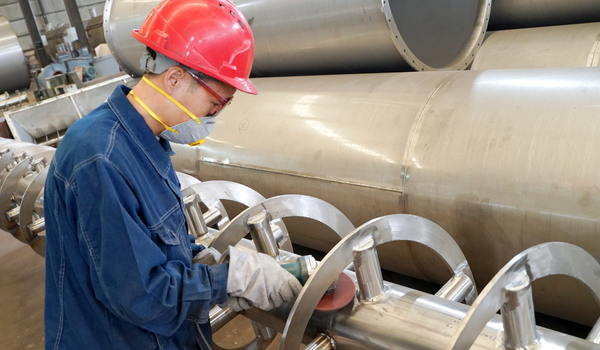
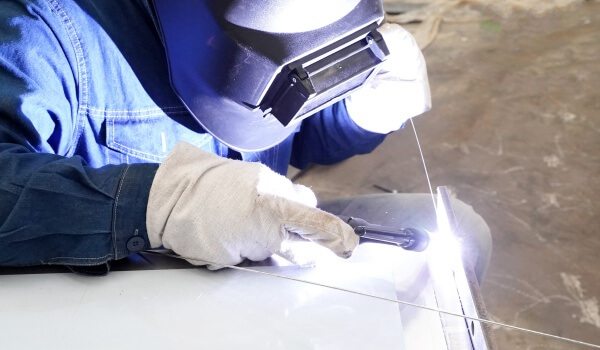
- Our Factory
- Technical Parameters
| Model | Area of bed layer (m²) | Drying capacity (kg HQ/h) | Power of fan (kw) | Temperature of inlet air (°C) | Temperature of raw material (°C) | Overall dimensions (main machine) LxWxH (m) | Occupied area (m²) |
| XF0.25-1(XF10) | 0.25 | 10~15 | 5.5 | 120~140 | 40~60 | 1×0.6×3.35 | 18 |
| XF0.25-2(XF20) | 0.5 | 20~25 | 7.5 | 120~140 | 40~60 | 2×0.6×3.35 | 25 |
| XF0.25-3(XF30) | 1.0 | 30~45 | 15 | 120~140 | 40~60 | 4×0.6×3.35 | 35 |
| XF0.25-6 | 1.5 | 52~75 | 22 | 120~140 | 40~60 | 6×0.6×3.35 | 40 |
| XF0.3-2 | 0.6 | ~30 | 7.5 | 120~140 | 40~60 | 2×0.7×3.4 | 25 |
| XF0.3-4 | 1.2 | 42~60 | 18.5 | 120~140 | 40~60 | 4×0.7×3.4 | 38 |
| XF0.3-6 | 1.8 | 63~90 | 30 | 120~140 | 40~60 | 6×0.7×3.4 | 45 |
| XF0.3-8 | 2.4 | 84~120 | 37 | 120~140 | 40~60 | 8×0.7×3.4 | 56 |
| XF0.3-10 | 3.0 | 105~150 | 48 | 120~140 | 40~60 | 10×0.7×3.4 | 70 |
| XF0.4-4 | 1.6 | 58~80 | 30 | 120~140 | 40~60 | 4x1x3.58 | 18 |
| XF0.4-6 | 2.4 | 84~120 | 37 | 120~140 | 40~60 | 6x1x3.58 | 56 |
| XF0.4-8 | 3.2 | 112~160 | 48 | 120~140 | 40~60 | 8x1x3.58 | 74 |
| XF0.4-10 | 4.0 | 140~200 | 70 | 120~140 | 40~60 | 10x1x3.58 | 82 |
| XF0.4-12 | 4.8 | 168~240 | 70 | 120~140 | 40~60 | 12x1x3.58 | 96 |
| XF0.5-4(XF50) | 2.0 | 70~100 | 30 | 120~140 | 40~60 | 4×1.2×4.1 | 50 |
| XF0.5-6 | 3.0 | 105~150 | 40 | 120~140 | 40~60 | 8×1.2×4.1 | 70 |
| XF0.5-8 | 4.0 | 140~200 | 70 | 120~140 | 40~60 | 8×1.2×4.1 | 82 |
| XF0.5-10 | 5.0 | 175~250 | 105 | 120~140 | 40~60 | 10×1.2×4.1 | 100 |
| XF0.5-12 | 6.0 | 210~300 | 140 | 120~140 | 40~60 | 12×1.2×4.1 | 140 |
| XF0.5-14 | 7.0 | 245~350 | 147 | 120~140 | 40~60 | 14×1.2×4.1 | 180 |
| XF0.5-16 | 8.0 | 280~400 | 169 | 120~140 | 40~60 | 16×1.2×4.1 | 225 |
| XF0.5-18 | 9.0 | 315~450 | 197 | 120~140 | 40~60 | 18×1.2×4.1 | 268 |
Remark:
- The feeding method has: 1) Star feeding. 2) Combining star feeding and air conveyor. 3) Belt conveying. 4) Decided by customer.
- Automatic production can be realized.
- Besides the model above mentioned, the special model can also be designed and manufactured as request.
- According different raw material, the power of fan will be different.
What is a Horizontal Fluid Bed Dryer?
The horizontal fluid bed dryer is a specialized piece of equipment that can be utilized in the continuous drying of granules and powders.
The material is distributed over a horizontal bed surface. Hot air at the bottom lifts the particles into a fluidized state. As the material advances, it remains in continuous contact with the hot air, achieving stable and efficient drying.
How a Horizontal Fluid Bed Dryer Works?
Step 1: Feeding and Spreading
Powder or granules enter via the feed end, are dispersed via the distributor plate, and are evenly spread across the horizontal porous bed plate.
The distributor plate avoids local accumulations and forms a stable bed layer thickness suitable for fluidization.
Step 2: Attaining Fluidization
Heated air enters beneath the bed plate and permeates upward through the micro-perforations of the distribution plate.
At a critical velocity of the gas, particles detach from the bed surface and are lifted, forming a uniformly suspended “fluidized layer.”
Step 3: Ongoing Improvement
Under the vibration or airflow action, material slowly advances along the horizontal bed toward the outlet.
In this stage, the moisture content of material can be adjusted precisely by controlling amplitude or frequency, or air volume.
Step 4: Rapid Heat Exchange
Particles constantly tumble in the fluidized bed, making full-surface contact with hot air.
The heat is transferred from the airflow to the surfaces of the particles, and the moisture inside the particles diffuses outwards and is taken away by the airflow, making your drying highly effective.
Step 5: Discharge
Once particles reach your target moisture content, the material is smoothly and uniformly conveyed to subsequent processes—such as screening, cooling, and packaging—enabling automated continuous production.
Key Components of Horizontal Fluid Bed Dryers
Fluid Bed Main Body
The fluid bed main body is normally referred to as the rectangular process chamber in which the entire function of drying takes place. Material enters from the feed end and is lifted by gas flow on the horizontal bed surface. It advances while suspended and forms a continuous stable state of “conveying-fluidization-evaporation.”
The horizontal configuration allows for accurate control of material layer thickness and residence time. Particles avoid accumulation and prevent localized drying failures due to uneven airflow. For powders and granules in the size range 0.1–6 mm, and especially the mainstream 0.5–3 mm size, it provides more stability than vertical batch systems. It handles a wide range of materials without excessive moisture content or product disintegration due to transient airflow fluctuations.
Perforated Bed Plate
Above the hot air inlet chamber, a perforated bed plate is the core component that ensures drying stability. The hot air does not directly affect the particles but rather permeates at a slow pace through thousands of micro-perforations to create a uniform fluidized airfield. Particles lift off the bed surface into a micro-suspended state under the influence of air pressure, and rapid heat and moisture exchange starts.
FANQUN’s bed plate aperture size and open area ratio are calculated from real conditions —ensuring fine powders won’t be blown away while preventing localized clumping or “dead zones” in cohesive materials.
Vibration System
Airflow cannot sustain drying on its own, especially with agglomeration crystals, hygroscopic powders, and light particles. The vibration system gives kinetic energy uniformly dispersed to the bed that breaks the micro-bridges between particles and thus restores ideal fluidization.
Vibration of the central tube prevents localized resonance. The thick-walled construction distributes the energy to each segment, whereas hardened and tempered springs in the base transmit forces of vibration to the ground instead of to the upper chamber.
Unlike rubber dampers, this structure resists aging over time, ensuring your equipment maintains stable performance for years under continuous operation.
Hot Air System
It’s the hot air system that dictates your thermal efficiency. After filtration, air enters the heat exchange unit where it’s heated either by steam, natural gas, electric heating, or thermal oil. This is then distributed along the space beneath the bed plate to each fluidization zone.
FANQUN uses U-shaped aluminum finned heating tubes, leaving expansion space for thermal contraction. This avoids weld fatigue common in traditional fixed heating tubes during repeated cycles, therefore guaranteeing stability in heat transfer efficiency in the course of continuous production.
This presents a critical advantage for pharmaceuticals, foodstuffs, or heat-sensitive materials in that you may set drying curves freely within the 60°C–200°C inlet air range without being forced into reducing temperatures or shutting down frequently due to structural fatigue.
Dust Collection System
Continuous drying will inevitably carry fine particles in the exhaust gas. Your yield is determined by dust collection efficiency or methodology.
Long-cone cyclones use centrifugal force to recover material and reduce particulate content in the exhaust gas to very low levels and can handle high-bulk-density particles. And baghouse dust collectors capture the powder through fiber filtration and handle low-density fine powders.
Proper configuration isn’t just about “environmental compliance”; it directly influences whether there is a need for repeated shutdowns to clean the pipes or whether blockages may happen, and whether downstream packaging will be affected by exhaust dust.
For high-value products such as pharmaceutical crystals or catalysts, an appropriate separation solution can stabilize yield at 98%.
Cooling Section
After drying, residual heat transfer remains in the particles, and direct discharge may cause moisture content rebound or caking of the particles. Therefore, horizontal fluid beds normally have a separate cooling section to quickly stabilize the product upon exiting the hot air zone.
Cool air is first dehumidified and passed through the material bed at a lower temperature. This stops the internal water migration inside the particles, hence preventing moisture regain or secondary evaporation.
For those products that are packaged directly or stored, this step is much more important than “drying completion.” Since food, pharmaceuticals, and heat-sensitive powder production may determine whether the product passes quality testing, cooling parts are usually solely relied on.
Control System
Core parameters such as PLC and PID control coordinate the real-time adjustment of temperature, air velocity, amplitude, and feed rate.
Sensors send back data on humidity readings to the PLC, and then the system fine-tunes the process parameters automatically. This maintains stability in the final moisture content without the need for any manual judgment.
Weir Plate Adjustment Mechanism
Weir plates set the rhythm of material advancement. An increase in weir height increases residence time for material at a lower moisture content, while lowering the weir height accelerates discharge. This becomes ideal for materials sensitive to heat or those with low moisture. Compared with relying on air velocity or experience, weir plates allow for direct, stable, and repeatable control of material dwell time.
Advantages of Horizontal Fluid Bed Dryers
Continuous and Stable Drying Capacity
The horizontal structure turns the drying process into a continuous operation. Material spreads evenly over the bed surface, which is suspended by fluidizing airflow and moves slowly towards the outlet under the action of the advancing mechanism.
Air velocity, bed area, and residence time are controllable in a relationship independent of empirical judgment. There’s no waiting for batch cycles or re-establishing thermal equilibrium during material changeovers. In production lines, the drying process offers stable, rhythmic output.
Industrial-Scale Processing Capacity
FANQUN horizontal fluid bed provides up to 18 m² bed area and processes around 80 kg of material each hour at standard conditions. Mass and heat transfer happen inside the single-layer fluidized state. The design avoids zones of accumulation and reflux to avoid overheating and uneven drying of certain parts. This scale not only increases throughput but also cuts down manual intervention and repetitive adjustments.
Friendly to particulate materials
The horizontal fluidization design allows for stable fluidization layers to be achieved in powders, granules, and crystalline materials. The design can accommodate particle sizes from 0.1–6 mm, with the ideal operational size range being 0.5–3 mm.
Fine powders cannot be blown away by concentrated airflow, and larger particles cannot settle because of too little inertia. During fluidization, the whole bed is in constant suspension, ensuring stable drying rates with uniform final moisture content.
High-Efficiency Heat Exchange
In the fluidized state, individual particles are completely enveloped in the gas stream, with a resulting convective heat transfer approach from all sides. There are no “hot spots” or regions of localized heat accumulation. Thermal efficiencies as high as 80–85% are realized, while the target moisture is usually attained at lower temperatures compared with conventional convective units. For heat-sensitive materials, this completely enveloping heat transfer technique effectively protects active ingredients or crystal structures.
Adaptable to Diverse Industry Requirements
Horizontal fluid beds are commonly employed in industries such as pharmaceuticals, food processing, fine chemicals, and others that require stable moisture content and continuous discharge.
This equipment can achieve multiple heat sources in steam, natural gas, electric heating, or thermal oil to ensure flexible configuration with production line energy strategies and process requirements.
During demanding laboratory and industrial scale-up processes, technical parameters remain the same throughout the pilot, intermediate, and mass production stages, thereby minimizing scale-up risks.
Maintenance-Friendly and Hygienic Design
The upper bed is fitted with inspection windows and rapid-action maintenance doors to allow direct observation of fluidization status and dust collection.
The chamber design features a dead-zone-free geometry with structural reinforcements that eliminate material accumulation sites, making cleaning easy and reproducible.
Internal cleaning and validation can be completed without dismantling core components, helping you meet GMP or food-grade hygiene requirements.
Applications of Horizontal Fluid Bed Dryers
Horizontal fluid bed dryers are extensively employed in industries of food, pharmaceuticals, chemicals, and new materials due to their stable and continuous drying ability and high adaptability to granular materials. They are most suitable for granular or powdered materials of even particle size that require quick moisture reduction.
The following table lists typical applications. If your material is not listed below, please contact us. We will recommend a suitable equipment solution based on your specific parameters.
| Industry | Typical Materials | Application Features |
| Food Processing | Breadcrumbs, instant soup mixes, rice noodles, dairy granules, cat litter, food additives | Integrated continuous dehydration, drying, and cooling to enhance stability and shelf life, compatible with sterilization or baking processes |
| Pharmaceutical Manufacturing | Granules, powders, tablet cores, excipients, amino acids | Ensures uniform drying, minimizes wall adhesion, and withstands subsequent coating and tableting processes; compliant with GMP sanitary design standards. |
| Fine Chemicals | Malic acid, polymer pellets, carbon powder, toner powder, rust inhibitors, ferrite pellets | Stable particle size, excellent surface density, dust-free processing, convenient for packaging and transportation |
| Fertilizers and Pesticides | Magnesium salts, potassium salts, nitrates, granular pesticide carriers | Continuous high-capacity drying, suitable for inorganic materials with large particle sizes and density fluctuations |
| New Materials / Batteries | Battery Raw Materials, Polymer Precursors | Temperature- and residence time-sensitive materials can be stably controlled to prevent caking and degradation. |
As a trustworthy manufacturer of drying equipment, FANQUN has been committed to the R&D and production of horizontal fluid bed dryers.
We have great cooperation relationships with many prestigious domestic universities and research institutions, ensuring that the most advanced technologies in industries are timely integrated into industrial applications to provide customers with stable and reliable drying solutions.
From structural design, process commissioning to installation and maintenance, FANQUN provides a professional team throughout the whole process to ensure equipment performance in line with the actual production needs of customers.
If you’re looking for drying equipment tailored to your specific process requirements, we invite you to contact us. Based on your material characteristics, production capacity goals, and industry standards, we will be able to offer a drying solution which will be more stable, uniform, and easier to maintain.
During the installation process, pay close attention to three key points that will be addressed next:
- It is required to place the fluidized bed, cyclone separator, and bag filter on level ground to prevent uneven distribution of stress that could compromise operational stability.
- The blower base shall be furnished with a foundation and support bolts. Install indoors or outdoors according to your factory layout for maximum airflow efficiency.
- Ensure the whole duct system is tight. Any leakage reduces hot air utilisation and compromises drying effectiveness.
If you have any questions about on-site installation, please consult us. Our FANQUN technical engineers can give professional guidance.
Horizontal fluid beds apply for continuous production in most cases and for large-batch granular materials. Their advancing structure controlled the residence time, therefore enabling repeatable and stable drying processes.
Vertical fluid beds are more orientated to batch processing, laboratory or pilot-scale applications, where thermal equilibrium must be re-established after each material changeover.
Horizontal fluid beds are generally the better option if higher production efficiency and increased consistency in product moisture are what you aim for.
The possible heat sources include steam, natural gas, thermal oil and electric heating.
Different heat sources suit different scenarios: Steam is widely used in food and pharmaceutical industries; natural gas is preferred for high-capacity and cost-sensitive applications; thermal oil is suitable for materials requiring precise temperature control; electric heating is ideal for laboratory and small-to-medium production.
If you are in doubt about the selection, our engineers can suggest a more suitable solution according to your material characteristics and your production capacity requirements.