
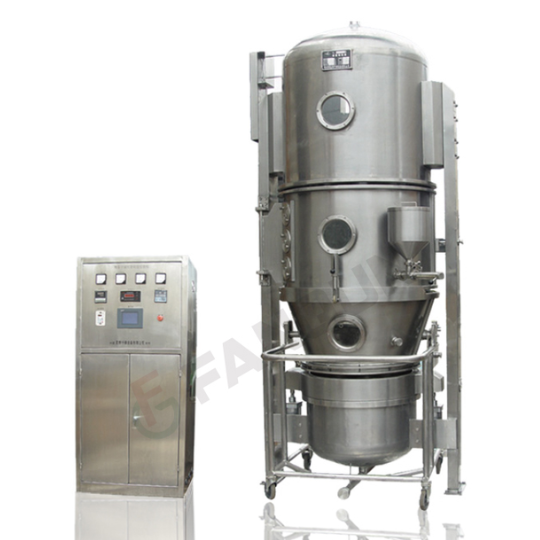
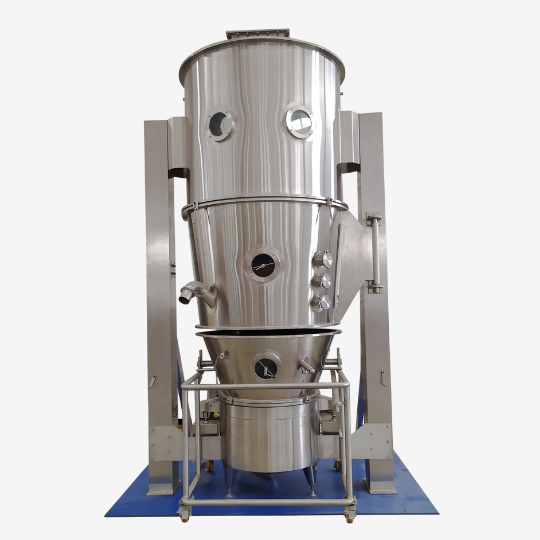
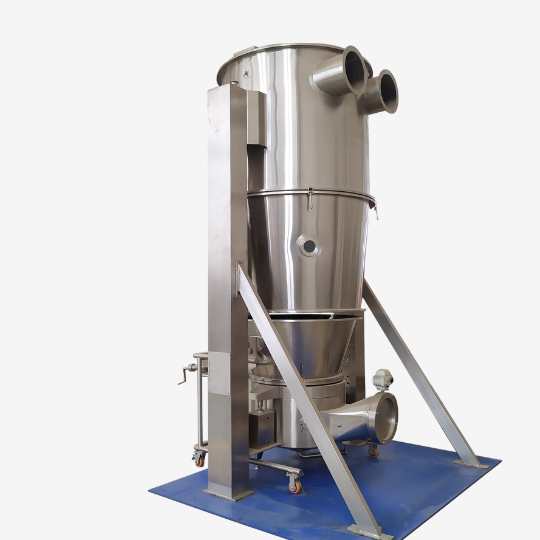
FANQUN Fluid Bed Granulator
A fluid bed granulator integrates granulation and drying in one machine, improving your processing efficiency dramatically.
- Complete product discharge, comply with GMP standards
- Produce uniform, anti-oxidation,water-proof, heat-resistant coatings
- Used for mixing, granulation, and drying, reducing your time consumption
- Enclosed structure and pressure relief ports to prevent dust escape and safeguard health
- FANQUN fluid bed granulator obtains ISO9001 certification and delivers comprehensive service, from installation to after-sales support
FQ-LHC Fluid Bed Granulator
This machine is a special system that combining fluid bed and spray technology. Spraying some liquid (adhesive, coating and extracting liquid) into the powders in the fluid bed will made powder into granules.
Features of FQ-LHC Fluid Bed Granulator
- It can get granules with good fluidity, dissolution and fine powder.
- It can change diameter and density of finished products easily.
- It has quantity-fixing pump and spray inspection system to guarantee stable spray conditions.
- Use special electricity-conduct fibre filter to prevent spark discharging and explosion caused by powder and solvent (having explosion-proof device).
- Explosion-discharging outlet is added in the back and top of main body to reinforce safety of machina.
- No dead corners in the main body and easy cleaning and meet the requirement and standard of GMP in the world.
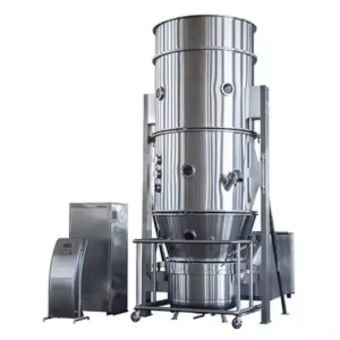
An automated production line of fluidized bed granulator for chemical industry with a 200 kilogram output capacity per hour.
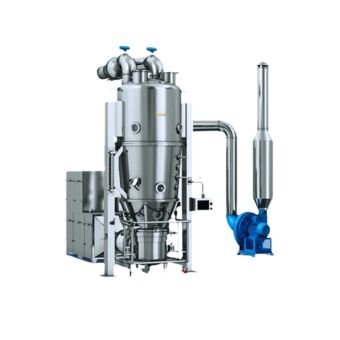
An easy to operate 220V continuous automatic fluid bed granulator with 18.5kW power with high efficiency and 120 kilogram output capacity.
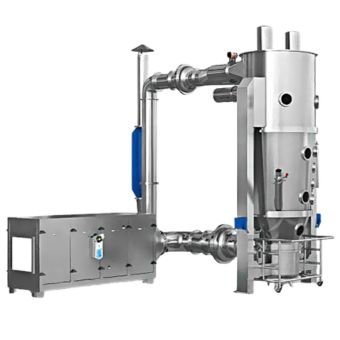
An automatic and multifunctional carbon steel material fluid bed granulator with customizable voltage and power.

An energy saving with high efficiency and accuracy fluid bed granulator with 500 kilogram maximum production capacity per hour.
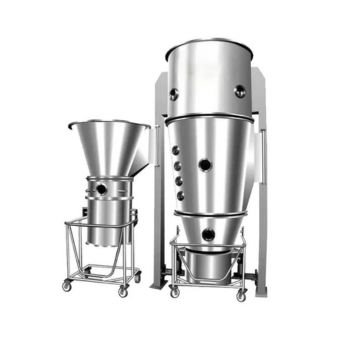
An automatic and energy saving chemical granules fluid bed drying granulator with 500 kilogram output capacity.
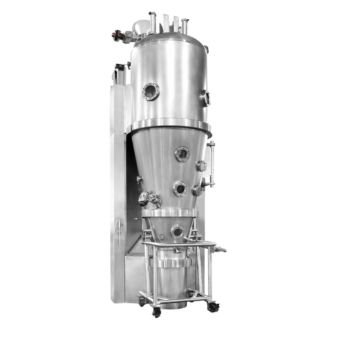
A high productivity 45kW power fluid bed granulating machine with 380V and a 750 kilogram output capacity per batch.
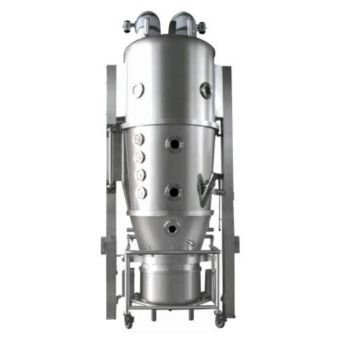
A high efficiency and multifunctional 60-500 kilogram output capacity vertical fluid bed granulator machine with customizable voltage and kW power.
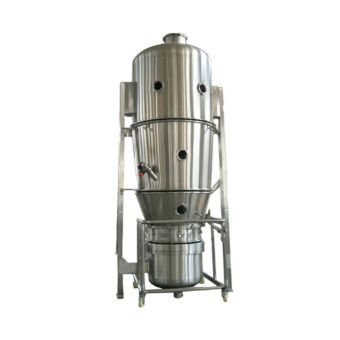
A custom dimension and custom voltage automatic and multifunctional one-step large-scale fluid bed granulator.
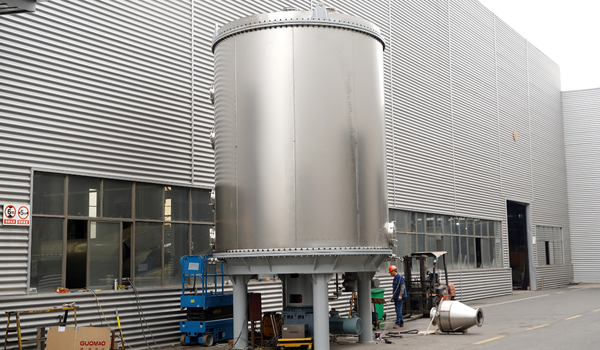
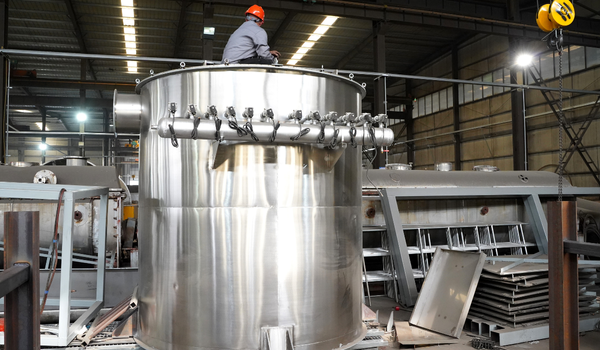
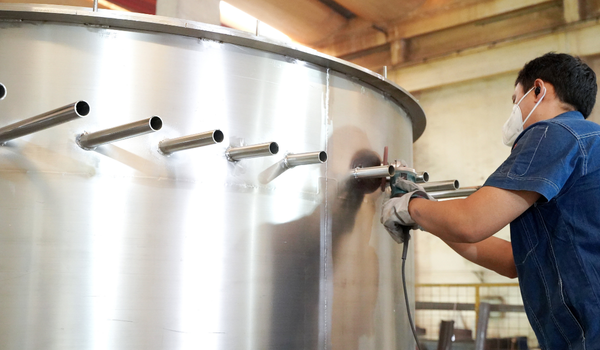
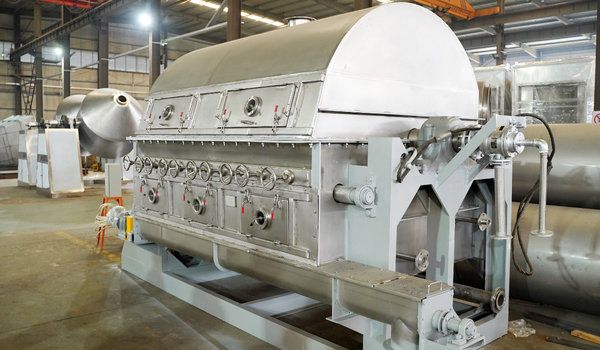
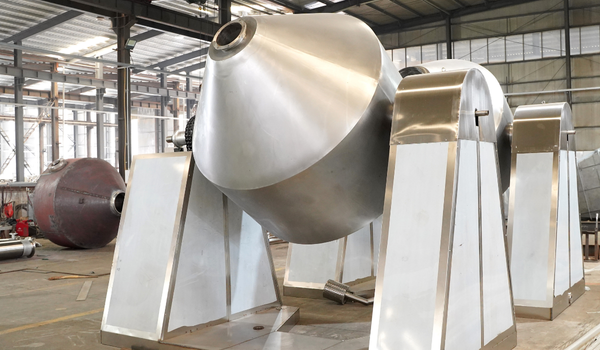
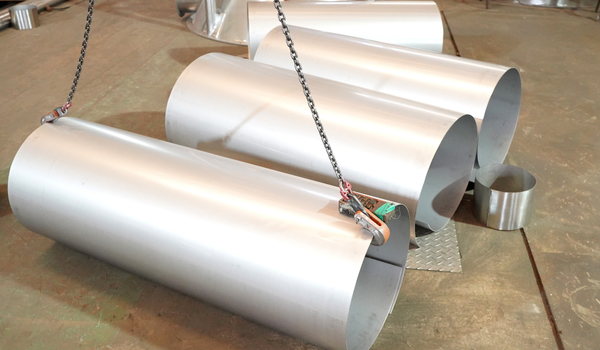
- Our Factory
- Technical Parameters
| Spec | 5 | 15 | 30 | 60 | 120 | 300 | 500 |
| Max working capacity (L) – upper spray | 22 | 45 | 100 | 420 | 620 | 1100 | 2000 |
| Max working capacity (L) – down spray | 15 | 35 | 90 | 400 | 550 | 900 | 1600 |
| Electric heater power (kw) | 21 | 27 | 45 | 81 | 135 | 234 | 315 |
| Range of temperature (°C) | 0-120 automatically regulated | 0-120 automatically regulated | 0-120 automatically regulated | 0-120 automatically regulated | 0-120 automatically regulated | 0-120 automatically regulated | 0-120 automatically regulated |
| Consumption of steam (kg/h) | 60 | 100 | 180 | 220 | 366 | 600 | 1000 |
| Power of fan (kw) | 5.5 | 11 | 15 | 22 | 30 | 55 | 75 |
| Amount of compressed air (m³/min) | 0.6 | 0.6 | 0.9 | 1.1 | 1.3 | 3.0 | 4.0 |
| Weight (kg) | 1450 | 1800 | 2600 | 3450 | 4000 | 6500 | 8000 |
What is a Fluid Bed Granulator
A fluid bed granulator is a granulation device that uses hot air to blow up powder and simultaneously sprays binder solution to create granules. It enables you to complete mixing, granulation, and drying in one machine. The produced granules are uniform and have good flowability, and are commonly used in the pharmaceutical, food, and chemical industries.
The Process of Fluid Bed Granulator
Step One: Preheating and Fluidization
First, you need to load the raw powder into the hopper container, and then start the heater. After being heated, the air enters the cavity from the bottom. It forms a stable upward airflow through the distribution plate, causing the powder to be blown up, presenting a state similar to boiling liquid. This is a fluidized bed.
Step Two: Spraying Binder Solution
Subsequently, the adhesive solution is atomized into uniform, tiny droplets by compressed air and sprayed from the nozzle. Depending on the process requirements, you can choose to spray the liquid from top to bottom or tangentially.
At this point, the tiny droplets contact the powder in the fluidized bed, gradually coating the particle and transforming the powder into uniform spherical particles. This stage requires precise control over the spray volume, spray speed, air velocity, and air temperature.
Step Three: Drying and Cooling
Once the particles are formed, hot air enters the chamber and rapidly evaporates the moisture within them, gradually drying them and increasing their strength. This step requires special attention; not only must the particles be thoroughly dried, but excessive surface hardening must also be avoided. After this, the system automatically lowers the inlet air temperature to cool the granules, facilitating subsequent screening and discharge.
Step Four: Quality Control
All granules need to undergo rigorous quality testing. This includes particle size distribution, moisture content, flowability, and particle strength, guaranteeing the final product meets your requirements.
Fluidized bed granulators are often equipped with online monitoring technology, allowing you to adjust parameters, maintain product consistency, and ultimately improve your customer satisfaction.
Types of Fluid Bed Granulators
Top Spray Fluid Bed Granulator
The material is suspended by fluidized air, and the binder is atomized and sprayed into the chamber from the top, gradually bonding the powder into uniform particles. Suitable for conventional granulation and coating in most industries.
- The particles are relatively round and have good flowability
- Downward spraying, with hot air below, shortens production time
- Easy to clean and maintain, meeting GMP requirements
However, when handling high-viscosity binders, the spray gun is prone to clogging and is not suitable for producing localized coatings precisely.
Bottom Spray Fluid Bed Granulator
The spray nozzle is located at the bottom of the chamber, and the atomized adhesive liquid is sprayed from bottom to top. It is commonly used for micro-pellet coating and film coating.
- Produced coating with high precision and more uniform than the top-spraying and tangential-spraying methods
- Suitable for demanding processes such as rapid-dissolved coating, controlled-release coating, and isolation layer coating
- Less dust backflow, decreased over-wetting, and higher material utilization
However, this equipment has strict requirements for process parameters, and its production efficiency is lower than that of top-spraying methods. Meanwhile, the particle size must be uniform; otherwise, the circulation efficiency will be affected. The equipment price and maintenance costs are relatively higher.
Tangential Spray Fluid Bed Granulator
The nozzles are located in the middle of the granulator and are tangential to the material, allowing the particles to rotate within the chamber. Suitable for applications such as layer coating, seed granulation, and particle enhancement.
- Achieves multi-layer stacking of core particles and outer materials
- Stable process, more regular particle shape, and better particle strength
- Suitable for producing large particles, tea powder pellets, and agrochemical granules
Unfortunately, it doesn’t suit for processing small, lightweight materials, as the particles are too small and easily broken apart, which will affect your yield. In addition, the equipment consumes more energy and requires skilled technicians to adjust and operate it.
Key Components of a Fluid Bed Granulator
- Air Distributor
It is used to evenly distribute hot air to the bottom of the material, allowing the powder to fully fluidize without clumping. Appropriate pore size, porosity, and distribution can also prevent powder accumulation or excessive blowing, reducing your energy consumption and improving granulation speed.
- Granulator Chamber
Fluidization, spraying, and drying are all finished within the granulation chamber. The chamber is made of stainless steel with a mirror-polished interior surface to reduce powder adhesion to the walls.
Cylindrical or vertically elongated chambers can facilitate airflow distribution, reducing material deviation. You can also monitor the granulation process in real time through a transparent viewing window.
- Spray Nozzle
The nozzle is used to atomize adhesives or solutions and spray them onto fluidized powder. Better nozzle atomization will bring more uniform particle distribution and more stable product quality. Moreover, its structure makes disassembly easier and can reduce your downtime for cleaning and maintenance.
- Heater
It is generally equipped with a steam heat exchanger and an electric heating device, which can output stable hot air for granulation and drying.
A high-quality heater can quickly raise the temperature and maintain uniform heat, without the material discoloring, caramelizing, or sticking together due to local overheating.
- Exhaust System
The exhaust system is responsible for discharging moist air and dust from the equipment. It can capture fine particles through filtration to prevent material loss and keep the workshop clean and safe.
Filter bags designed with anti-static properties can effectively prevent powder leakage and reduce the risk of explosion. More advanced granulator models feature an automatic back-blowing, significantly reducing your maintenance time.
Advantages of Fluid Bed Granulators
Uniform Granule Quality
The fluidized bed granulator enables the material to follow a strict and repeatable trajectory within the cavity, ensuring that each particle comes into uniform contact with the spray liquid, thereby forming consistent and dense particles.
Compared with conventional stirring equipment, which is prone to problems such as uneven coating and caking, the fluidization property can effectively avoid these defects, improving your product’s appearance and consistency in quality.
More importantly, through the control system, precise spraying can be carried out, so the coating materials are saved, and your production costs are reduced.
High Process Efficiency
Fluid bed granulating machines offer short atomization distances, with droplets almost immediately landing on the material surface upon ejection, improving your granulation efficiency. Furthermore, mixing, granulation, and drying can all be finished within the same sealed chamber, delivering various features in one machine. It can greatly diminish your process changeover and transfer times.
This means you no longer need to purchase extra dryers or mixers, nor do you require frequent cleaning and material transfer, thus expanding your profit margins.
Especially for companies with tight delivery schedules, the speed gains offered by fluid bed granulators are undoubtedly your most competitive advantage.
Meet GMP Requirement& Easy Cleaning
The fluid bed granulator undergoes mirror-polishing both internally and externally, eliminating dead corners and ensuring complete material discharge with no residue.
Compared to a conventional granulation machine, the fluidized bed better meets the GMP requirements of the pharmaceutical and food industries. For example, removable filter bags and simple chamber structure allow your customers to process granules faster.
The CIP cleaning system can automatically flush the interior container, diminishing the risk of cross-contamination associated with manual cleaning. Fluidized bed processing makes your products cleaner, easier to use, and facilitates certification.
High Safety Standards
Our fluidized bed granulators are designed in strict accordance with safety regulations and equipped with pressure relief ports, making the overall structure more resistant to explosions. This ensures your equipment remains safe and stable when handling flammable dust and volatile solvents.
In contrast, granulation equipment with poor sealing is prone to dust leakage and static electricity accumulation, while the fully enclosed structure of the fluidized bed completely solves this problem, protecting your personnel and reducing cleaning burden.
You should understand that in the event of a dust explosion, the losses extend beyond equipment and raw materials; it can also lead to production stoppages and regulatory risks. Therefore, choosing our fluid bed granulators is the reliable option.
Applications of Fluid Bed Granulators
Pharmaceutical Industry
Fluidized bed granulators are commonly used for granulation and coating of tablets and capsules. The cylindrical accelerating container or an inverted conical deceleration allows the powder to tumble evenly, achieving excellent coating effects such as microparticles, large particles, small particles, and microgranules.
At the same time, its enclosed structure avoids cross-contamination, making it suitable for demanding products such as antibiotics, vitamins, and sustained-release granules.
Equipping it with an online monitoring feature can further improve your process stability and product yield while also lowering production costs.
Food Industry
Fluidized bed granulation of spices, flavorings, sweeteners, and nutrient powders can make more uniform granules with better flowability and storage resistance. Besides, spray coating protects the flavor and helps create heat-resistant and shock-resistant compound ingredients. The granulation machine meets food-grade hygiene standards, allowing you to pass food certifications quickly.
Chemical Industry
Powders such as fertilizers, detergents, and adsorbents often contaminate equipment and have uneven particle sizes. Fluidized beds, through efficient hot air distribution and spray systems, rapidly aggregate powders into granules, producing less dust, increasing density, and greatly improving storage and transportation speed.
For catalysts, fluidized beds can make the particle surface more uniform and increase their strength, enhancing their reaction performance. Very suitable for long-term continuous production.
Our fluid bed granulators can deliver you stable granule sizes and reliable quality, and can also provide you with a competitive price and customizable options.
Feel free to contact us.
Spray drying atomizes liquid materials and then instantly dries them into fine powder through hot air, completing drying and shaping in one step. A fluid bed granulation machine, on the other hand, is used for powder materials, where hot air suspends the powder and the binder is sprayed to form granules.
You need to check the filter bag’s condition based on the pressure and clean it regularly. Also, inspect the seals on the equipment and calibrate the temperature and pressure sensors. More importantly, completely clean the chamber to prepare for the next application.
High-shear granulation relies on the powerful impeller and chopper to compress wet materials into dense granules. These granules have high density and strength but a wide particle size distribution. In contrast, fluidized bed granulation through hot airflow and a binder produces loose, porous granules with good flowability and can be dried in an integrated process.
This problem is usually caused by improper control of the spraying speed and air temperature. You can appropriately reduce the spraying speed and air temperature, and extend the low-temperature drying time to evaporate all the moisture in the granules, thereby improving the quality of your product.