
FANQUN Disc Dryer
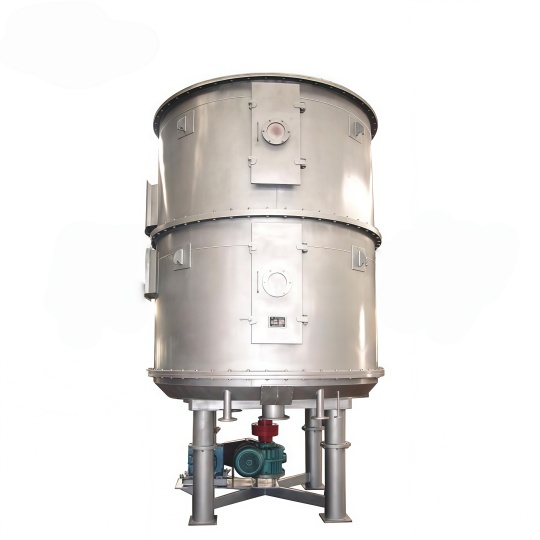
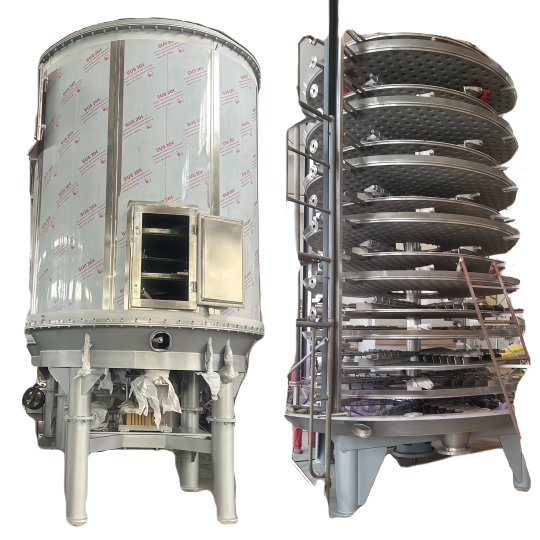
The Fanqun rotary disc dryer adopts multiple heating discs, which have a large heat transfer surface area and ensure efficient indirect heating. Contact us now. First-come, first-served.
- Designed for continuous operation around the clock, it features high production capacity. The continuous feeding and discharging system ensures the stability of the production process.
- The integrated steam collection and condensation system can efficiently remove moisture and recover solvents. This function can reduce the impact on the environment and enable the recycling of solvents.
- The rotating disc with a specially designed scraper enables gentle material movement and prevents damage to heat-sensitive materials.
- The advanced PLC control system is equipped with a human-machine interface, which can precisely control the temperature, residence time and disc speed.
- Multiple heating discs are adopted, featuring a large heat transfer surface area to ensure efficient indirect heating.
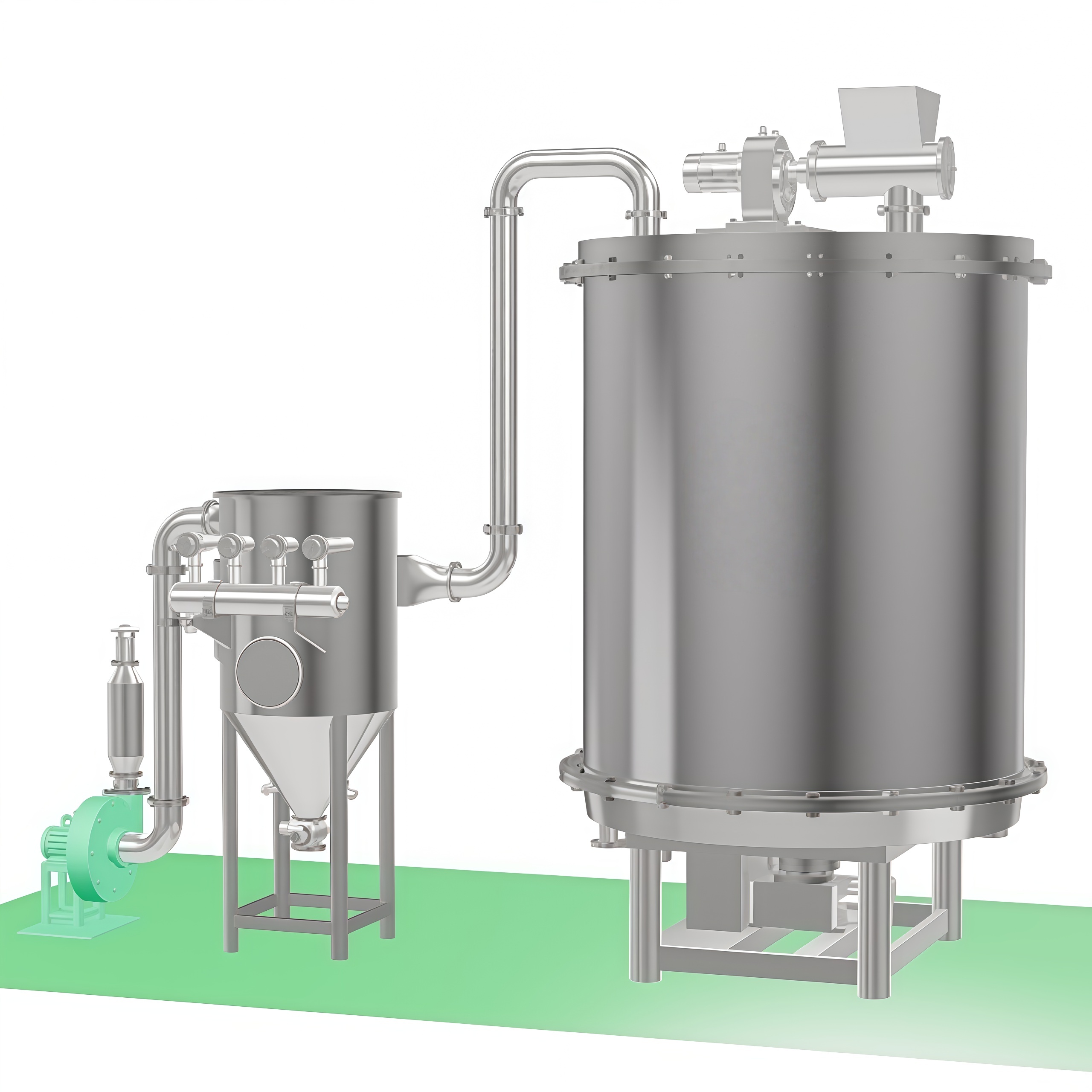
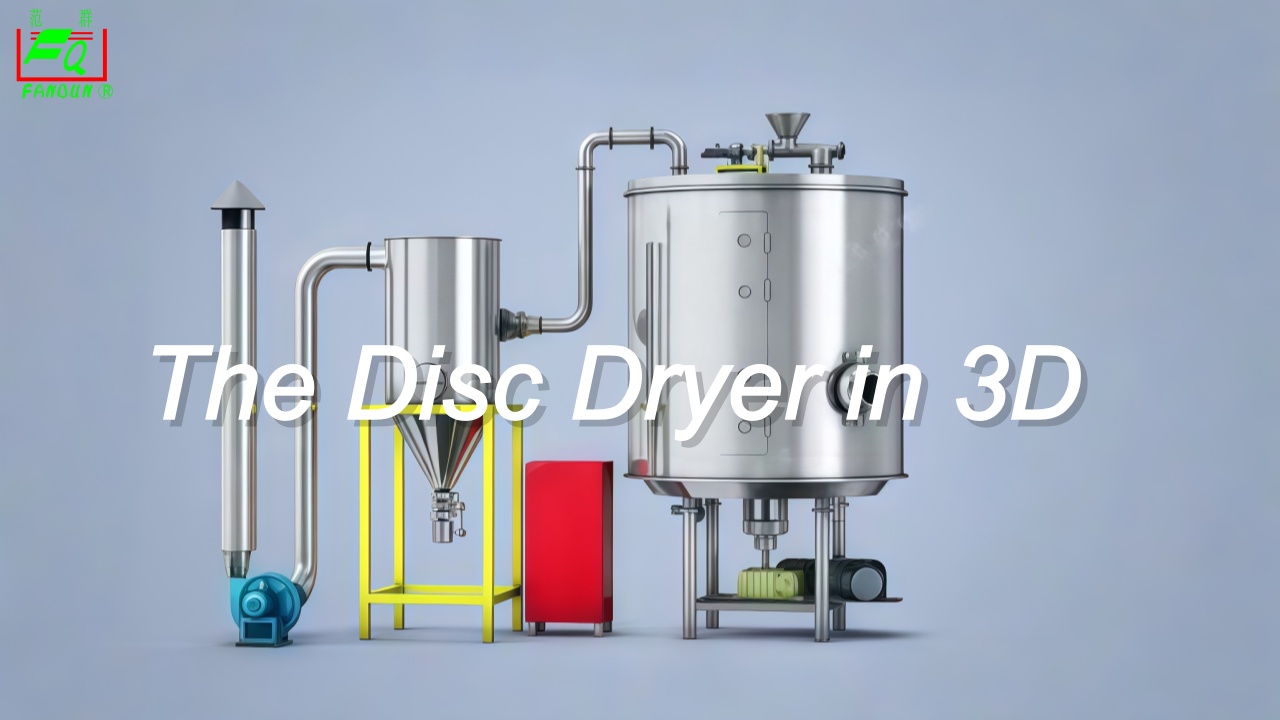
3D Structure & Airflow of FANQUN Disc Dryer
This video clearly shows the internal structure and airflow system of the FANQUN Disc Dryer, helping users fully understand how the equipment achieves efficient, uniform, and gentle drying.
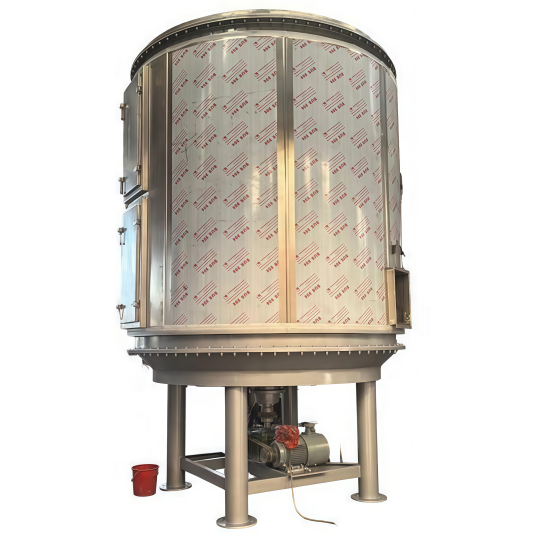
YP Series Disc Dryer
YP Series Rotary Disk Dryer is a kind new dryer that has high effective heat conduction. It has high heat efficiency, low energy consumption/mall cover,and it is easy to be controlled and operated. The dryer has no pollution for environment. It is widly used in chemical industry .pharmaceutical industry,pesticide,foodstuff,feed,agricultural and sideline products and so on. It is used for the material of resin,antioxidant,precipitated calcium carbonate,super fine CaCO₃,reinforcing ,K₂CO₃CuSO₄,amylum, corn plumle,florin,medical intermediate and so on.
Principle of YP Series Disc Dryer
The material that follows the index is dried on the surface of disk The material in the small disk moves into the edge through horror, and then the material fall into edge of bid disk The material in big disk is move into the middle of disk, and then fall down to next small disk. The big and small disks are alternated arrangement to the material can be dried on whole drying area The material is heated evenly, and is has no back mixing and dead corner, The final moisture is stable, so it can ensure better quality.
The disk parts of disk dryer are horror leaves and drying diskji adopts many special technology for suppressing and molding to ensure drying efficiency and normal operation. In some places the difference of temperature is large and air moisture is high, and the finished material is required that hardly has water. On the base of disk dryer, it is equipped with air heating dryer and hydrofuge device. It can avoid damp air from condensation and refluence. It can ensure that the final moisture meet the requirement.
Features of YP Series Disc Dryer
1. Drying plate
(1) Designing pressure: general is 0.4MPa, Max. can reach 1.6MPa.
(2) Work pressure: general is less than 0.4MPa, and max. can reach 1.6MPa.
(3) Heating medium: steam, hot water, heat transfer oil. When the drying plates’ temperature is 100°C, hot water can be used ; when 100°C~150°C it will be saturated water steam ≤0.4MPa or steam-gas, an when 150°C~320°C it will be heat transfer oil; when >320°C it will be heated by electric, oil or fused salt.
2. Material transmission system
(1) Main shaft revolution: 1~10rpm, electromagnetism or slepless speed regulation by inverter.
(2) harrow arm: There are 2 to 8 pieces arm that be fixed on the headstock on the every layers.
(3) Harrow’s blade: Surrounding the harrow’s blade, float together with the surface of the plate to keep contact. There’re various of types.
(4) Roller: for the products easily agglomerate, or with the requirements of grinding the heat transfer and drying process might be reinforced by placing roller(s) at the appropriate place(s).
3. Shell
There’re three types for option: normal pressure, sealed and vacuum
(1) Normal pressure:
(2) Sealed: Cylindrical shell, could bear the interior pressure of 5KPa, the main ducts of the inlet and outlet of heating media might be inside of the shell or outside.
(3) Vacuum: Cylindrical shell, could bear the exterior pressure of 0.1MPa. The main ducts of inlet and outlet is inside of the shell.
4. Air heater
Normal for the application of big evaporation capacity to increase drying efficiency.
Application of YP Series Disc Dryer
- Drying, heat decomposition, combustion, cooling, reaction, and sublimation
- Organic chemicals
- Mineral chemicals
- Pharmaceutical and foodstuff
- Feed and fertilizer
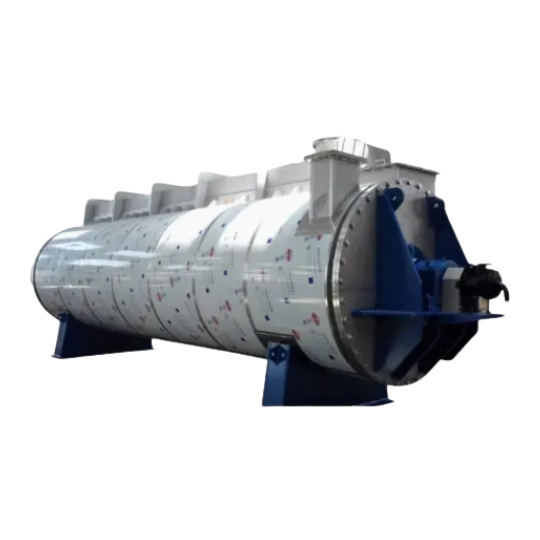
Vacuum operating pressure with temperature on a constant measure, the heat volume is adjustable and rotation pace can be changed.

Steam drying method with great continuous operation method. Enclosed disc dryer that uses steam for constant temperature within.
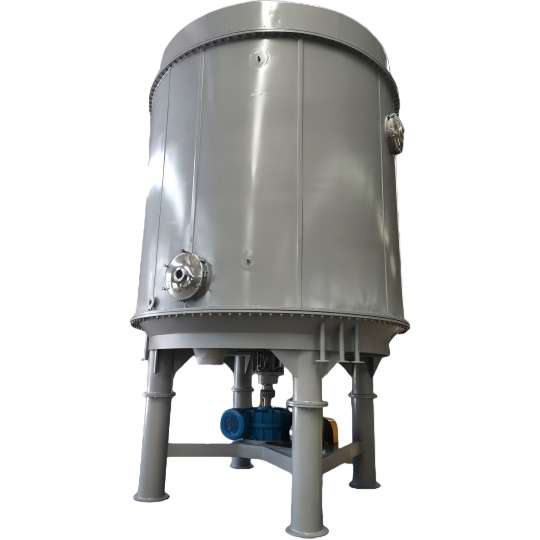
Energy saving and great advantage for organic chemical production, Continuous rotation and temperature control for preferable results.
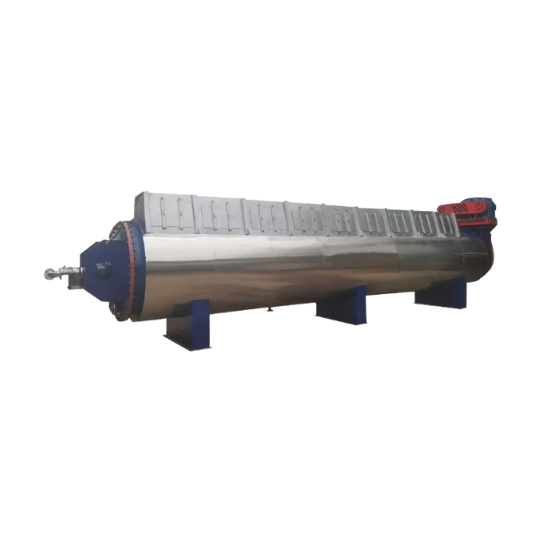
Manufactured with carbon steel for durability against impact and has an energy saving feature, Has vacuum paddle dryer.
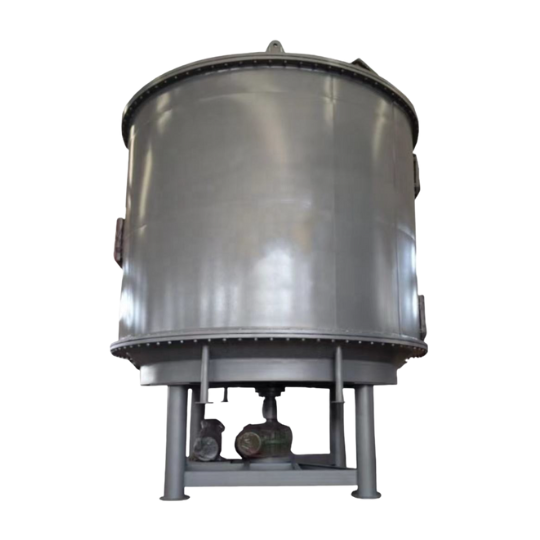
Has wide customization options for industrial application and continuous belt movement.

An automatic steep dryer for fruits or meat processing, has multifunctional control and low noise volume.
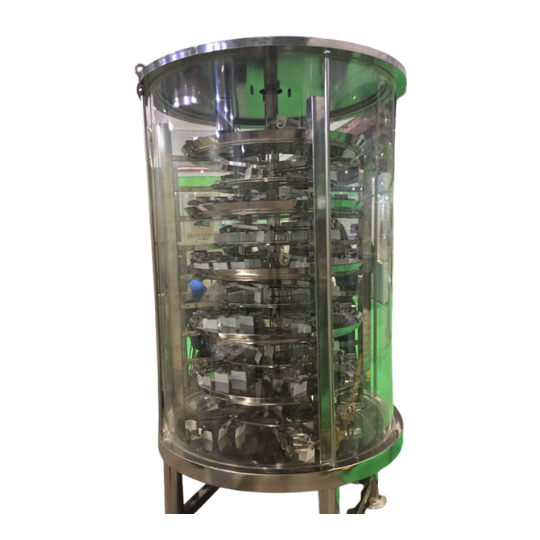
Long lifespan and durable stainless steel materials for explosion-proof, Customization available for the size and labels.

Manufactured with pressure atomization and application for medicinal use or chemical, can help dry granulated products.
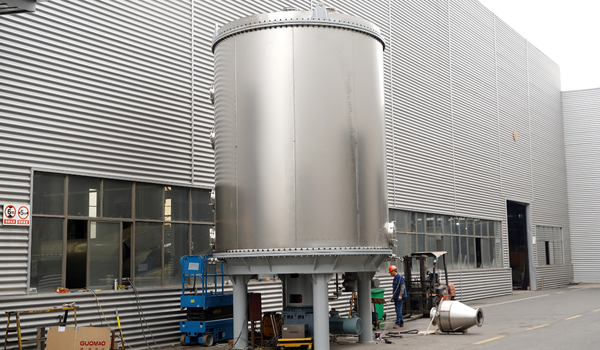
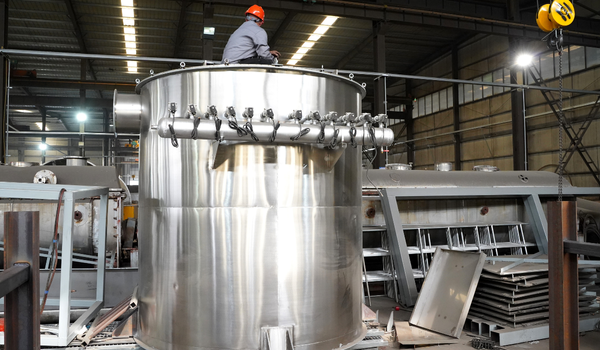
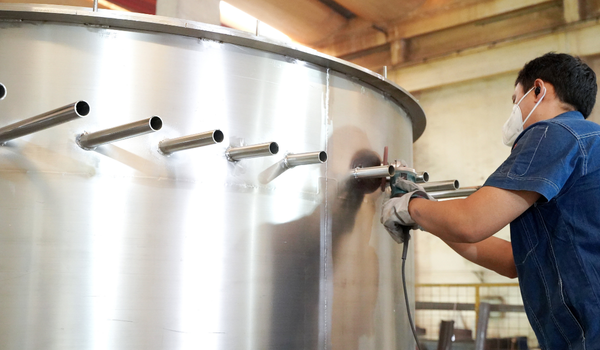
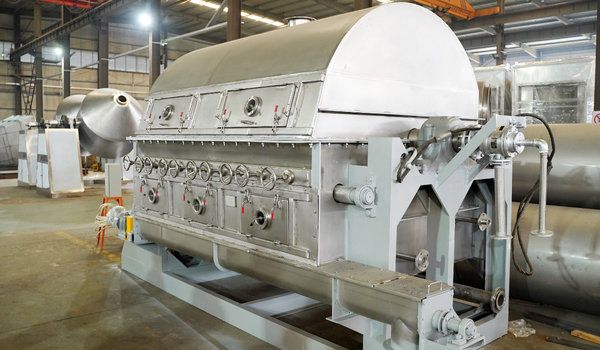
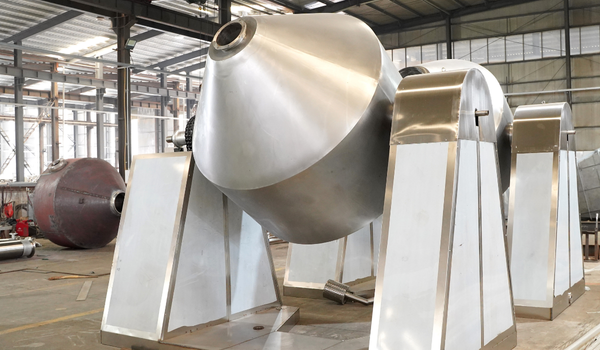
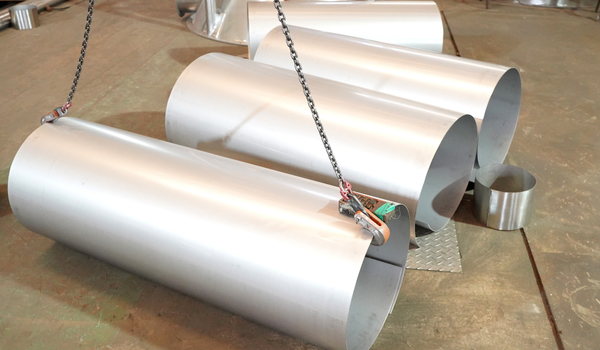
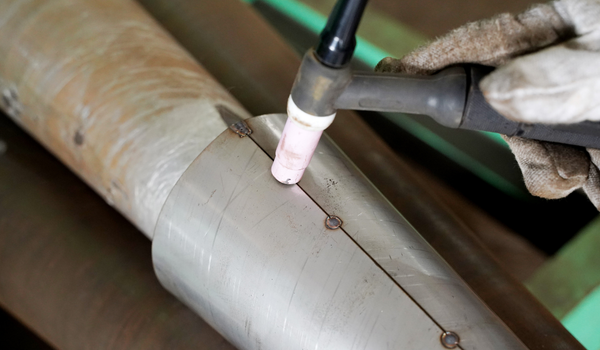
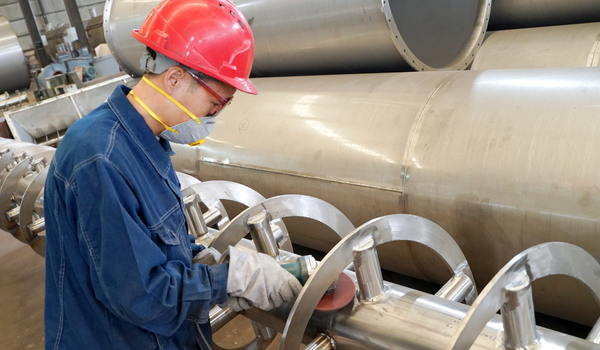
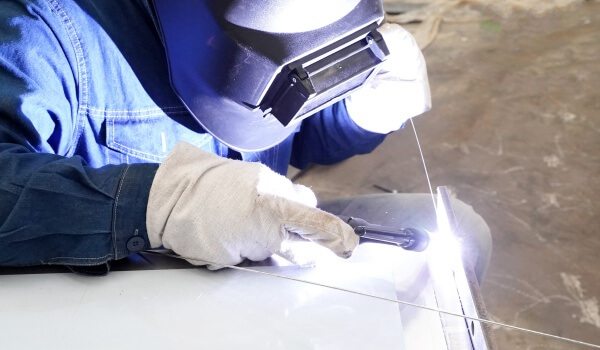
- Our Factory
- Technical Parameters
| Spec. | Outer diameter (mm) | Height (mm) | Drying area (m²) | Power (kW) |
| 1200/4 | 1850 | 2608 | 3.3 | 1.1 |
| 1200/6 | 1850 | 3026 | 4.9 | 1.1 |
| 1200/8 | 1850 | 3448 | 6.6 | 1.5 |
| 1200/10 | 1850 | 3868 | 8.2 | 1.5 |
| 1200/12 | 1850 | 4288 | 9.9 | 1.5 |
| 1500/16 | 2100 | 3022 | 8.0 | 2.2 |
| 1500/9 | 2100 | 3442 | 10.7 | 2.2 |
| 1500/10 | 2100 | 3682 | 13.4 | 2.2 |
| 1500/12 | 2100 | 4282 | 16.1 | 3.0 |
| 1500/14 | 2100 | 4702 | 18.8 | 3.0 |
| 1500/16 | 2100 | 5122 | 21.3 | 3.0 |
| 2200/6 | 2900 | 3262 | 18.5 | 4.0 |
| 2200/8 | 2900 | 3682 | 24.6 | 4.0 |
| 2200/10 | 2900 | 4102 | 30.8 | 4.0 |
| 2200/12 | 2900 | 4522 | 36.9 | 4.0 |
| 2200/14 | 2900 | 4942 | 43.1 | 4.0 |
| 2200/16 | 2900 | 5382 | 43.3 | 4.0 |
| 2200/16 | 2900 | 5782 | 55.4 | 5.5 |
| 2200/20 | 2900 | 6202 | 61.6 | 5.5 |
| 2200/24 | 2900 | 6622 | 67.7 | 7.5 |
| 2200/26 | 2900 | 7042 | 57.9 | 7.5 |
| 3000/8 | 2800 | 7062 | 60.0 | 7.5 |
| 3000/10 | 2800 | 4650 | 48 | 11 |
| 3000/12 | 2800 | 4650 | 60 | 11 |
| 3000/14 | 2800 | 5250 | 72 | 11 |
| 3000/16 | 2800 | 5850 | 84 | 11 |
| 3000/18 | 2800 | 6450 | 96 | 11 |
| 3000/20 | 2800 | 7050 | 108 | 13 |
| 3000/22 | 2800 | 7650 | 120 | 13 |
| 3000/24 | 2800 | 8250 | 132 | 13 |
| 3000/26 | 2800 | 8850 | 144 | 13 |
| 3000/28 | 2800 | 9450 | 156 | 13 |
| 3000/30 | 2800 | 1050 | 168 | 13 |
| 3000/30 | 2800 | 180 | 180 | 13 |
What Is A Disc Dryer?
Simply put, this is a continuous drying equipment specially designed for industrial scenarios, with a core set of discs featuring heating functions. These discs are horizontally arranged in the drying chamber, with steam or heat transfer oil passing through the interior. The temperature is precisely controlled by metal conduction.
It adopts a continuous drying process. Materials are fed from one end and constantly turn and move on the surface of the disc in coordination with the scraper. After being evenly heated, they are gradually dehydrated. The entire process does not stop, and its efficiency is much higher than that of intermittent equipment, which is suitable for the pace of your large-scale production.
Let’s focus on its drying method, indirect drying. This is particularly important for you when dealing with animal by-products, fish scraps or sewage sludge. Moreover, the drying process is gentle, and the temperature is controllable, which can retain the effective components such as proteins and oils in the materials. Unlike high-temperature direct drying, it is not easy to damage the quality.
Ultimately, a disc dryer is an industrial helper that helps you efficiently and steadily handle difficult-to-dry materials by heating discs and continuous operation.
Disc Dryer Working Principle
Core structure
The disc dryer has a main body of a horizontally placed cylindrical shell. Inside stood a thick main shaft, with many discs welded to it. Some are called hollow discs, and some are solid discs, arranged according to the design requirements. The shell is wrapped with an Insulation layer on the outside which can reduce heat lossOne end of the main shaft is connected to a motor, and the other end is equipped with a scraper or raking plate.
Feeding
The discs on the shaft move along, just like a row of small shovels. The wet material you put in falls on the first layer of the disc, and the inclined surface of the disc will push it to move axially. When reaching the edge of the disc, the material drops along the gap to the next disc and continues to be pushed forward. The entire process is continuous, slowly sliding from the feed port to the discharge port.
Heating
Where does the heat come from? Through the disc and the shell itself. Steam flows out of the hollow heating plate and is transferred to the shell. Then it comes into contact with the material through the shell. When the disc rotates, its surface comes into direct contact with the material and transfers heat to it.
Toss and turn
When wet materials first enter the machine, they have a lot of surface moisture, which evaporates first when exposed to high temperatures. As it moves forward, the moisture content decreases, and the temperature can be slightly raised – this is called gradient warming. For instance, the temperature in the first half is 80℃, and in the second half it is raised to 100℃. You don’t need to worry about local overheating because the disc is constantly turning over the materials.
Dehydration
When the main shaft rotates once, the disc moves the material up and down several times. The wet ones sink to the bottom, the dry ones float up, and the originally clumped materials are also crushed. The gaps between the material particles become larger, allowing air to penetrate and carry away the evaporated water vapour, thus naturally increasing the drying efficiency.
Dehumidification
The evaporated water turns into steam, mixed with a small amount of dust, and exits from the exhaust port at the top of the shell. If you are dealing with food or medicine, you can connect a dust collector at the back to intercept and recycle the dust.
Look, the entire process is “feeding – heating – turning – dehydration – dehumidification”, with each step closely linked. The design of the disc is crucial. Whether there are more or fewer discs and the size of their angles will all affect the speed at which the material moves, and whether it is heated enough.
The Disc Dryer Advantages
High specific evaporation rate
Fanqun’s rotary disc dryer has developed a dual composite heat transfer design. This design significantly increases the heating area per unit volume, and the evaporation capacity in the same space far exceeds that of traditional models.
Intelligent load control
Traditional dryers often consume energy in the cold zone due to uneven feeding. The annular disc dryer solves this problem through a dynamic load regulation system
The rotational speed of the rotating disc is linked with the Angle of the rake arm to automatically level the material layer.
Real-time monitoring of material layer thickness and automatic deceleration to prevent accumulation when overloaded.
This ensures that 100% of the energy of the heat medium penetrates the material layer, avoiding local overheating or ineffective heat transfer. You will enjoy a stable moisture content in the output and bid farewell to the trouble of repeated debugging.
Heat transfer acceleration
Continuous scraping of the bottom of the plate during rotation can prevent the material from scaling and hindering heat conduction.
The hollow shaft is equipped with an internal drain channel, allowing steam condensate to be quickly discharged without accumulation
Experiments have proved that after continuous operation for 500 hours, its heat transfer coefficient still remains above 95% of the initial value. You can use the disc dryer with confidence to challenge high-moisture and viscous materials without worrying about efficiency decline.
Low-temperature precision control
When you handle heat-sensitive products (such as medicines and food ingredients), precise temperature control is the lifeline:
The fanqun dryer features closed-loop control of steam pressure and rotational speed, achieving a fluctuation accuracy of ±1℃.
The zoned heating design allows for independent temperature adjustment for different surfaces.
Your dried products will enjoy a higher premium space, and there is no need to worry about batch differences.
Long service life
The indirect disc dryer is equipped with oil-lubricated bearings as standard throughout the series, eliminating the risk of grease contamination and significantly extending its service life.
Its main shaft is laser-coated with tungsten carbide, which also enhances its wear resistance.
The modular quick-release structure enables the main shaft to be replaced within 2 hours.
After the service life of the industrial disc dryer is extended, you can shift the focus of your operation and maintenance team to core production.
Compact layout
Compared with similar equipment, the disc dryer is smaller in size
The disc dryer uses vertically stacked disc groups instead of long cylinders.
This is particularly precious for enterprises with limited factory space. You can increase production capacity without expansion, and both logistics and installation costs are compressed simultaneously.
Disc Dryer Applications
Sewage sludge treatment
Disk dryers are particularly reliable in sludge treatment. For instance, our client has reduced the amount of sludge by 80% and its volume by more than half by using a disc dryer. The calorific value of the dried sludge is stable and meets the A-grade biosolid standard.
It can be directly sent to the fluidised bed incineration plant for power generation or heating, achieving energy recovery. Not only has it saved $400,000 in disposal costs annually, but it has also created a source of income through the sale of biosolids.
The key point is that this process not only ensures the incineration efficiency but also recovers the phosphorus element in the sludge through subsequent processes, avoiding resource waste. For you, this means meeting environmental protection standards, reducing costs, and also opening up resource utilisation benefits.
Animal by-products and fish processing
By-products such as animal offal, feathers and fish meal used to be troublesome to handle and prone to spoilage. The rotary disk dryer uses a low-temperature, slow drying method, which can not only kill bacteria but also retain effective components such as proteins.
For instance, when fish paste is dried and made into feed additives, it not only extends the shelf life but also increases the added value.
Food and feed production
Friends who deal in pet food or grain processing all know that moisture control directly affects product quality. The hot air circulation of the disc dryer is uniform, which can stabilise the moisture of grain, meat and bone meal in a safe range to avoid mildew.
For temperature-sensitive products like milk powder and yeast, it can also reduce the heating power to prevent nutrient loss. Many customers have reported that after using it, the product qualification rate has significantly increased, and customer complaints have decreased.
Drug processing
The pharmaceutical industry has extremely high hygiene requirements. The fully enclosed design of the indirect disk dryer can prevent dust leakage, and the internal polishing treatment is also less likely to leave material residue. For heat-sensitive drugs like traditional Chinese medicine extracts and antibiotic intermediates, its segmented temperature control function can precisely match the drying curve, ensuring that the active ingredients are not damaged while meeting the moisture standards stipulated in the pharmacopoeia. The equipment is also equipped with an online cleaning interface, making production changes worry-free and effortless.
Let me give you a specific example. After our customers used the indirect disk dryer, they were able to retain 99.9% of the purity of the active pharmaceutical ingredients while eliminating the risk of cross-contamination.
Drying of chemical raw materials
The material forms in the chemical industry are rather complex. Some are sticky, some are acidic, and some need to be explosion-proof. The stirring blades of the disk dryer can break up agglomerated materials, and the corrosion-resistant coating can handle acidic and alkaline environments without any problem. For materials like dyes, pigments and resin particles, they can all be dried evenly, and the moisture content error of the output does not exceed 1%. Your production capacity can be increased by 300% and energy consumption can be reduced by 25%. When encountering flammable and explosive materials, a nitrogen protection system can also be optionally equipped, maximising the safety factor.
Fanqun is a manufacturer of disk dryers with over 30 years of rich manufacturing experience. We have established long-term and stable cooperative relationships with over 500 well-known enterprises worldwide.
Choosing a disc dryer essentially means choosing a production logic of “less input and more output”. If you have specific material parameters, I would be more than happy to provide a customised energy consumption simulation report. After all, helping you spend your money where it counts is our greatest sincerity.
It’s really not difficult to buy a disc dryer. The machine is designed with the aim of making it easy for workers to operate. The touchscreen interface is clear, and the commonly used functions are just a few keys. Start, pause, adjust speed, set temperature. Before starting up, check the material quantity and sealing condition as prompted. If everything is normal, just start it a little.
The lifespan of a disc dryer depends on the choice of material and your daily maintenance. If well-maintained, it is not uncommon for it to last for ten years. If the material is highly viscous, contains a lot of impurities, or operates under overload for a long time, major overhauls may be required every 3 to 5 years.
The discs are stacked layer upon layer, and the heat transfer area is much larger than that of ordinary dryers. The materials flip between the trays, making more uniform contact with the hot medium and resulting in less heat loss. In actual tests, for the same processing capacity, it saves about 20% more steam or electricity than traditional belt or paddle dryers. The rotational speed can be adjusted, and the temperature can be flexibly controlled according to the moisture content of the material, without randomly burning energy. Overall, the rotary disc dryer does not consume much energy.