
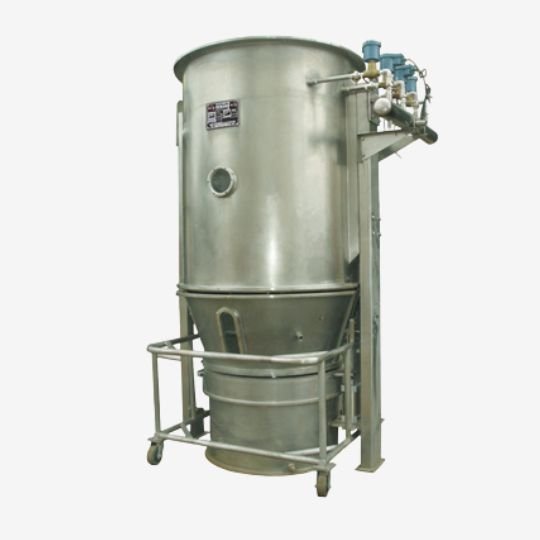

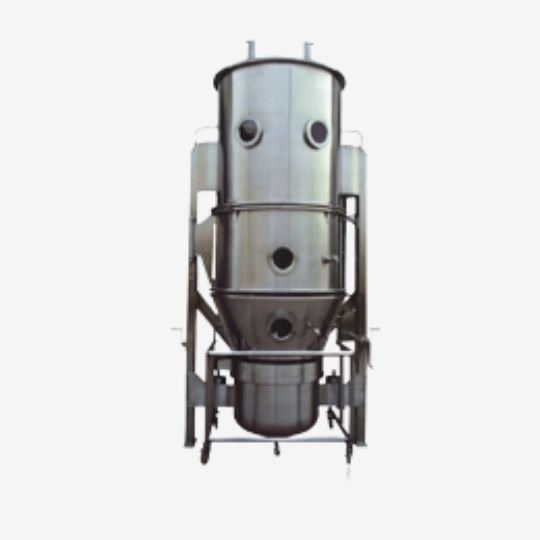
FANQUN Vertical Fluid Bed Dryer
The FANQUN Vertical Fluidized Bed Dryer is specifically designed for free-flowing powders and small particles ≤3mm. It allows for quicker heat exchange, lower energy consumption, and batch consistency in production to enable efficient food, chemical, and pharmaceutical processes.
- FANQUN boasts a vertical compact design that minimizes footprint while increasing drying efficiency.
- FANQUN’s advanced fluidization technology provides uniform heat transfer and stable moisture control, maintaining consistent performance during extended operation.
- It provides a range of batch sizes from 10g laboratory loads up to 500 kg industrial-scale batches, covering R&D, pilot testing, and large-scale production scenarios.
- FANQUN vertical fluidized bed dryers realize accuracy in temperature control within ±1°C with consistent final moisture content and protect heat-sensitive materials.
FG Series Vertical Fluid Bed Dryer
- Fluid dryer to achieve fast heat transmission of medium.
- Seal negative pressure operation, there is no dust.
- Because of using anti-static material as filter,it is safe in operation;
- The equipment has no dead corner so it is easy to clean fully and there is no cross pollution;
- It is in conformity with the requirements of GMP.
The machine is mainly used for drying powder or granules from pharmaceutical, foodstuff, chemical and so on industries.
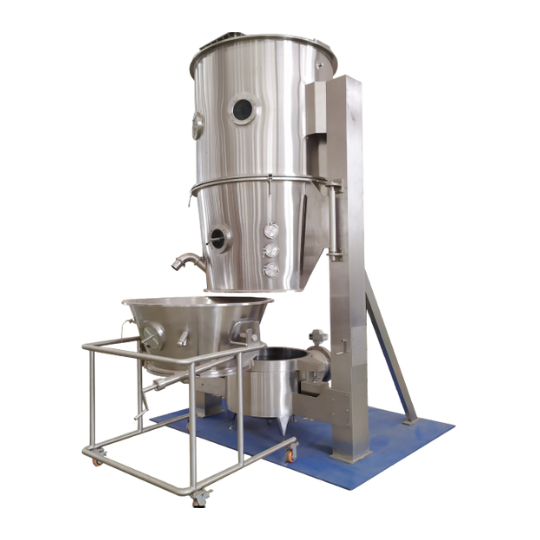
Heating methods with temperature control like steaming are capable of processing pharmaceutical and chemical products.

Repairable and replaceable parts with durable structure, Explosion-proof with polished surface.
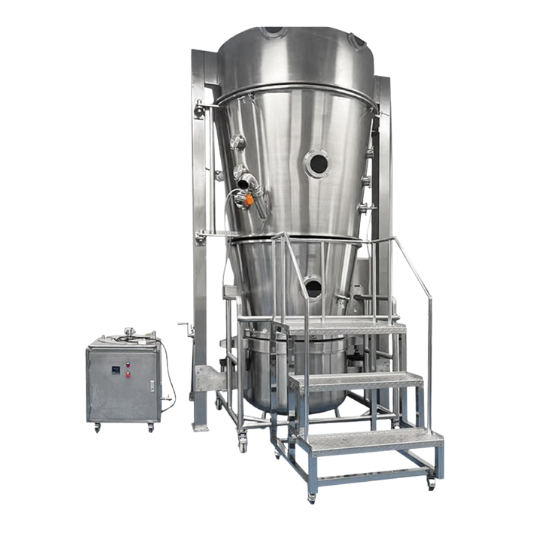
Large options of application and large capacity for heavy duty. Has improved fluidity and reduced dust inclusion.
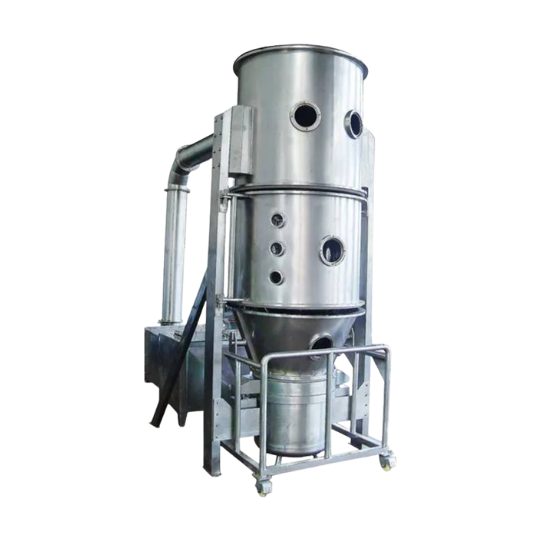
Precision machining and durable built, has high-quality materials that enhance the functionality of the granulator and evaporates moisture within.
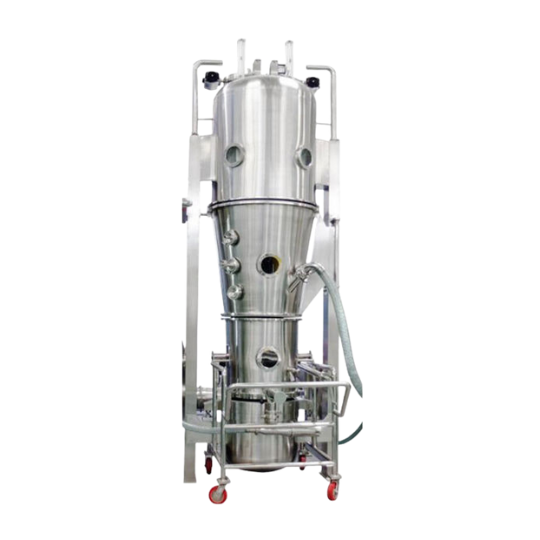
Turns into granules and has a large application for chemical processing, has high efficiency and productivity.
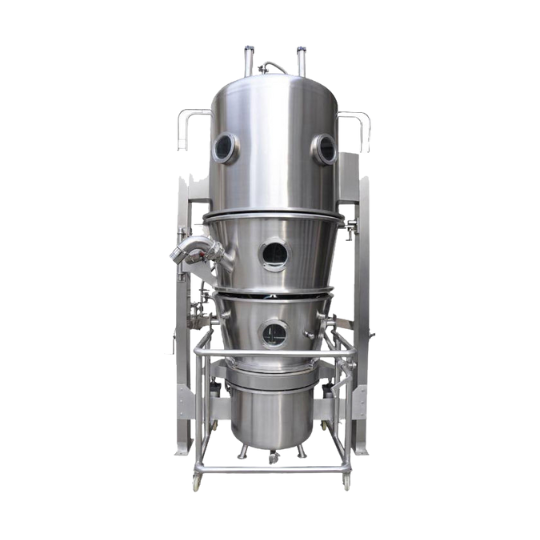
Stainless steel exterior with great quality control and non-stick surface polish. Automatic and multifunctional features.
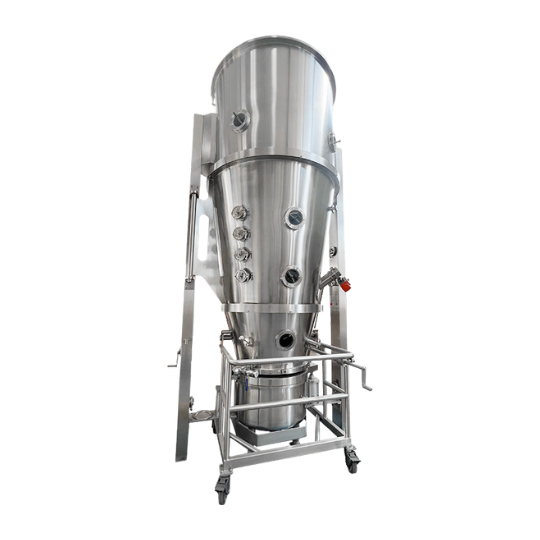
Can be applied for plastic and food processing with temperature control and manufactured with high-quality material.
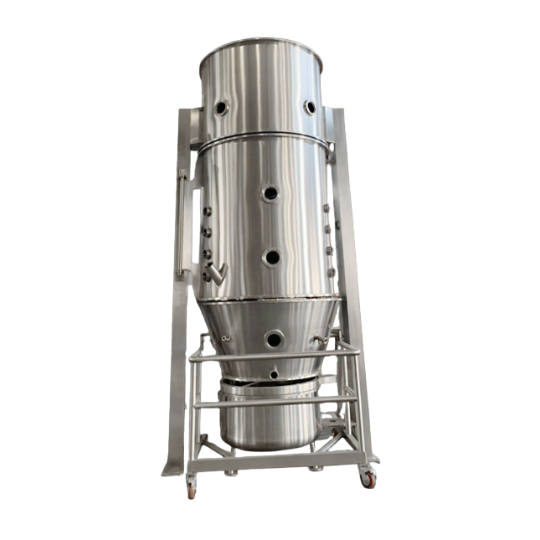
Easy to clean and operate, produces instant coffee with no moisture clumps. Enhances pure distillation
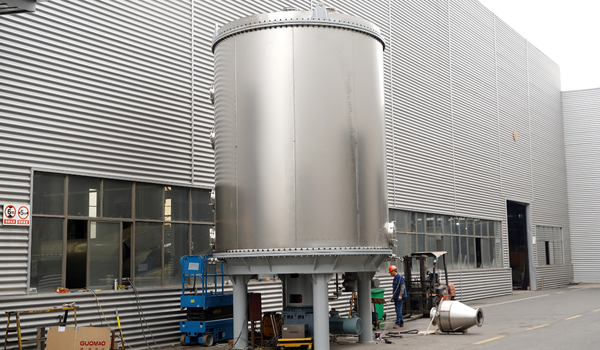
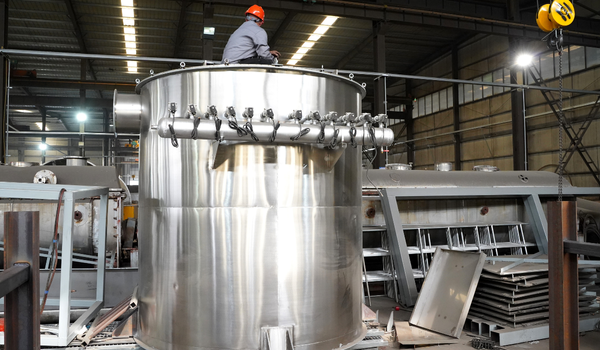
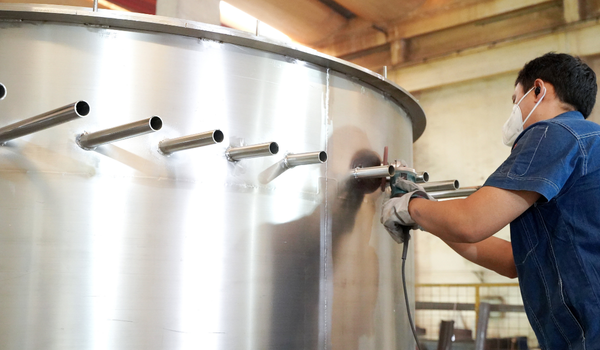
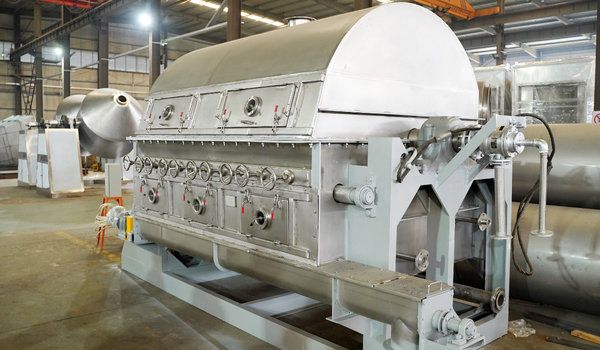
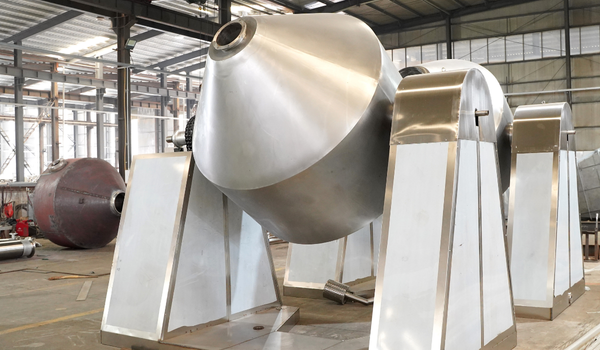
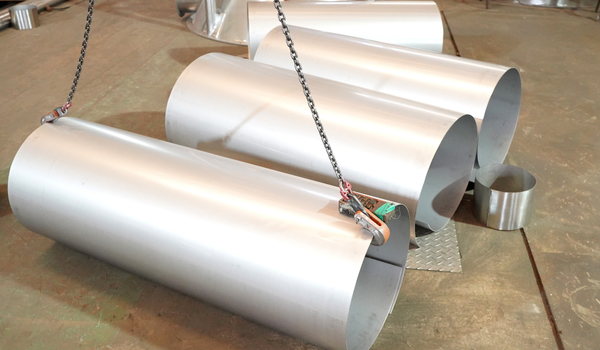
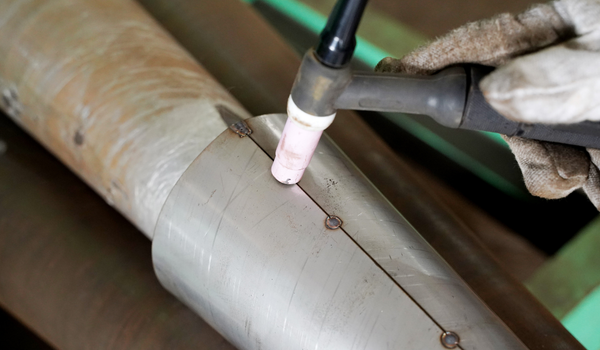
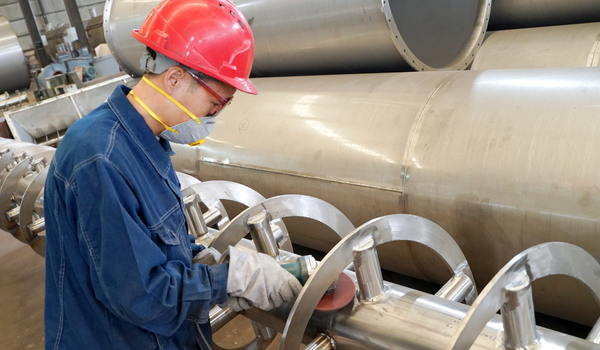
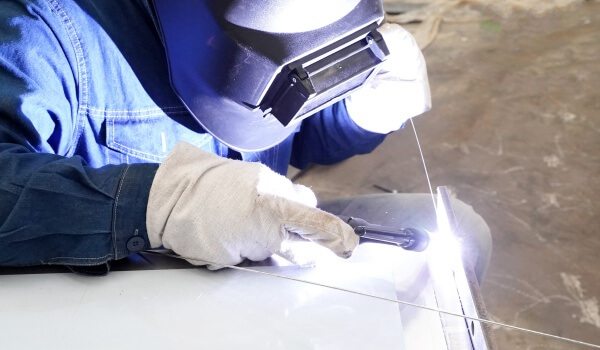
- Our Factory
- Technical Parameters
| item | unit | 3 | 5 | 30 | 60 | 120 | 200 | 300 | 500 | 1000 |
| diameter of container | mm | 300 | 400 | 700 | 1000 | 1200 | 1400 | 1600 | 1800 | 2200 |
| volume of container | L | 12 | 22 | 100 | 220 | 420 | 670 | 1000 | 1500 | 2500 |
| Min capacity | Kg/batch | 1.5 | 4 | 15 | 30 | 80 | 100 | 150 | 250 | 500 |
| Max capacity | Kg/batch | 4 | 6 | 36 | 72 | 140 | 240 | 360 | 600 | 1100 |
| consume of steam | Kg/batch | 12 | 23 | 70 | 140 | 211 | 282 | 366 | 465 | 800 |
| amount of compressed air | m³/min | 0.3 | 0.3 | 0.3 | 0.6 | 0.6 | 0.9 | 0.9 | 0.9 | 1.5 |
| power of fan | kw | 2.2 | 4 | 5.5 | 11 | 18.5 | 22 | 30 | 45 | 75 |
| temperature | °C | |||||||||
| collection rate | % | > 99 | ||||||||
| time of operation | min | 15~30(depends on material) | ||||||||
| content of final product | % | ~ 0.2(depends on material) | ||||||||
| noise | dB | ≤ 75 | ||||||||
| height of main machine | mm | 2100 | 2300 | 2500 | 3000 | 3300 | 3800 | 4000 | 4800 | 6200 |
What is a Vertical Fluidized Bed Dryer?
FANQUN Vertical Fluidized Bed Dryer uses hot air flowing upwards to suspend powders or particles ≤3 mm in a fluidized state to ensure every particle contacts the gas thoroughly, hence can dry rapidly, uniformly, and stably.
How Vertical Fluidized Bed Dryers Work?
The operational process of FANQUN vertical fluidised bed dryers usually comprises the following four steps:
Step 1: Fluidization Formation
When it starts up, the bottom distributor (air distribution plate) creates a consistent and stable high-speed airflow. This passes through the perforated bed plate, gently “lifting” the wet material. Particles separate from one another, become suspended, and enter a state of dynamic motion—known as fluidization.
In this phase, the material no longer accumulates but churns like boiling water; it lays the foundation for initial heat exchange.
Step 2: Full Gas-Solid Contact
When particles are fully “unpacked” and no longer stick to walls, hot air can envelop each particle from 360°.
Fluidized bed drying uses direct gas-solid heat transfer compared to layer drying or surface conduction.
* maximises the contact area between particles and air.
* minimizes the pathways of heat transfer.
* significantly enhances the efficiency of heat exchanges.
Providing fast, uniform drying performance for you.
Step 3:Evaporation of Moisture
In the process of continuous gas-solid contact, moisture on the surface is removed rapidly. While this is happening, the control system maintains a constant final moisture content through parameters such as temperature, airflow, and negative pressure.
Step 4: Material Discharge and Collection
Once drying is complete, the fluid bed system releases the particles through the outlet.
Typically integrated with:
- Cyclone separator: Separates fine dust from main particles
- Baghouse dust collector/filter: catches ultra-fine particles to prevent product loss
- Cooling or screening unit: Prepares material for your downstream processes
Continuously delivering clean, traceable industrial production for you.
Key Components of Vertical Fluidized Bed Dryers
Air Intake Treatment System
The quality of drying depends on the state of the air entering the bed. FANQUN’s air intake treatment system involves multistage control over air purification, dehumidification, and heating to guarantee fluidization stability and consistency of batches.
Inlet air undergoes three-stage processing: primary stainless steel mesh filter (0.15 mm) → F7 medium efficiency filter → high-temperature resistant H13 HEPA filter. This acts to suppress particulate contamination, as well as thermal deformation, risks at the source. The HEPA filter features differential pressure monitoring and quick-release connectors that enable clear maintenance access windows to minimize downtime.
Main System
The main unit consists of a vertically arranged base, material container, diffusion chamber, and filtration chamber to minimize footprint and ensure smooth gravity discharge. The quick-drain valve is located at the lowest point in the cantilevered base with lateral supports for thorough cleaning.
The vertical seal of FANQUN top ring is realized by using two hydraulic cylinders. Silicone bladder seals (0.3 MPa) prevent the leakage of powder, thermal expansion, and pressure imbalance, improving batch consistency. The whole structure meets GMP requirements for your long-term industrial operation.
Material Container
The container supports mobile cart-style loading with braked and swivel casters for precise alignment. Front and rear viewing windows with sealed samplers facilitate observation and quality control. Sintered metal mesh is used in the base of the container instead of conventional screens to prevent secondary distribution, offering wear resistance, heat resistance, extended lifespan, and reduced fine powder leakage.
Containers have quick-release mechanisms and tilt-discharge linkage with lifting actuators, enabling smooth transition between continuous production lines or batch processes.
Diffusion Chamber
The diffusion chamber is suspended from side supports and pivots horizontally for easy maintenance. Multiple vertical spray gun interfaces are flush-mounted internally, ensuring uniform airflow diffusion without blow-off or dead zones. Preset positioning stops and quick-change nozzle seats minimize the time costs of online cleaning, maintenance, and production switching.
Filter Chamber
The filter chamber houses the product filter bags and gas-solid separation system and serves as the core for continuous drying. FANQUN employs a dual-chamber oscillating powder cleaning system: two sets of filter bags clean alternately and maintain stable fluidization without shutdown.
Large-diameter non-metallic pulleys + adaptive tensioning systems reduce wire rope fatigue significantly. In-built bag-to-flange fixation prevents outward flipping, increasing GMP compliance and simplifying manual installation. Vertical relief valves discharge instantly during positive pressure events to prevent bag rupture and secondary contamination.
Atomization System
It has a one-head pressure nozzle with a two-stage atomization structure. Media enters coaxially for uniform droplet distribution. The core peristaltic pump provides stepless speed adjustment and meets the processing requirements for high-viscosity and sensitive suspensions. Atomization gas pressure is manually fine-tuned via a pressure reducing valve, enabling droplet stabilization before hot air introduction to prevent localized clumping.
Muffler System
It is provided with an explosion-proof centrifugal high-pressure blower, isolated from the main unit to avoid the transmission of vibration to the fluidization zone.
Flexible joints, variable frequency drive, and carbon steel mufflers together reduce noise and energy consumption. Exhaust interfaces match your air lines for secondary filtration or VOC treatment.
Control System
PLC control is available with manual/automatic/recipe management modes. Parameter locking and three-tier access permission ensure process consistency. Test and operation states interlock with each other to avoid misoperation. A comprehensive safety system provides interlocks such as pneumatics, sensors, and differential pressure alarms.
FANQUN will retain essential gauges, touchscreens, warning lights, and printer interfaces on your control panel for direct use in pharmaceutical plants or pilot facilities to ensure traceability of data and reusability of parameters.
Key Parameters for Vertical Fluidized Bed Dryers
Among so many models on the market, do you know how to choose a high-quality vertical fluid bed dryer? In order to solve this common problem for most customers, FANQUN designed a parameter chart for you to quickly find a stable and efficient vertical fluidized bed dryer.
| Parameter | Technical Parameter Description |
| Drying Temperature Range | Ambient Temperature ~ 180°C (Adjustable) |
| Single Batch Drying Capacity | 10 – 500 kg/batch |
| Suitable Materials (Feed) | Powder and granular materials, initial moisture < 20% |
| Post-Drying Moisture Content (Discharge) | 3% – 5% (Typical Range) |
| Recommended Inlet Air Temperature | < 100°C (depending on process settings) |
| Operating Mode | Configurable for Batch / Continuous |
| Industry Standards | GMP-compliant design available |
| Structural Materials | SS304 / SS316L / Titanium / Duplex Stainless Steel |
| Optional Heat Sources | Steam, Hot Water, Electric Heating, Thermal Oil, Gas / Oil / Coal / Biofuel Hot Air Generator |
Advantages of Vertical Fluidized Bed Dryers
Superior Power
FANQUN combines variable-frequency fans with pneumatic inlet valves, allowing for adjustment of airflow in real time according to feed conditions to prevent under-blowing or over-blowing.
At the same time, synchronized with vacuum feeding, it ensures that materials achieve stable fluidization upon entering the bed layer, initiating efficient drying from the very first second instead of stagnating and building up.
Ultra-Compact Design
The vertically arranged drying chamber uses dual-drive airflow + gravity and helps natural particle descent to avoid sideways buildup.
This translates to:
* Smaller footprint-offering greater economy for plants with restrictions on cleanroom costs, especially pharmaceutical and food plants
* Shorter particle flow paths in the bed
* Smoother discharge process
Uniform Particle Moisture Distribution
FANQUN’s double-stage atomization structure ensures stable heat and mass transfer for moisture-sensitive materials. The envelope-like air film forms around particles, which are kept in full suspension within the drying chamber and always kept in contact with hot air. All the above advantages dramatically reduce the phenomenon of “dry outside while wet inside.”
This process standardizes each particle, achieving near-perfect moisture consistency across batches—crucial for industries like food ingredients, pharmaceutical powders, and functional materials where final moisture content is critical.
Meets sterilization requirements
The overall structure of the FANQUN Vertical Fluidized Bed Dryer meets GMP demands. Valves will automatically shut during shutdown to effectively prevent backflow contamination.
Meanwhile, quick-clean access points are fitted to the filtration section, material container, and diffusion chamber inlet for:
- CIP (Clean-in-Place)
- SIP (Steam-in-Place)
It meets industry demands, whether the application is for medical raw material processing or for food manufacturing.
Suitable for Highly Sensitive Materials
FANQUN equipment provides drying under a nitrogen atmosphere, avoiding particles from directly contacting oxygen in the whole process of drying for formulations prone to oxidation or with solvents inside, such as pharmaceutical intermediates and active yeast.
At the same time, the closed-loop system effectively recovers the volatile organic solvents without their emission into the air. This is not only a question of environmental protection; it is also an important aspect of process safety.
Prevents Blockages
FANQUN incorporates a flared inlet with a quick-acting butterfly valve that allows for fast material transportation under negative pressure to prevent congestion. In case of congestion, an abnormal alarm mechanism that distinguishes pressure difference variations in the internal filter bags starts the vibration cleaning automatically.
Applications of Vertical Fluid Bed Dryers
Vertical fluid bed dryers have extensive applications in many industries, from maintaining flavor in food to ensuring the pharmacological effect of pharmaceuticals. These dryers consistently exhibit excellent drying performance.
| Industry | Typical Material Form | Example Products |
| Food | Non-fragile granules/powders / semi-moist solids | Coffee powder, milk powder, spices, seasonings, nutritional supplements, semi-moist pet food |
| Pharmaceutical | Granules / powdered raw materials/excipients | Pharmaceutical granules, Active Pharmaceutical Ingredients (API), Pharmaceutical excipients |
| Chemical | Powder / Microparticles / Bulk Granules | Detergents, Fertilizers, Pigments |
| Cosmetics | Powder / Fine Granules | Dry powder cosmetic ingredients |
| Minerals | Sandy Granules / Crystals / Metal powders | Sand, Crystals, Metal powders |
FANQUN has been dedicated to the R&D and manufacturing of drying equipment for more than thirty years, and the vertical fluidized bed dryer is one of our most mature products. We have long-term cooperation with domestic universities and materials research teams, realizing the transformation from laboratory technologies into production lines.
Our services include raw material testing and parameter validation to complete production line design for food, pharmaceuticals, and the chemical industry.
If you’re assessing process solutions for free-flowing powders or small granular materials, our engineering team can tailor the equipment directly to your production needs based on your material properties, batch sizes, and industry standards. This ensures more stable drying operations with uniform material distribution.
Particle shrinkage is mainly due to too high drying intensity. The rapid moisture migration inside the particles causes accelerated surface dehydration and the resulting hard crust. When the drying continues unhampered, internal moisture also migrates outward, causing additional volume contraction.
It can be caused by too long residence time in the bed, too high inlet air temperature, or too high air velocity. Please do not hesitate to contact our professional technical staff if you are not sure how to solve it.
The common causes, excluding static electricity, include the following: agglomeration by very small or irregularly shaped particles, excess moisture during feeding, insufficient airflow, and internal material charging. Any of these can prevent fluidization.
This is mostly because of the unequal heat and mass transfer. Particle overheating due to excessive contact with airflow or high temperatures, and/or poor atomization, leads to rapid surface cracking while moisture remains inside particles. The result can therefore be materials that are “dry on the outside but wet on the inside.”